The Meaning of Mashhad
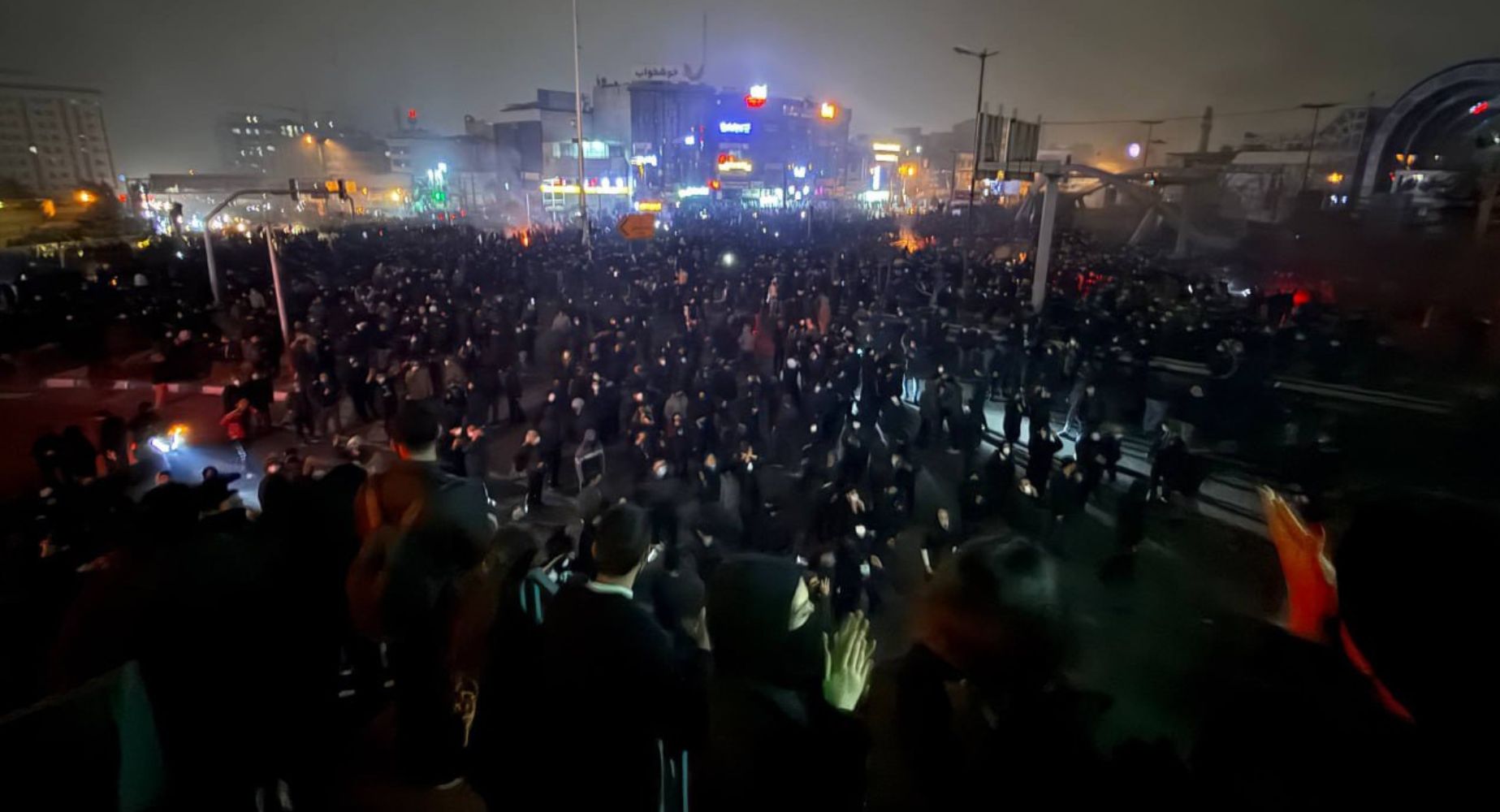
Reports from Mashhad, Iran’s second-largest city and one of the regime’s most important religious strongholds, mark a qualitative shift in Iran’s unrest. Over one million people reportedly rallied, regime forces withdrew, and the city briefly fell under protester control. Since the beginning of the uprising, more than 1,000 protests have been documented nationwide.
Mashhad is not a peripheral city. It is central to the Islamic Republic’s religious legitimacy and ideological authority. When mass protests overwhelm such a place, the nature of the crisis changes. This is no longer scattered dissent or cyclical unrest but a breakdown in the regime’s ability to govern.
From Grievance to Assumption of Collapse
The slogans dominating these protests make that shift unmistakable. The shift from “Pahlavi will return” to “Javid Shah” represents escalation. What began as symbolic alignment evolved into a direct political assertion. Historically, movements escalate slogans only when they believe momentum is moving in their favor.
The most widespread chants are “This is the last battle, Pahlavi will return” and “Javid Shah” (“Long live the King”). These are not demands for reform or negotiation. They are slogans of succession.
Inflation, sanctions, economic collapse, and social repression may have ignited the protests, but they no longer define them. International media often describe the events as “unrest” or “protests” while avoiding the content of the slogans themselves. But when large segments of a population chant the fall of a regime as an assumption rather than a request, politics moves from grievance to anticipation. The uprising stops reacting to power and begins preparing for its absence.
This shift matters more than protest size alone. Many regimes survive mass demonstrations. But regimes have difficulty surviving once popular belief in their permanence collapses.
The chant “Pahlavi will return” is often mischaracterized as a narrow call for monarchical restoration. In practice, it signals continuity with Iran’s last widely recognized state identity without forcing an immediate resolution of the long-divisive monarchy-versus-republic debate within the opposition.
“Javid Shah” is a slogan that allows diverse social groups—students, workers, secular liberals, nationalists, professionals, and politically unaffiliated citizens—to align around a shared direction without ideological uniformity. Instead of consensus, it offers sequencing: first the removal of the Islamic Republic, then a democratic transition.
Iran’s uprising now follows a recognizable pattern of regime collapse:
First, psychological rupture. The spread of “Pahlavi will return” marked the breaking of fear.
Second, national synchronization. After Pahlavi called for nationwide participation on January 8 and 9, millions of Iranians responded across cities and regions, transforming dispersed protests into coordinated national action.
Third, regime retreat. Authorities cut internet access, disrupted landlines, and reportedly prepared to interfere with satellite communications. States sever communications when they feel strategically vulnerable, when they are losing narrative control.
The University–Street Nexus
Iran’s most transformative moments have historically occurred when street protests and intellectual institutions moved together. As slogans spread into universities, professional associations, and civil society, their impact multiplies.
These institutions are central to the regime’s ideology. When students, academics, artists, and professionals echo the language of the streets, the state loses both symbolic authority and organizational depth. This university–street nexus forms the backbone of sustained national mobilization.
Pahlavi’s Role
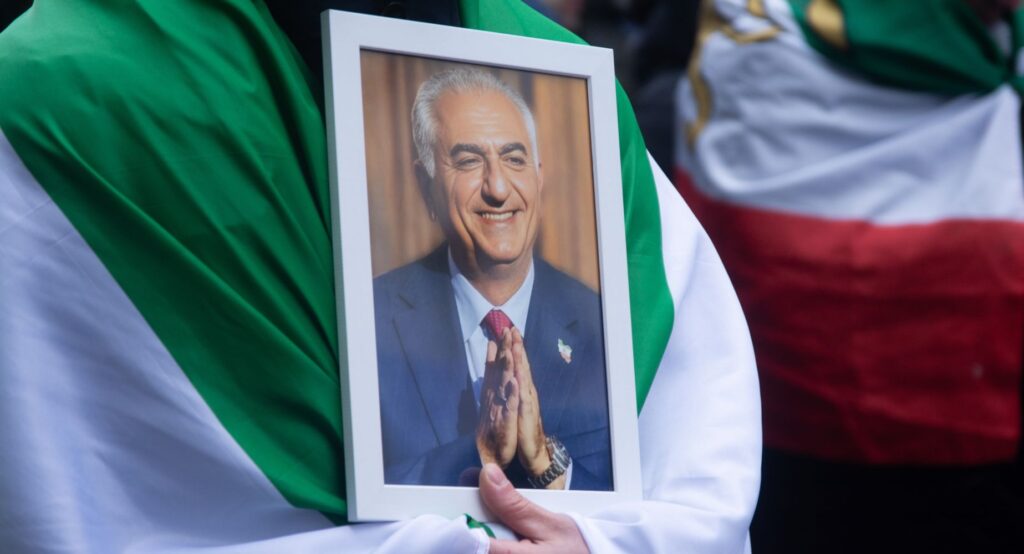
Prince Reza Pahlavi’s role is best understood as catalytic rather than authoritarian. He has functioned as a unifying reference point, capable of aligning internal resistance with external engagement.
Following the January mobilization, he thanked President Donald Trump for pledging accountability for regime crimes and urged European leaders to move beyond ambiguity. His appeal was practical: use technical, financial, and diplomatic tools to restore communications, protect information flows, and ensure Iranian protesters are not silenced behind digital blackouts.
His message—“Great nation of Iran, the eyes of the world are upon you”—reinforced morale inside Iran while placing some responsibility on the international community. The regime’s attempt to cut communications confirms how threatening this linkage has become.
Crucially, the direction of the movement does not predetermine Iran’s final political system. The collapse of the Islamic Republic would not end the political process; it would begin a transitional phase. A transitional government, led by Prince Reza Pahlavi, would focus on stabilizing the country, restoring communications and public order, and preparing the ground for a national referendum.
Based on the outcome, a new parliament would be elected, and a final constitution drafted and approved. What ultimately unites all credible pathways is not the form of the state, but its foundation: a secular democratic system based on popular consent, accountable institutions, and a clear separation between religion and political power.
The evolution from “Pahlavi will return” to “Javid Shah” captures this moment of transition. It reflects a society that no longer asks whether the Islamic Republic should fall, but prepares for what comes after. The destination remains open. The direction is no longer in doubt.