Pakistan’s mediation effort between Washington and Tehran deserves more scrutiny than it has received, and for a reason that has nothing to do with Islamabad’s diplomatic competence. The problem is structural. Any agreement that addresses Iran’s nuclear program while leaving its crypto-financial infrastructure intact is not a settlement. It is a postponement, one that preserves and quietly legitimizes the architecture Tehran will deploy in the next confrontation.
Understanding why requires taking seriously what crypto has done to the geometry of American leverage.
Iran’s crypto ecosystem, valued at roughly $7.8 billion, has become part of the financial spine of the Islamic Revolutionary Guard Corps (IRGC). The IRGC now controls more than half of that system, moving value through Bitcoin and stablecoins across a network of affiliates and commercial fronts in ways that conventional interdiction cannot easily reach. Iran’s Ministry of Defense has gone further, accepting cryptocurrency as payment for weapons exports through its state arms export agency MINDEX. This appears to mark one of the first instances of a nation state publicly showing its willingness to accept cryptocurrency as payment for military hardware. This is not shadow banking at the margins of a sanctions-pressured economy. It is an alternative financial system, built specifically to survive the sanctions architecture the West spent years constructing.
That infrastructure does not just sustain Iran but sustains its network. The mechanism runs through Iran-based financier Sa’id al-Jamal, whose crypto wallets were sanctioned by the U.S. Treasury’s Office of Foreign Assets Control (OFAC) for funneling proceeds from illicit Iranian oil sales to the Houthis. He received an estimated $178 million USD through those wallets. Over $10 million in transfers from two UK-registered shell companies, Zedcex and Zedxion, were traced to Al Jamal. These payments were connected to Ansarallah operations in Yemen. The Red Sea attacks that reshaped global shipping lanes and sent insurance premiums soaring were partly bankrolled this way.
Then there is the seizure of the Straits of Hormuz and what this means beyond this crisis window.
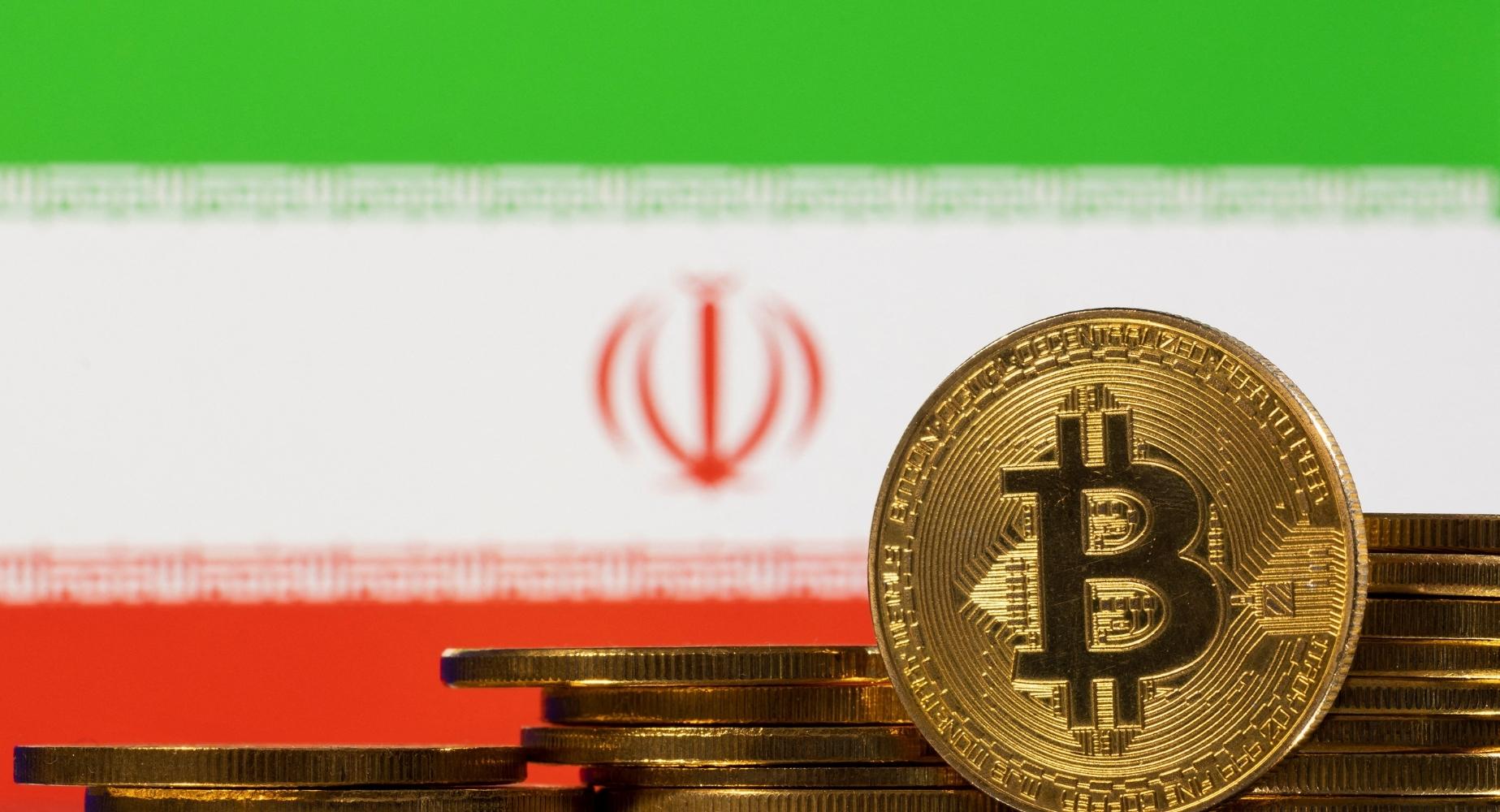
Iran’s imposition of a Bitcoin toll on international shipping is not simply a clever sanctions workaround, though it is that. The IRGC has charged ship operators up to $2 million per vessel since mid-March 2026, accepting payment in Bitcoin and Chinese yuan. Iran has proven that a critical node in the global economy can be operated, at least partly, under crypto-denominated coercive terms, with international shipping companies as unwilling participants and no multilateral institution positioned to respond. North Korea established the template for crypto as a sanctions evasion tool. Iran has extended it into something more ambitious: crypto as coercive statecraft. Future adversaries are not missing this.
The implication extends well beyond the current crisis. If this model goes unaddressed in any negotiated framework, it will be replicated by Iran and other rogue states in future confrontations.
The fourth role crypto is playing is genuinely novel, and it complicates the mediation in a different register entirely. When Pakistan asked the Trump administration to extend its Iran deadline, Bitcoin ticked upward. Traders read Islamabad’s intervention as de-escalatory and priced risk assets accordingly. Diplomacy now has a live market feed, one that operates on a 24-hour exchange with no circuit breakers, visible simultaneously to every government, hedge fund, and sanctions-compliance desk on earth.
Negotiators have always known that markets react to geopolitical signals. They have rarely had to contend with those signals arriving in seconds, compressing the space between diplomatic gesture and market consequence to near zero. The feedback loop that used to play out over days now closes before the press conference ends. That is not a technical detail about financial markets. It is a structural change in how coercive bargaining works.
For Pakistan as mediator, Iran’s crypto resilience cuts in a direction Islamabad cannot easily navigate. Tehran has financial off-ramps that allow it to wait, to hedge, and to walk away from a deal it finds unfavorable. A party that does not need a deal has fewer incentive to make concessions on the issues that would make a deal durable.
Mediation tends to produce short-term crisis abatement at the cost of long-term stability, because agreements reached under third-party pressure frequently fail to resolve the underlying conditions responsible for conflict in the first place. Pakistan’s mediation is tracking precisely toward that outcome. It can reduce immediate kinetic pressure. It cannot close Iran’s financial off-ramps, defund the proxy network, or alter the crypto-denominated terms Tehran has imposed on Strait traffic. A ceasefire that leaves those conditions intact does not resolve the conflict. It defers it, to a moment when Iran’s alternative financial infrastructure is more mature, more diffuse, and harder to address than it is today.
The harder argument is this. The sanctions architecture the United States spent decades building assumed financial isolation as a precondition for leverage. Iran has systematically dismantled that precondition. Any negotiated framework that trades on enrichment timelines and missile ranges while leaving the crypto network untouched is not closing the conflict. It is deferring it.
Pakistan’s mediation may produce a ceasefire. But the more consequential development is what this crisis has normalized. Crypto is no longer a sanctions workaround at the margins of rogue state finance. It is an instrument of coercion, tested, deployed, and now available as a template to every state that wants to operate outside the dollar-denominated order. That is the change a ceasefire will not reverse. Quite the contrary.