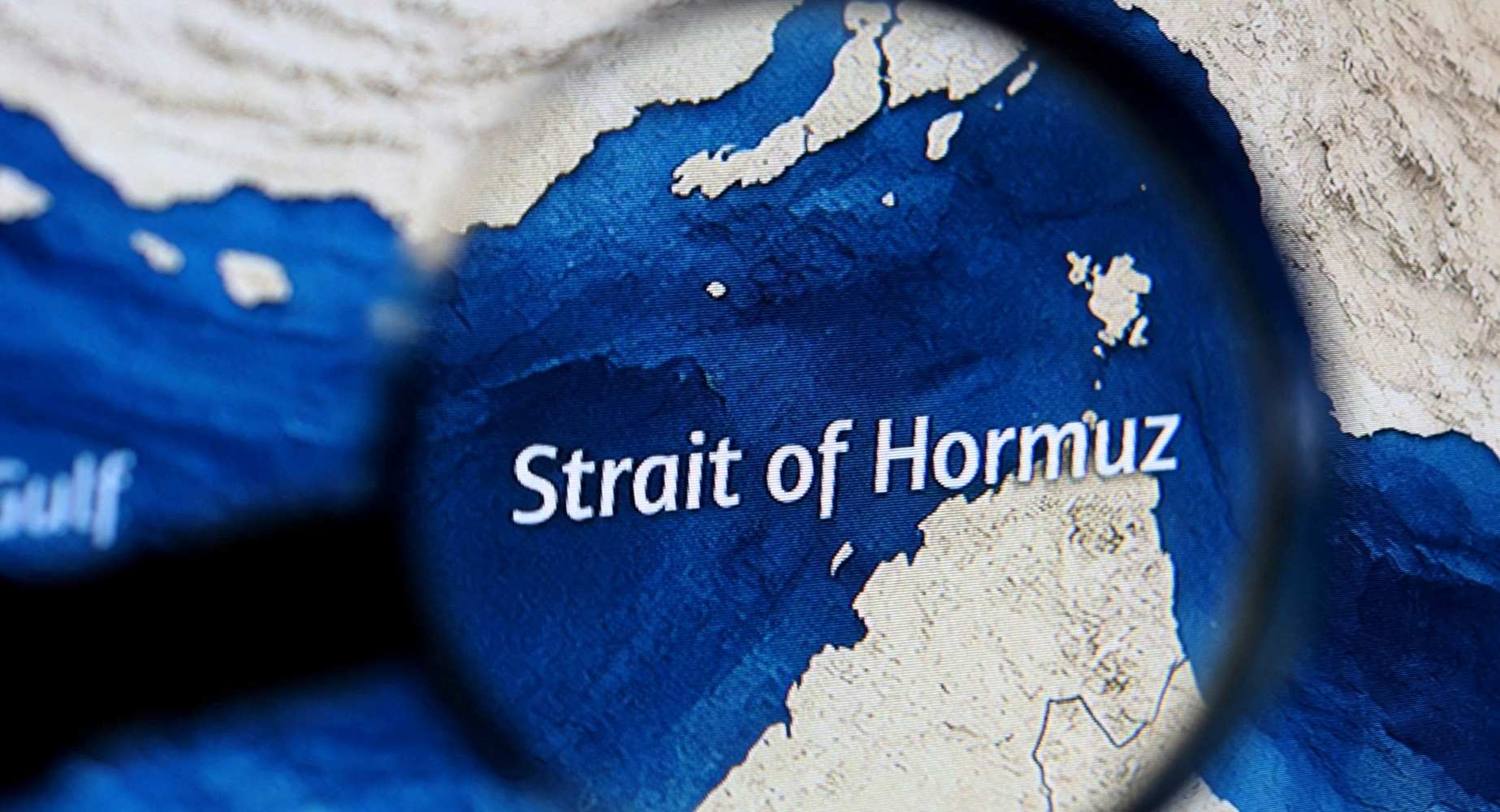
On April 7, the United States and Iran agreed to a two-week ceasefire, during which the two countries have used Iran’s ten-point peace plan as a starting point for negotiations to end the conflict. One wedge issue in this peace plan is Iran’s demand to control the Strait of Hormuz and establish a $2 million fee for ships transiting the strait, which would be split between Iran and Oman. Iran responded to American and Israeli airstrikes by disrupting maritime traffic through the Strait of Hormuz, establishing what many analysts have referred to as a “toll booth system” in which commercial ships can pass through the strait only by making payments to the Islamic Republic. Iran’s parliament is also reportedly developing “a plan to formally codify Iran’s sovereignty, control and oversight over the Strait of Hormuz, while also creating a source of revenue through the collection of fees.” Hoping to contest Iranian control over the strait, the US began imposing its own quasi-blockade on Iranian-linked vessels on April 13, which has thus far deterred several ships from transiting this body of water. However, many analysts appear resigned to the possibility of Iran’s continued control of the strait absent significant concessions from the US.
The United States will not happily accept permanent Iranian control over the Strait of Hormuz, a critical economic chokepoint through which roughly 20% of the world’s oil and liquefied natural gas passed prior to the start of the conflict. An Iranian toll booth in the strait would be illegal under Article 38 of the UN Convention on the Law of the Sea (UNCLOS), which affords all ships and aircraft the right to freely transit straits. Article 42 of UNCLOS says coastal states can “adopt laws and regulations relating to transit passage through straits,” but not laws that “discriminate in form or in fact among foreign ships or in their application have the practical effect of denying, hampering or impairing the right of transit passage.” Neither Iran nor the United States are party to UNCLOS, but most of the nations whose commercial ships are unable to freely transit the strait are. While international law gives Iran the right to defend itself in response to attacks from foreign states, that right extends only to military targets and does not give Iran carte blanche to declare control over an international body of water. Notably, the American blockade on Iranian ports is legal under international law, particularly given that the Navy is not preventing ships not connected to Iran from transiting the strait or denying humanitarian shipments.
Any peace scenario which ends with Iran controlling the Strait of Hormuz, control which it lacked prior to the start of the conflict, would represent an abject foreign policy disaster for the United States. The Trump administration likely understands this, which explains its motivation for imposing its blockade on Iranian ports. Iranian control of the strait would afford it outsized geopolitical and economic power in the region and would enable it to raise billions of dollars in annual revenue which could be used to fund the same regionally disruptive activities which purportedly served as the casus belli for the conflict. Even if the US reached an agreement to somehow share control of the strait with Iran (an idea which was recently floated by President Trump), the international community would almost certainly recoil at any proposal that turns the waterway into a tollbooth.
Given the central role control of the Strait of Hormuz plays in negotiations, it is worth examining whether there is any precedent for the type of toll booth system for which Iran hopes to receive international recognition. History is replete with examples of state and non-state actors attempting to force commercial ships to pay for safe transit. A 2024 UN report alleged that the Houthis earned $180 million monthly in payoffs from ship operators hoping to transit the Red Sea without being attacked by the Yemeni rebels, though the UN was notably unable to confirm this number, and some experts have questioned its accuracy. Digging further into history, the Barbery pirates acted as state-sanctioned privateers during the 16th-19th centuries who targeted merchant vessels off the Mediterranean coast from Morocco to Libya and demanded tributes for safe passage. Yet in both instances, these fees were exacted in violation of established law and were met with broad international backlash, including by the US military. Iran’s pursuit of official recognition of its Hormuz toll booth makes it distinct from the more decentralized and extrajudicial efforts outlined in these examples.
A slightly more apt historical comparison is the 1936 Montreux Convention, which codified Turkey’s legal authority over the Bosphorus and Dardanelles, two critical straits which connect the Black Sea to the Aegean and Mediterranean seas. While the treaty allows for the free passage of all ships through the straits during peacetime, it gives Turkey the right to close the strait to any foreign naval vessels during times of war, unless those ships are returning to their port of registry (Turkey has exercised this authority to limit the transit of Russian warships through the straits during their war with Ukraine). However, unlike the Strait of Hormuz which contains the territorial waters of both Iran and Oman, the Bosphorus and Dardanelles bisect the nation of Turkey and are entirely located within the country’s sovereign territory. Accordingly, the unique security considerations which necessitate Ankara’s control over the Turkish straits are not applicable to Iran and the Strait of Hormuz. Furthermore, the Montreux Convention gives Turkey the right to bar the passage of commercial ships only if they hail from nations with which Turkey is at war, whereas Iran seeks the broad authority to deny civilian vessels from any nations at its discretion.
Iran could theoretically cite the Montreux Convention as precedent for its charging of fees in the Strait of Hormuz, as the treaty affords Turkey limited rights to do so in the Bosporus and Dardanelles. However, Turkey can only charge fees for services rendered (lighthouse services, pilotage, etc.) rather than for passage through the straits, and the convention only allows these fees to be levied against commercial vessels. The fees being charged for Iran on all foreign ships are allegedly for “safe passage” through the strait. However, given that Iran poses the primary threat to vessels transiting the region, and that Iranian naval ships can do very little to protect a ship from an airstrike from an outside power, this justification carries little weight. The only other contemporary example of countries charging fees in international waters is Russia’s imposition of fees for commercial vessels transiting the Northern Sea Route. However, these fees are necessary to cover the operational costs of the icebreakers used to clear the pathway for ships to transit this ice-covered route, making that a poor comparison to the Strait of Hormuz.
To find an actual historical analogue to Iran’s Hormuz toll booth requires one to go all the way back to 1429, when the King of Denmark and Sweden established the Øresundstolden, or “sound dues,” imposed on ships transiting the Øresund waterway separating Denmark and Sweden. Any vessels which refused to pay these tolls were boarded or fired upon, though indigenous ships were exempt from paying these tolls. Once Sweden became an independent kingdom in 1523, its ships became subject to the Øresundstolden despite the strait also falling in Swedish territorial waters. Disputes over the Øresundstolden served as a major impetus for the Torstenson War fought between Sweden and the Kingdom of Denmark-Norway in the 17th century, after which Sweden became exempt from the Øresundstolden. However, the fees remained in effect for all other nations until 1857, when they were abolished by the Copenhagen Convention, which codified the status of the Danish straits as international waterways. Notably, Denmark was heavily compensated by the other signatories to the Copenhagen Convention for agreeing to sign the treaty, which perhaps aligns with Iran’s strategy of using its de facto control of the Strait of Hormuz as a bargaining chip to exact significant concessions from the US if Tehran is ultimately forced to abandon its bid for permanent sovereignty.
Yet the success or failure of Iran’s Hormuz toll booth gambit hinges not just on the negotiations between the combatants, but on buy-in from the strait’s other occupant: Oman. Just as Denmark had to carve out a side deal with Sweden to continue imposing the Øresundstolden, so too is Oman’s acquiescence to Iranian hegemony in the strait critical to its plan. Given that Iran lacks sovereignty over the entirety of the waterway, Oman would either have to cede its territorial waters to Iran, allow the Islamic Republic to indefinitely police the strait (presumably with fee exemptions for ships hailing from or sailing to Oman), or partner with Iran in imposing transit fees. While Iran has openly discussed making this toll booth a bilateral operation with Oman, the Sultanate has given no indication that it is considering this proposal, instead reiterating its opposition to the imposition of tolls while acting as a mediator between Iran and the US.
Even if Oman and the US consented to Iranian control over the Strait of Hormuz, opposition to this arrangement by other regional states could ultimately lead to enduring conflict over the body of water. Given the Gulf Cooperation Council’s recent support for a UN Security Council resolution promoting the free navigation of the Strait of Hormuz, Iran may face strong opposition from its Arab neighbors if it attempts to normalize its maritime toll booth. Similarly, a US-Iran peace agreement would not necessarily force Israel to cease its military operations against Iran, particularly if it believes Iranian control of the strait would enable it to rebuild the military and nuclear capabilities which Israel successfully eroded over the course of the war. As challenging as it may be for Iran to establish an agreement to operate its Hormuz tool booth may be, sustaining such an operation may prove even more difficult.
While America and Israel have inflicted significant damage on Iran over the course of the conflict, Iran’s control of the Strait of Hormuz has arguably left the Islamic Republic with a stronger geopolitical hand than it started with. Iran’s efforts to turn the strait into a permanent toll booth are illegal and borderline unprecedented but have given Tehran significant leverage with which to negotiate, even if Iran’s ability to maintain control over the strait post-conflict is far from certain. Whether Iran can retain its maritime toll booth will likely define the legacy of the conflict and alter the region’s geopolitical dynamics for years to come.