Why Top-Down Decrees Can’t Cure the Region’s Crisis?
El-Sissi diagnosed the symptom. He did not know how to cure the disease.
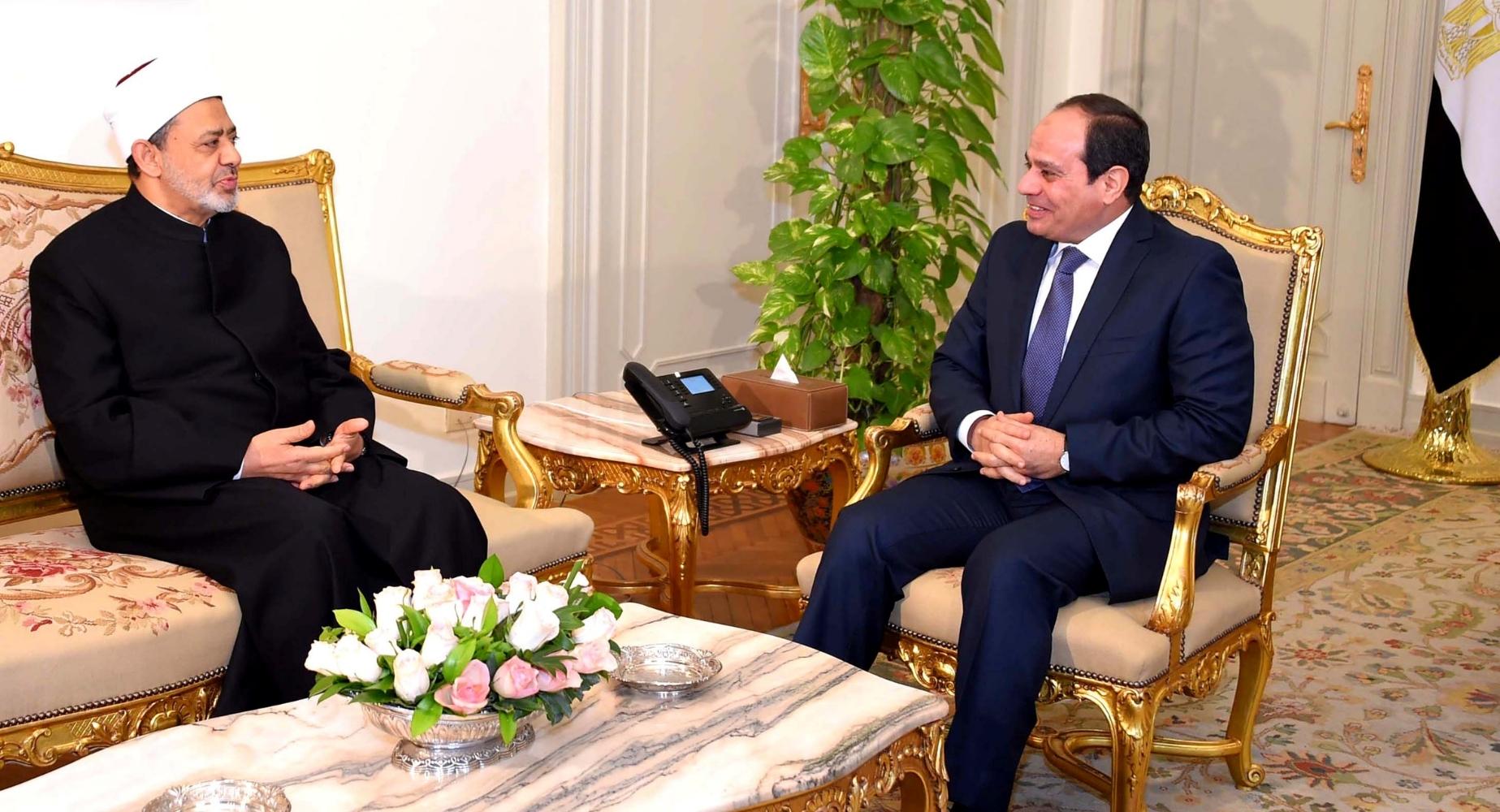
On January 1, 2015, Egyptian President Abdel Fattah el-Sissi stood before the scholars of Al-Azhar University and issued an ambitious call for a “religious revolution.” He warned that it was both mathematically and morally impossible for a global community of 1.6 billion Muslims to remain in permanent ideological confrontation with the rest of humanity, as detailed in the contemporary reportage by the Times of Israel.
It was a rare moment of candor from an Arab leader. El-Sissi acknowledged that something in the region’s religious-political architecture had become fundamentally unsustainable. He heard the echo of a collapsing paradigm. But over a decade later, the strict limitations of what he proposed have become glaringly obvious.
El-Sissi diagnosed the symptom. He did not know how to cure the disease.
His speech has often been praised in Western and Israeli analytical circles as a brave call for moderation within Islam. In reality, it revealed the structural trap of trying to solve a civilizational problem with a bureaucratic instrument. It showed why political Islam cannot be neutralized from within the very state machinery that historically empowered it.
If we want to understand where Egypt—and the wider Middle East—are heading, we must look beyond the surface-level language of state-managed “reform” and ask a harder, institutional question: what kind of legal and political order makes the weaponization of religion structurally impossible?
The Limits of State-Managed Islam
El-Sissi’s message to Al-Azhar was essentially a managerial directive: reform your discourse, modernize your curricula, and stop producing extremism. The state would set the parameters; the religious establishment would obediently adjust itself to a new, state-sanctioned line.
This remains the persistent fantasy of authoritarian modernizers across the region: that religion can be engineered from above, calibrated like a thermostat, and kept “under control” through a combination of funding, surveillance, and institutional pressure.
But this strategy is based on a profound misunderstanding of the adversary. Political Islam is not simply a set of bad ideas circulating in the air; it is a governance model that fuses moral authority, legal power, and social mobilization. As long as a state continues to derive its ultimate legitimacy from a religious framework—whether labeled “radical” or “moderate”—the mechanism of weaponization remains fully intact.
You can change the slogans, the textbooks, and the state-appointed preachers. You can decapitate organizations, ban parties, and jail extremists. What you cannot do with this method is disarm the central device that made political Islam historically powerful: the foundational claim that the state is the executor of a divine legal order. That is the exact lever El-Sissi never dared to touch.
The Paradox of Asking Clerics to “Fix” the Crisis
This statist reform project suffers from an internal contradiction. It asks conservative religious institutions, whose societal power stems precisely from their monopoly over defining divine norms, to voluntarily limit that power in the name of pluralism and civic neutrality.
In practice, that means asking the gatekeepers of a theologically grounded order to participate in building a post-theological system that would render their own political role obsolete. It is structurally incoherent.
So long as Al-Azhar and similar institutions remain tied to the state’s legitimacy, their task will never be to dismantle political Islam as a mode of power. Their task will be to make it more palatable, more manageable, and more acceptable to foreign partners—leaving the underlying paradigm untouched. “Moderation” becomes another tool of state control rather than genuine liberation, softening the edges while preserving the core mechanism.
From Shari’a Frameworks to Civic Sovereignty
The real exit from this dead end does not lie in a more enlightened clergy or better state messaging. It requires a total systemic replacement of the legal and social paradigm.
In my book, The End of Political Islam, I argue that political Islam must not merely be fought as an insurgent ideology; it must be outgrown as a system of governance. True de-radicalization cannot be a spiritual evolution managed by intelligence services; it must be a deliberate, uncompromising institutional transition from Shari’a-based legal frameworks to a universal civic code that is entirely independent of any single theology.
This alternative architecture rests on three indispensable pillars:
The Primacy of Civic Law: Legal frameworks must be derived strictly from human legislation and constitutional processes, not from theological interpretation. Religious norms can guide private ethics, but the state itself must stand on completely neutral ground.
Absolute Equality of Citizenship: Rights cannot be a theological concession granted by a dominant religious majority to tolerated minorities or women. Equality must be axiomatic and absolute. Women, ethnic minorities, and non-believers must stand as full citizens because the civic order recognizes no hierarchy of souls.
De-confessionalization of Identity: A citizen’s legal status, protections, and relationship with the state must be entirely independent of religious affiliation. Faith becomes personal, communal, and cultural—but never a ticket to a different tier of law.
This architecture does not abolish faith; it rescues faith from power. By establishing a secular civic space, you remove religion from the arsenal of the state.
Why Containment is a Strategic Trap for Israel
From an Israeli vantage point, El-Sissi’s Egypt is frequently viewed as the ultimate “responsible actor”—a pragmatic regime that keeps jihadist groups in check, maintains vital security cooperation, and prevents regional spillover. From this narrow perspective, the state-managed containment of political Islam looks like a highly successful, necessary firewall in a dangerous neighborhood.
But this view confuses tactical containment with a strategic solution.
As long as Egypt’s legal and constitutional order continues to rest—even symbolically—on religious legitimacy, the seeds of political Islam remain deeply planted in the soil of the state itself. Authoritarian regimes can suppress Islamist movements for decades through sheer force. Yet every inevitable crisis of state legitimacy, every economic crash, and every systemic failure will once again push populations toward those underground actors who speak the language of divine justice and sacred resistance.
Containment merely buys time; it cannot build a stable future.
Changing the Grammar of Regional Conflict
The failure to move beyond political Islam shapes the entire security environment around Israel and across the Middle East. So long as states and revisionist actors define themselves in religious terms, political conflicts are automatically elevated into cosmic struggles. Every negotiation is framed as a betrayal of God; every compromise becomes apostasy; and regional tragedies are transformed into permanent instruments of sacred mobilization.
A genuinely civic, secular order would not magically resolve the deep geopolitical rivalries of the Middle East. But it would completely change their grammar.
These conflicts would finally be fought, debated, and managed in the rational language of borders, sovereign rights, security arrangements, and constitutional guarantees—rather than in the vocabulary of holy war and absolute salvation. For long-term regional stability, that difference is not abstract. It dictates whether regional crises can be managed within the limits of rational bargaining, or whether they will continue erupting in forms that see compromise itself as a sin.
Designing the New Foundation
When we speak of the end of political Islam, we are not predicting the disappearance of Islamic belief or culture. We are describing the historical exhaustion of a specific political project: the attempt to build states whose legitimacy and legal architecture rest on theological sovereignty.
Egypt in 2015 gave us an early glimpse of that exhaustion—a secular president standing in front of the guardians of religious orthodoxy, asking them to adjust the faith so the world might stop fearing it. The profound truth embedded in that moment was that the old model had run out of answers. The tragedy is that the response remained trapped inside the same paradigm, asking religion to help save the authoritarian state.
The real break will arrive only when the region finds the courage to separate faith from sovereignty, constructing secular, civic, and egalitarian frameworks that make the weaponization of faith structurally impossible. El-Sissi heard the crack in the old foundation; the task of our era is to design the new one.