How the Iranian Question Could Define Republican Strategy After Trump
As the United States approaches the 2028 presidential cycle, the central debate inside the Republican Party is no longer simply who will inherit Donald Trump’s political movement. The deeper strategic question is what America First will become after Trump.
The answer may be shaped by one country more than any other: Iran.
The confrontation with Tehran sits at a unique intersection where nuclear proliferation, energy security, maritime stability, Israel’s security, regional alliances, and American credibility converge. Unlike standard foreign-policy challenges, Iran is not merely a localized regional problem; it is a test case for how Washington understands power in a multipolar world.
For this reason, Iran has become the Persian crucible in which the future of Republican foreign policy will be formed.
The Two Futures of Conservative Foreign Policy:
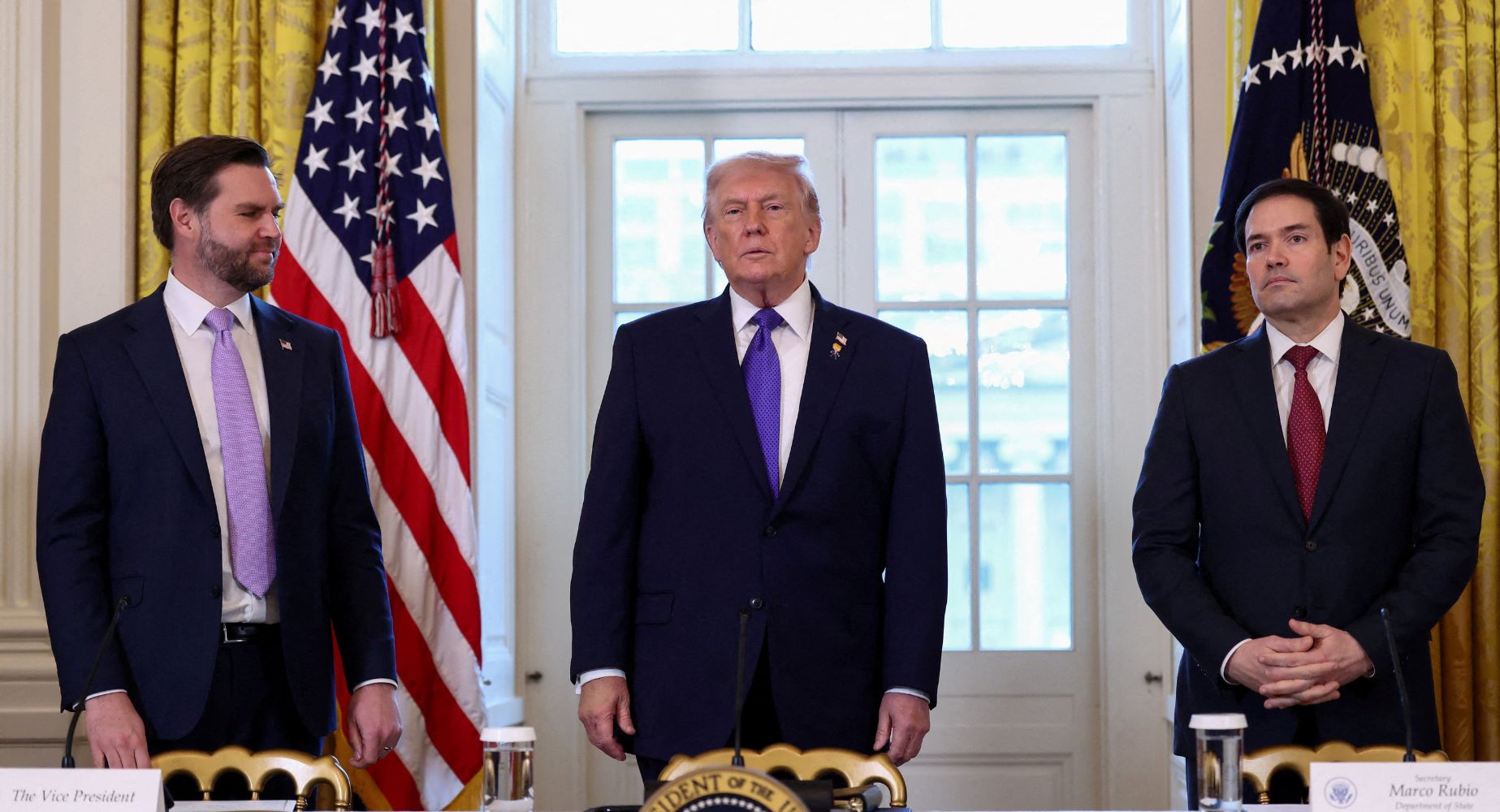
The emerging contrast between Vice President JD Vance and Secretary of State Marco Rubio represents a fundamental debate within American conservatism.
Both operate within the framework of America First, but they interpret its strategic purpose differently.
Rubio represents a tradition of American leadership based on alliances, deterrence, forward presence, and the credibility of security commitments. His worldview rests on the principle that American power is most effective when adversaries understand that aggression will meet a determined response. Under this view, a retreat from allies or a failure to confront major threats creates vacuum-driven instability that ultimately demands greater American involvement down the road.
Vance represents a newer conservative realism. His argument prioritizes national renewal, asserting that previous decades of intervention consumed enormous resources without producing durable strategic gains. The United States should maintain overwhelming power, but it must apply that power selectively. Allies should carry greater operational responsibility, and military force must serve explicitly defined core interests rather than open-ended regional stabilization.
This distinction becomes decisive when applied to the Iranian challenge.
Iran is where these two interpretations of power collide.
For Rubio’s framework, the Iranian challenge demonstrates the necessity of forward deterrence. Tehran’s nuclear capabilities, regional networks, missile forces, and pressure against American partners cannot be contained through diplomacy alone. Negotiations require credible American power behind them, and stability depends on ensuring aggression carries unacceptable costs.
For Vance’s framework, Iran represents the danger of strategic overextension. The United States must prevent nuclear proliferation and protect core interests, but it should avoid becoming the permanent security guarantor of every regional theater. The objective is disciplined application of American power.
This contrast presents two distinct theories of endurance: one assumes regional order requires continuous American presence and deterrence; the other asks whether American power can build a regional architecture that functions without permanent direct deployment. Achieving the latter requires strategic transformation rather than American retreat.
The Limits of the MoU: Managing Instability
A central flaw in current diplomatic debates is the assumption that a negotiated memorandum of understanding or transactional agreement with the Islamic Republic can produce a durable regional equilibrium.
While an agreement can temporarily reduce immediate tensions, constrain specific military activities, and open communication channels, conflict management is fundamentally distinct from strategic resolution.
A diplomatic framework that leaves the political structure of the Islamic Republic intact addresses the manifestations of the Iranian challenge while preserving the system that generates them. Economic relief and international engagement provide Tehran with fresh resources and legitimacy without altering the ideological and institutional foundations of its regional strategy.
Washington thus risks remaining trapped in a reactive cycle: pressure, negotiation, temporary restraint, renewed confrontation, and recurring crisis management. Transactional diplomacy alone does not relieve the strategic burden on the United States; it merely manages an unresolved conflict indefinitely.
If the ultimate goal of conservative grand strategy is durable stability and strategic endurance, policy must move beyond managing the Islamic Republic toward enabling its structural replacement.
This strategy diverges sharply from the 2003 Iraq model. The objective is not military occupation, nation-building, or the reconstruction of Iranian society under American direction—approaches that directly contradict the principles of strategic restraint.
The goal is political transformation without state collapse.
Iran is a historically continuous nation-state with a deep national identity, an established administrative apparatus, and a powerful sense of territorial sovereignty. The strategic objective must be to preserve the Iranian state while replacing the revolutionary political structure that has subordinated Iranian sovereignty to an ideological agenda.
A political transition led by credible national opposition forces, including figures such as prince Reza Pahlavi, offers a path toward restoring Iranian statehood rather than destroying it. A genuinely sovereign, nation-state-oriented Iran—freed from revolutionary ideology—would dismantle the primary coordination behind regional proxy networks, neutralize the core drivers of conflict, and alter the strategic parameters of the nuclear dispute.
For Washington, the objective is not to control Iran, but to support the conditions under which a sovereign Iranian state can carry responsibility for its own security and regional relationships.
Israel: Two Concepts of Strategic Partnership:
Israel introduces a second consequential dimension to the debate between forward deterrence and conservative realism.
Both perspectives maintain strong support for Israel’s security and qualitative military edge. The divergence lies in the strategic philosophy governing how that relationship serves long-term American interests.
The traditional approach views Israel as America’s central democratic security partner and strategic anchor in the Middle East. Sustained military cooperation, intelligence sharing, and explicit commitments reinforce Israeli security while preserving a broader regional balance against revisionist networks.
The restrained framework, while maintaining firm support against existential threats, places greater emphasis on burden-sharing. Capable regional partners are encouraged to assume primary responsibility for their neighborhood rather than relying on Washington as a permanent guarantor.
A political transformation in Iran alters the strategic equation for both views. Removing the revolutionary system eliminates the main driver of confrontation with Israel. Rather than relying indefinitely on tactical deterrence against proxy networks, Israel could operate within a regional system composed of sovereign states carrying their own security responsibilities.
A transformed Iran enables regional partner self-reliance without requiring American abandonment.
Beyond Iran: The Meaning of America First:
The resolution of the Iranian question will define the broader evolution of America First across three potential trajectories.
First, America First could remain primarily a domestic doctrine. Its focus would center entirely on rebuilding economic strength, restoring industrial capacity, securing borders, and strengthening technological competitiveness, treating foreign policy strictly as a tool for internal renewal.
Second, it could evolve into a selective foreign-policy doctrine. In this model, alliances are preserved and adversaries are confronted, but international commitments are judged rigorously by their direct contribution to American core interests, avoiding permanent intervention.
Third, America First could become the foundation of a new conservative international order. Moving beyond post-Cold War global management, Washington would lead a network of sovereign partners aligned around national security, economic resilience, technological superiority, energy independence, and resistance to authoritarian expansion.
Under this third vision, American leadership becomes structural: using power to construct an international environment that does not require continuous military intervention to sustain itself.
The long-term objective of American strategy in the Middle East should not be permanent crisis management, but the establishment of a self-sustaining regional balance.
A secure Israel, stable Gulf partners, and a transformed Iran integrated into a sovereign regional order would produce such a balance. The strategic value of this transformation extends well beyond the region itself.
American resources—military capacity, intelligence bandwidth, diplomatic focus, and capital—are finite. Resources consumed by endless regional management cannot simultaneously address primary global challenges: China’s technological and economic expansion, Russia’s challenge to European security, and the critical race for dominance in artificial intelligence, semiconductors, advanced manufacturing, and energy infrastructure.
Resolving the Middle East’s core structural driver converts the region from a strategic drain into a secure platform, granting Washington the freedom to concentrate on the defining rivalries of the twenty-first century.
The Persian Crucible:
Iran has become the testing ground where competing understandings of American power meet.
One view holds that order requires sustained American presence, alliances, and forward deterrence. Another argues that enduring strength demands strategic concentration, burden-sharing, and avoiding open-ended entanglements.
Short-term diplomacy can manage conflict, and military power can deter immediate aggression. However, neither creates a self-regulating regional balance on its own.
Supporting political forces capable of replacing the revolutionary governing structure while preserving the Iranian state creates the possibility of a fundamentally different alignment. If policy relies on temporary pressure or transactional MoUs to preserve the existing structure, America First will remain trapped in the cycle of regional management it seeks to escape.
However, if American power aids a political transformation that allows a sovereign Iranian national state to emerge, Washington achieves something far more consequential than a temporary ceasefire: a stable balance among capable sovereign states that preserves American influence while reducing its operational burden.
The Persian crucible tests whether American power can be applied with sufficient strategic clarity that the United States no longer needs to remain everywhere, forever.