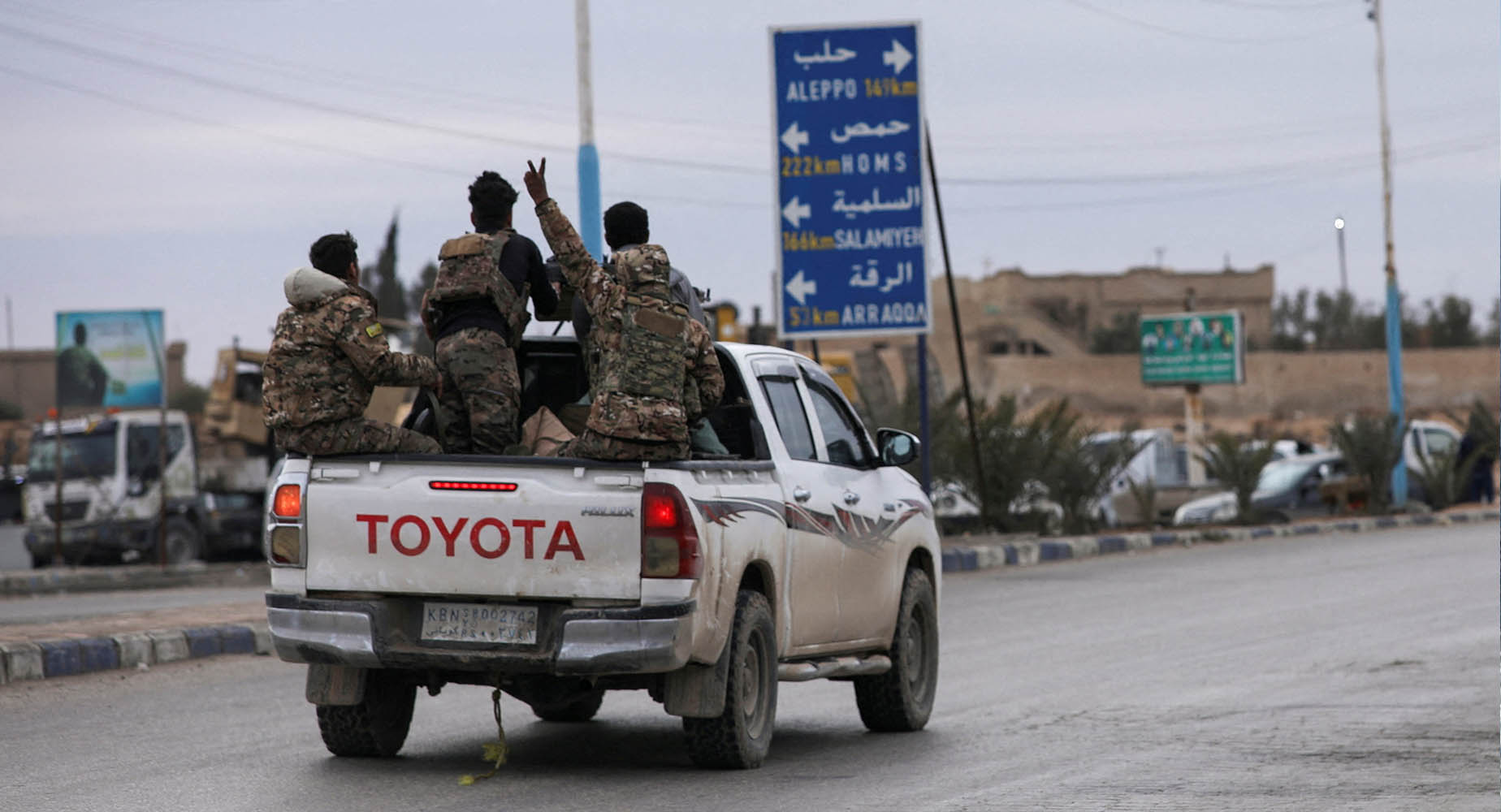
A decade ago, as it sought to strengthen its campaign against the Islamic State in Syria, the United States adopted the Syrian Democratic Forces – a coalition of opposition militias dominated by the Kurds – as its partner of choice. The SDF quickly distinguished itself as a capable ally, helping dismantle ISIS’s territorial control and ultimately collapse its self-declared caliphate. Thereafter, it assumed another critical function, becoming the custodians of the group’s captured fighters and the de facto vanguard of the fight against a jihadist resurgence.
Now, however, the White House is signaling that this status quo no longer obtains. “Today, the situation has fundamentally changed,” the Trump administration’s special envoy for Syria, Tom Barrack, said in a recent social media post. “The original purpose of the SDF as the primary anti-ISIS force on the ground has largely expired, as Damascus is now both willing and positioned to take over security responsibilities, including control of ISIS detention facilities and camps.”
What explains the shift? Washington’s volte-face appears to be driven, first and foremost, by mounting confidence in Syria’s new president, Ahmed al-Sharaa. Since the December 2024 ouster of the Assad regime by Hayat Tahrir al-Sham(HTS), a former al-Qaeda affiliate, the group’s leader has become something of an international darling. In recent months, al-Sharaa has been extensively feted in regional capitals, as well as in Washington, where he received a warm welcome from President Trump himself.
In these meetings, al-Sharaa has said all the right things. He has pledged a democratic political transition, committed to future elections, and promised to protect minority rights, among other policies. In the process, he has helped set the stage for a major pivot in U.S. policy. That shift is now underway, and al-Sharaa’s forces have wasted little time seizing the opportunity. In recent days, Syrian government troops have taken control of significant areas in the country’s northeast previously held by the SDF, creating two potential flashpoints.
One is with the SDF itself. Tensions are now running high between Kurdish forces and Damascus, which expects the previously autonomous militia to integrate into the national military. A comprehensive deal to do so was struck between the SDF and Syrian authorities in late January but fractured almost immediately. Since then, the SDF has encouraged its adherents to mobilize against the central government. “Just as our comrades in 2014 forged a historic resistance in Kobani and turned it into a graveyard for [ISIS] … today we affirm with the same resolve that we will turn our cities … into a graveyard for the new [ISIS]-minded people who are directed by Turkey,” the Kurdish militia has warned. How this unfolds remains uncertain, but the prospect of serious sectarian and ethnic violence is not out of the question.
The second flashpoint involves jihadist forces. When the ISIS caliphate collapsed in 2019, the international community expanded and repurposed a network of detention facilities to hold the group’s fighters and their families. Both populations now pose a major problem. The Islamic State’s hardened jihadi core remains far from rehabilitated, and abandoning the SDF risks creating precisely the sort of security vacuum that these militants have historically exploited.
In fact, they are already doing so. A late-January jailbreak in northeast Syria freed 120 hardened fighters, according to Syrian government estimates. (Kurdish sources put the figure much higher: some 1,500 escapees). That helps explain why the U.S. military has made the decision to begin transferring some 7,000 remaining detainees into Iraqi custody – a move that reflects real doubts about the ability of al-Sharaa’s government to contain the threat.
A related danger comes from a rising generation of potential radicals. When ISIS-linked families entered Kurdish administrative detention some six years ago, many of the detainees were still children. Today, a growing number are of fighting age, even as lax conditions and rampant indoctrination in camps such as Al-Hol have created fertile soil for radicalization. In effect, Syria’s detention system is incubating a new generation of jihad – and it’s far from clear that Damascus has a plan to deal with it.
All this should be instructive. After years of military involvement in the Syrian theater, America is understandably eager to turn the page. But doing so prematurely risks abandoning a known and capable counterterrorism partner for a still-untested arrangement. That is hardly a recipe for lasting stability.