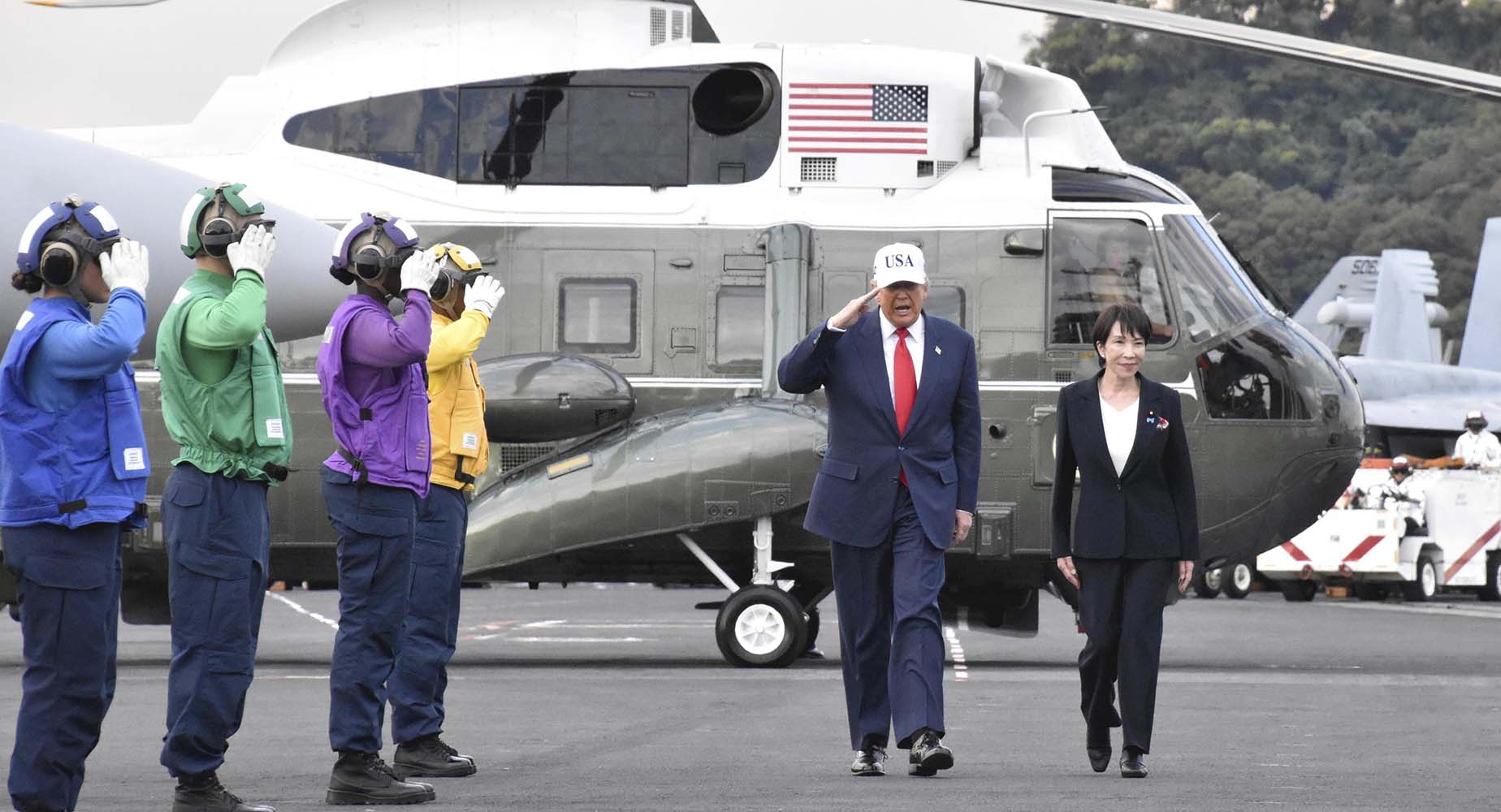
Japanese Prime Minister Sanae Takaichi took a calculated gamble to call for elections only four months into her tenure. The Liberal Democratic Party was in deep trouble with the Japanese electorate. While LDP objectionable behavior seems modest compared to European or US values, it represented an arrogance by the LDP that deeply offended Japanese voters. So, Takaichi-sensei’s snap election was a risky gamble. But she sensed the electorate wanted strong leadership. She stood up to China’s crude pressure campaign, which Japanese voters hugely appreciated. She brought the LDP back to a towering leadership majority in the Lower House. It confirms that Japan is ready for a larger role in Asia.
Historically Japan focused on commercial opportunity and diplomacy to engage Asia. Japanese politicians were happy to stand in the shadow of America’s military posture. This started to change in the second Abe Administration. Abe charted a course to create new administrative structures for national security. When China reacted with harsh military demonstrations of missilry after the Nancy Pelosi delegation visited Taipei, it reinforced the view that Japan must invest more in its military and take a larger role in the region. China’s inept handling of Takaichi’s comments about a cross-strait’s crisis reinforced the view that Japan must focus on building a stronger military.
This is most welcome. Chinese security experts believe (and US Asian allies worry) that America is in strategic decline in the Pacific. The Trump Administration’s national security strategy is troublingly ambivalent about China as a threat. The strategy expresses formulaic expressions demanding more military investment by allies. But there is no clear vision or understanding of the threat posed by China to America’s security interests and the imperative for tangible actions in the Asia-Pacific region.
Our leading Asian partners—Japan, South Korea, Australia—see this. These countries want the US to maintain its security presence in Asia. They see the US as an essential counterweight to Chinese intimidation. To be a stronger partner to the US, each of these countries is making long-term commitments modernizing their security forces. They want America to remain an active and leading security partner in the Asia Pacific. But they see the lack of consensus within the US political establishment over national goals and purposes. They read an ambiguous national security strategy with no clear vision about Asia. They see the massive accumulating financial deficits and the fact that debt servicing today exceeds spending on national security in the US.
None of our security partners in the region have the depth to substitute for the United States as a security guarantor for the region. Herein lies the dilemma. Each is actively working to engage an ongoing US role in the region. Each partner country wants continued American military presence. Each country is making major investments in national security, in part to reassure America that they are committed to their own defense but also preparing for the possibility that the US will not stand up on their behalf to Chinese intimidation. Each is concerned that America lacks the political will in the long term to deter Chinese pressure. Each knows they have no option other than hoping the US will be there in a time of crisis.
The very strong support for Prime Minister Takaichi is therefore most welcome. She has been strong in standing up to the Chinese, but if the situation tips to confrontation, fortunately she has built a trustworthy relationship with President Trump. America is still the essential security power in the region and that should prove to be constructive in a crisis.
But this speaks to the near term. The longer-term situation is far more clouded. America’s military is indeed strong and creative, as seen in the recent activities in Venezuela. But how strong can America be when it runs fiscal deficits of 7% a year, when politicians lack the will to address the looming crisis of insolvency for the Social Security system, when the Congress is balanced precariously on 2-3 votes with every difficult problem.
America once had a clear vision of its long-term security interests. We had a clear vision of the threat posed to our interests. We had a clear vision that was shared by our partners in Asia and in Europe. We understood the crucial role our allies played in constructing a fabric of mutual reassurance to resist Chinese and Russian intimidation. Our allies made themselves vulnerable by hosting US forces. Their countries would incur the destruction if war came. But it was worth the risk to have America as a steady guarantor of security and peace. And it was hugely beneficial for the US to have them as security partners.
These former certainties are now in question. This heightens the value of Japan’s evolution to a stronger and more focused security commitment. We are fortunate indeed that Takaichi won such a convincing election. But we need to see in this election the essential underlying dynamics. China is intent on dominating Asia. Our allies want to resist that. America is essential for this effort. For the foreseeable future, America will remain the essential security partner in Asia. We need a more thoughtful debate to reaffirm our commitment to a free and prosperous Asia.