Demography may not be destiny, but gradually—and unforgivingly—it does alter the realm of the possible in the world arena. One of the most important geostrategic consequences of current global demographic trends is playing out now in China, where depopulation is tightening the constraints on “China’s rise”.
An astonishing and generally unexpected birth crash is now underway in the PRC. It has already pushed China into population decline, and depopulation there stands only to accelerate over the coming generation. Tomorrow’s impending demographic realities, already visible today, will require us to revisit the now-familiar “China’s rise” narrative. Given the rapid aging and shrinking of the country’s population—by now inevitable—in the decades immediately ahead, this may not turn out to be the “Chinese century”, after all.
For thirty-five years—from 1980 through 2015—the Chinese state and the CCP that commands it enforced a harsh and coercive “One Child Policy” on the Chinese people. By the early 1990s, China’s fertility had fallen below the replacement level; two decades later, the Party concluded the country’s birth rates were actually too low. But when authorities finally suspended the program (note that population control was never actually scrapped: Beijing still insists that “births are a matter of state”) an amazing thing happened.
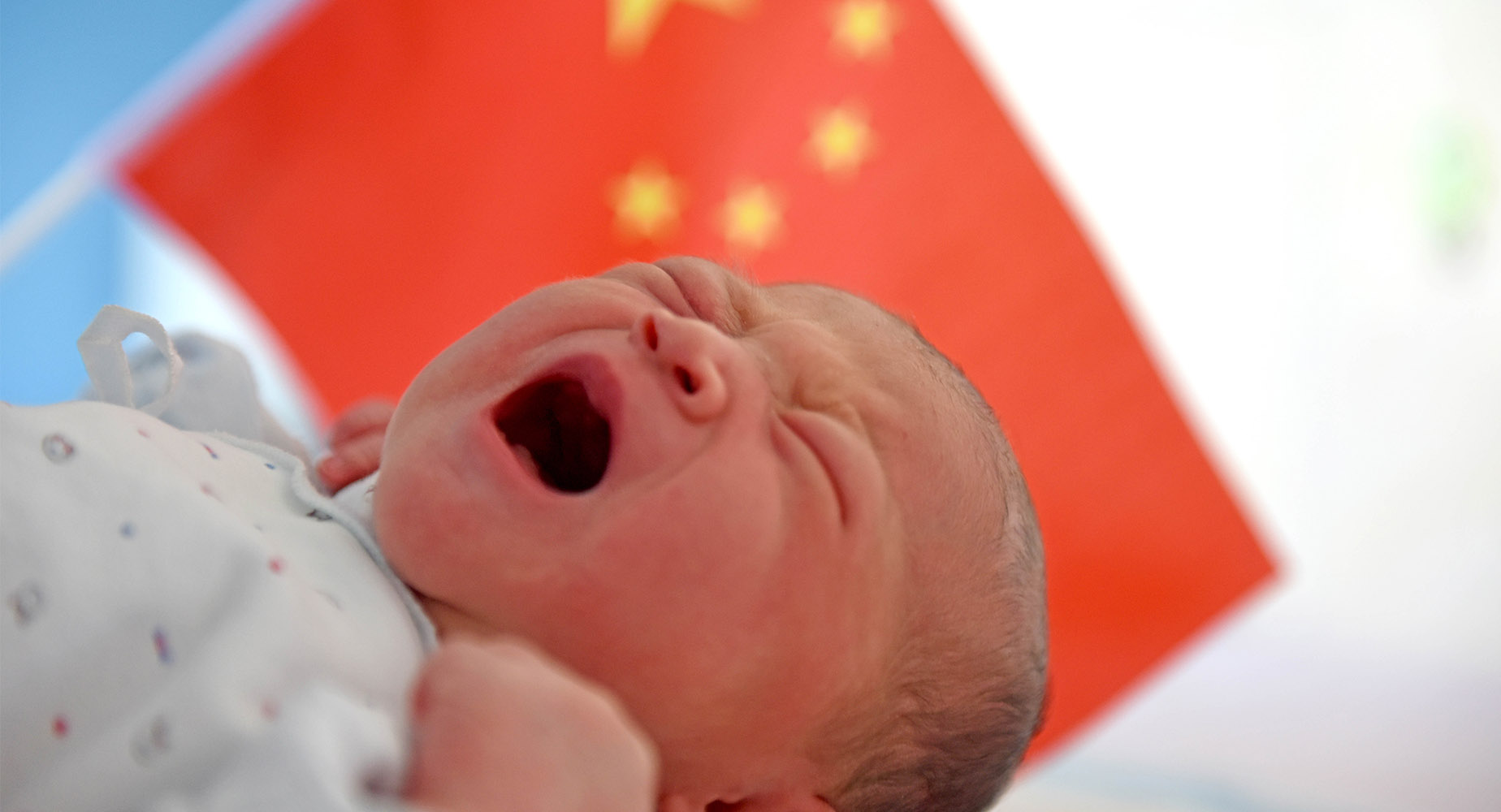
After a slight uptick in reported births in 2016, China’s fertility levels careened into a full-blown plunge. By 2023, China’s birth level was reportedly less than half as high as it had been just six years earlier (18.3 million in 2016 vs. 8.9 million in 2023).
That sort of sudden, brutal decline is almost never seen in modern societies during times of orderly progress—rather, it tends to be characteristic of disaster, of reverberations from famine, pestilence, or wartime upheaval. Since it cannot be explained by obvious crisis, China’s recent “birth shock” may instead possibly speak to some radical shift in popular sentiment: perhaps a sharp swing away from optimism and into deep pessimism.
And the amazing PRC birth drop has not yet stopped. Last month Chinese authorities reported that the national birth level in 2025 fell below the 8 million mark (to 7.92 million births).
To put that number in perspective: it is barely two fifths of China’s birth total just nine years earlier. Further: China likely has not had such a low annual birth count since the 18th Century. And for a country of roughly 1.4 billion people, the 2025 birth total implies that China was almost 60 percent below the childbearing level needed for long term population stability as of 2025. If China were to maintain that 2025 birth pattern, there would be only 43 future daughters—and 18 future grand-daughters—for every 100 Chinese women of childbearing age today.
Thanks to this unexpected birth crash, China entered into population decline in the year 2021, joining the “net-mortality club” of societies where deaths outnumber births. The gap between deaths and births has steadily widened since then, and the country’s population decline correspondingly accelerated.
Even before the latest stunning birth drop, the UN Population Division was projecting that China would be tallying over 2.3 deaths for every live birth by the year 2050, and that total population would fall by over 150 million between then and now. Given the continuing birth slump, the gap between deaths and births in China could prove to be even wider, and the population drop even more steep.
And this is just the overall “headcount” sounding. If we dig down, the implications look all the more unforgiving.
With less than half as many babies in 2025 as in 2016, China’s working age manpower is set on a crash course in the generation ahead: we can see this already, and there is very little Beijing can do to alter that trajectory. China’s 15-64 group peaked over a decade ago, but has only shrunk by about 1 percent since then. Now it is on track to drop by a quarter—perhaps even more—by 2050: that works out to a shrinkage in working age manpower of roughly a quarter billion men and women over the coming generation.
The 18-23 contingent—from whose ranks the PLA will draw its future recruits—stands to be less than half as large in 2050 as today. Indeed: by 2049—the 100th anniversary of its Communist Revolution—China may have fewer young men of military age than at the time of the 1949 “Liberation”.
And super-low fertility means that China will be going gray at an extraordinary tempo. Given that the overwhelming majority of Chinese who will be living in 2025 have already been born, there is relatively little surmise in these projections. By 2050, China’s median age is on track to hit 52 years. No country in history has ever been that gray—yet. That same year, nearly one in three in China will be 65 or older. One in ten will be over 80 by then, as well.
On their very face, these demographic trends all stand to compromise China’s economic performance, and to complicate Beijing’s quest to augment deployable international power. But things look even more serious when we consider what sustained super-low fertility means for China’s family structure.
With the rise of China’s “new family type”—only children begetting only children—we will be entering a Chinese future in which a growing proportion of the rising generations will lack not only siblings, but also cousins, aunts and uncles. The withering away of China’s extended family networks—the people’s only reliable social safety net since the dawn of Chinese civilization—will surely have profound and far-reaching implications, few of them beneficial. And an only-child PLA also begs the question of casualty tolerance in any future international adventures the CCP may wish to contemplate.
To be sure: Beijing will try to compensate for these demographic headwinds, and it does have some potentially valuable options at hand. These include bulking up on popular education and training, going all-in on AI and robotics, and doubling down on other R&D efforts.
But the world is a moving target, and these same options will (at least potentially) be available to competitors, including the USA, that do not face the same severe demographic dilemmas.
Not so long ago, received wisdom held that it was only a matter of time before the Chinese economy surpassed America’s. Today growing numbers of observers doubt that crossover will ever take place. To be sure: with nuclear weapons and the world’s second largest economy (and population) for the foreseeable future, China is all but guaranteed a major role on the world stage. But demographic trends may have helped deny Beijing its shot at global primacy.