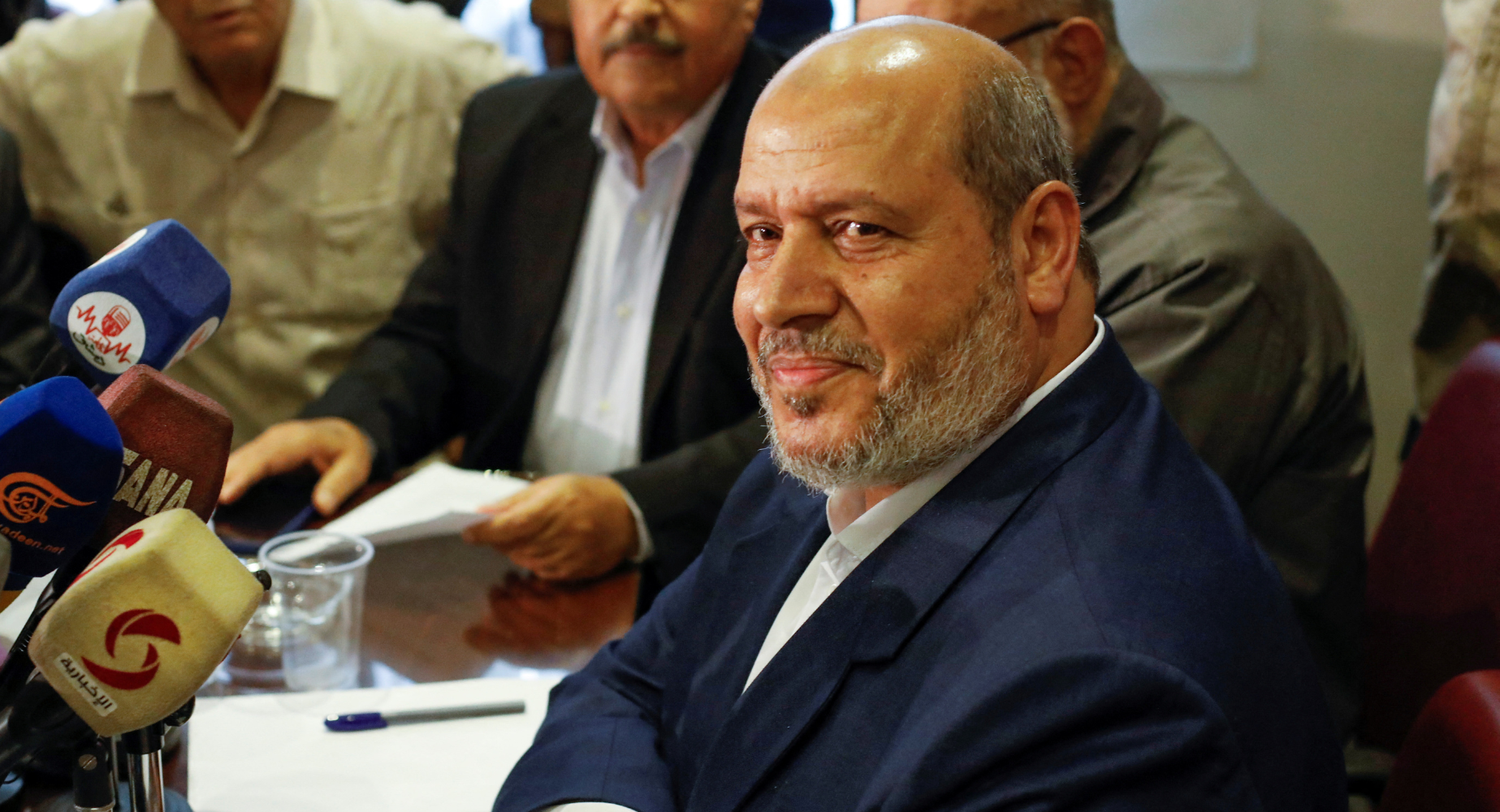
According to Israeli military assessments, Hamas currently has no single figure currently holding the entire apparatus together. Israel’s elimination of the top tier has left a vacuum that the external leadership is rushing to fill.
Hamas is in the final stages of an election process to select replacements for both Yahya Sinwar, the late head of the political bureau in Gaza, and Ismail Haniyeh, the late head of the overseas political bureau. Both were eliminated by Israel during the war – Sinwar in Gaza in October 2024 and Haniyeh in Tehran in July 2024.
In Gaza, nearly all of Hamas’s brigade commanders were killed in northern, central, and southern Gaza, with the exception of Izz-a-Din al-Haddad, former Gaza City Brigade commander who is now head of the military wing in the Strip. Israel estimates that more than half of the original Hamas terror army in Gaza was killed in action, with more injured or captured.
With Yahya Sinwar, his brother and successor Muhammad Sinwar, Muhammad Deif (former head of the military wing), and Marwan Issa (Deif’s deputy) all dead, the “Gaza veto”—the ability of the military wing to dictate terms to the political leadership abroad—has been severely weakened. Hamas’s overseas leadership, based in Qatar, remains mostly intact despite the September 2025 Israeli strike targeting senior Hamas leaders in Doha.
Regarding Phase Two of the Trump 20-Point plan, codified in UN Security Council Resolution 2803, a stalemate persists because Hamas refuses to demilitarize, blocking the entry of any international alternative security force.
The Candidates
The upcoming elections, originally scheduled for the first ten days of January 2026, were postponed owing to Hamas’s participation in talks for Phase Two of the Trump 20-Point Plan, according to a report by Asharq Al-Awsat.
The Shura Council, the group’s secretive consultative body, has been convened to adjudicate between competing factions, primarily split between an Iranian-aligned group and a Qatar – Turkey one.
The leading candidate for the top position is Khalil al-Hayya, currently the deputy chairman of the political bureau in Gaza, though he operates out of Qatar. He is favored by the Iranian axis and the remnants of the military wing. He was a close confidant of Sinwar and supports a continued jihadist armed struggle model that relies on Tehran’s financial and military backing.
Opposing him is Khalid Mash’al, the current head of the overseas office, who represents a faction more aligned with pro-Islamist states like Qatar and Turkey and is reportedly open to a negotiated truce as a tactic to try and get Israel to withdraw from the roughly 50 percent of Gaza that it currently controls.
Muhammad Darwish (Abu Omar Hassan), the current head of the General Shura Council and the temporary head of the Leadership Council, with ties to both Iran and Turkey, has emerged as potential compromise candidate, though one that is less popular. Darwish is a shadowy figure who has historically managed Hamas’s immense investment portfolio. His candidacy is bolstered by his control over the organization’s purse strings and his role as the interim chair of the joint leadership council formed after Haniyeh’s death.
Another key power broker in the current restructuring is Zaher Jabarin, who holds the West Bank file and manages the organization’s finance bureau. Jabarin, who was also released in the 2011 Gilad Shalit deal, operates from Turkey and has been instrumental in laundering money for terrorist operations in the West Bank and Gaza. His influence has grown as the Gaza Strip’s local economy has collapsed, making external funding streams critical for the survival of the movement’s remaining infrastructure.
A fifth key figure in the leadership mix is the Doha-based Nizar Awadallah, a veteran member of the Gaza Political Bureau who previously challenged Sinwar for leadership and represents the internal Gaza establishment that is distinct from the military wing.
The current chief of the military wing in Gaza and surviving brigade commander, ‘Izz al-Din al-Haddad, is reportedly focused on basic survival and stabilizing the ranks rather than projecting political power.
The interim political head in Gaza is ‘Ali al-’Amoudi, a former head of Hamas’s media apparatus and Sinwar ally who was released in the 2011 prisoner deal, swapping one Israeli soldier (Gilad Shalit) for over 1,000 Palestinian security prisoners. Asharq Al-Awsat reported that al-’Amoudi effectively took over the political bureau’s work in Gaza, stabilizing Hamas’s leadership, together with Tawfiq Abu Naim, a senior Hamas internal security forces member and another Sinwar ally.
With the Gaza leadership decimated and its military command and control gone, the balance of power appears to have shifted to the external leadership. Furthermore, the inability of the Gaza leadership to physically meet or communicate securely has forced the Shura Council deliberations to take place abroad.
The Hamas Strategy in Gaza
According to Israeli military sources, Hamas’s current operational priority is not large-scale military offensives, but rather the preservation of its administrative and political control over the civilian population. This “civil governance” strategy aims to prove to the Palestinian population that it remains the sole political powerbroker in the Strip – an effort bolstered by frequent brutal street executions of any suspected rivals, opponents, or dissidents in Gaza.
The organization seeks to wait out the Israeli military presence, using its control over the civilian sphere and the local tax-supported government to survive until international pressure forces an Israeli withdrawal.
Hamas suppresses attempts by local clans or alternative factions to distribute aid independently, ensuring that all resources flow through its checkpoints and administrative organs. This control over the “stomach” of Gaza allows the external political leadership to maintain leverage in negotiations, despite the loss of military assets.
Hamas bolsters this strategy by collecting taxes on commercial goods entering Gaza, capitalizing on the flow of “dual-use” items and private trucks to generate revenue. Reports indicate that Hamas has generated over 200 million shekels (approximately $66 million) in tax revenue since recent ceasefire arrangements began, levying fees of up to 50,000 shekels per truck.
Hamas security forces in Gaza supervise market prices and distribution, signaling to both the local population and the international community that no alternative governing body can function without its consent.
In terms of military strategy, Hamas is recruiting new troops in Gaza, using Iranian funds and money raised internally from taxing international humanitarian organizations who import aid, and selling stolen humanitarian aid in Gaza’s markets.
The disconnect between the military reality on the ground and the political maneuvering abroad is creating friction within the movement. The Gaza faction, now led by mid-level commanders like al-Haddad and political caretakers like ‘Ali al-’Amoudi and Tawfiq Abu Naim, operate under extreme duress and logistical isolation.
These figures are tasked with the job of rebuilding the al-Qassam Brigades (the military wing), despite being surrounded on all sides by the IDF, including being cut off from smuggling routes from Sinai, while simultaneously deferring to a leadership in Doha that is insulated from the immediate physical danger.
Israeli Military Tactics
Meanwhile, on the ground, the Israeli military has adopted a policy of striking any attempt at Hamas military rehabilitation, such as the assassination of senior Hamas military operational commander Raad Saad in December 2025, a key architect in building the elite Nukhba force and its death squads that raided southern Israel on October 7, to prevent the military wing from reorganizing into a coherent threat.
Israeli forces are currently preparing the ground in areas like Khan Yunis and Rafah, clearing rubble and removing unexploded ordnance, to allow for the future construction of alternative urban centers managed by international entities.
Conclusion
If Khalil al-Hayya wins the upcoming elections, this would consolidate the Iranian grip on the organization and likely signals a continuation of a military strategy of attrition, relying on the “Unity of Fields” concept where Gaza is just one front in a broader Iranian-led conflict.
If a compromise candidate like Darwish is selected, it may indicate a desire to focus on rebuilding the organization’s shattered financial and administrative networks rather than immediate military confrontation.
Regardless of the outcome, civilians within the Strip are moving back into Hamas-controlled zones not out of ideological support, but because Hamas’s administrative apparatus, however degraded, remains more capable of organizing basic life and rebuilding infrastructure than the Israeli military government in the Israeli-controlled zones.
Hamas’s ability to levy taxes and police markets is more critical to its survival at this time than its ability to launch rockets. Israeli military sources acknowledge this dynamic, noting that Hamas is “terribly trying to preserve its status as sovereign” by signaling to the population that “you will not have anything better than us.”