The abduction of Ukrainian children has become one of the most horrific aspects of Russia’s war against Ukraine. Both Congress and the administration have unequivocally condemned this crime and are working to bring the 20,000 stolen children home. Yet the U.S. Treasury Department’s most recent easing of sanctions on Russian oil may undermine the good work done on the issue by Congress and First Lady Melania Trump.
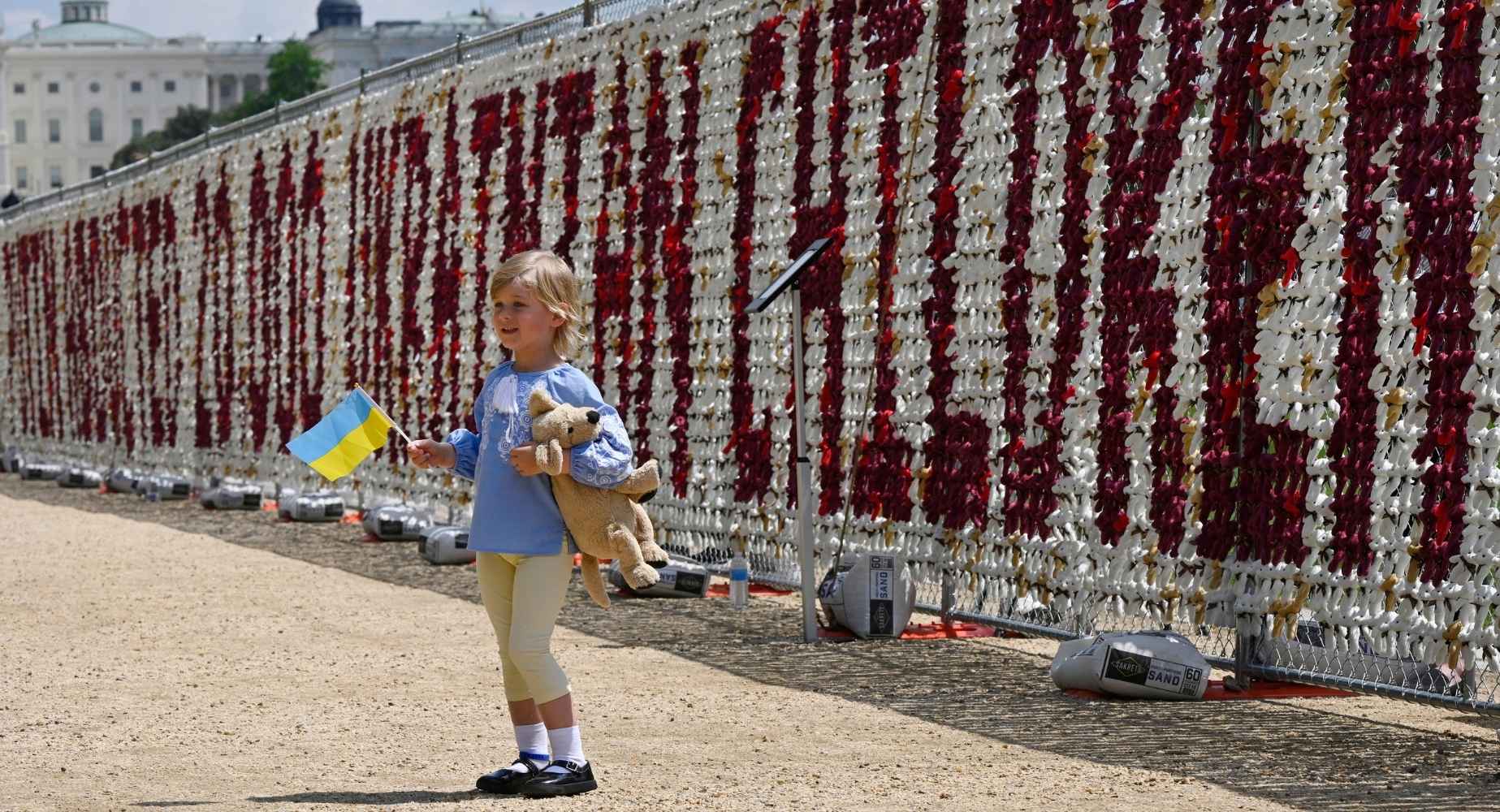
On April 23, the National Mall in Washington, D.C., witnessed a heartbreaking scene: a massive installation of 20,000 teddy bears, each one representing a known Ukrainian child abducted by Russia, spelled out, “Putin abducted 20,000 Ukrainian children. Bring kids back.”
My organization, Razom for Ukraine, chose the location deliberately. We wanted America’s decision-makers to see and feel the presence of these stolen children as they shape U.S. policy toward Russia and Ukraine.
That display came at a moment when Washington is sending dangerously mixed signals. On one hand, First Lady Melania Trump has been personally engaged in efforts to return abducted Ukrainian children, with Congress and the State Department funding rehabilitation efforts. On the other hand, the Treasury Department has eased pressure on Russia’s energy sector by waiving sanctions and temporarily permitting the sale of Russian oil – again.
These two issues may seem unrelated, but in reality, they are interconnected.
Recent findings by Yale University’s Humanitarian Research Lab confirm that Russian energy giants Gazprom and Rosneft have been involved in the illegal transfer and “re-education” of Ukrainian children. Researchers identified at least 2,158 children who were taken to six camps owned or supported by these Russian energy companies or their subsidiaries. That number is only the tip of the iceberg. Their role goes much further.
Russia’s system of child abduction and indoctrination is funded by Russia’s federal budget and the oil and gas industries are the top contributors to it. In 2026, the Kremlin allocated more than $1 billion in federal funding for its so-called “youth policy.” Compared with pre-invasion spending, the 2026 budget is 80% higher and reflects the Kremlin’s priorities.
A large portion of the “youth policy” budget goes to paramilitary and “patriotic” organizations that brainwash and militarize Russian, and now Ukrainian, kids. Investigators have found that 388,000 Ukrainian children under Russian occupation have already been enrolled in Yunarmiya (Youth-Army) and the Movement of the First, which are notorious state-backed youth organizations sanctioned by the United States and Europe.
Russia intentionally steals Ukrainian children and is attempting to turn Ukrainian boys and girls into loyal subjects — and eventually soldiers — of the Russian regime.
Ukraine has been fighting to bring its children home. More than 2,000 children have been returned. First Lady Melania Trump has gotten involved. She has a direct line of communication to Russian President Vladimir Putin. Her quiet but persistent work has led to the release of 26 Ukrainian children, some of whom were kidnapped before age five and spent years separated from their mothers.
Melania’s efforts send a clear message to the Kremlin and to the world: America stands with Ukraine’s abducted children, and we are committed to their safe return.
That kind of diplomacy demands a coordinated approach and strong political leverage.
But while the First Lady has been engaged in high-stakes negotiations with one of the world’s most ruthless dictators, the Treasury Department has given him breathing room by easing sanctions on Russia’s most profitable industry.
With oil prices surging amid the war with Iran, lifting pressure on Russian oil helps Moscow make an estimated additional $150 million per day — or roughly $4.5 billion per month. The United States cannot simultaneously save children and indirectly enable a system that kidnaps them.
No matter how hard Mrs. Trump works, her efforts will be undermined if the Kremlin remains financially capable of continuing its kidnapping campaign. Putin will continue to treat child returns as a bargaining chip.
US policy toward Russia and Ukraine must be coordinated, consistent, and rooted in strength.
If we stand with abducted children, US policy must pressure the Kremlin in every conversation to return the kids, cut off Putin’s ability to abduct and indoctrinate more children, and give the First Lady the leverage she needs to negotiate from a position of strength.
On May 18, the Treasury waived the sanctions on Russian crude oil again. If the Treasury continues to pursue this policy, Russia is estimated to earn $36 billion or 2.1% of its GDP by the end of 2026. This will not only allow Moscow to steal more children, but will also enable the Kremlin to continue bombing Ukraine and terrorizing those children who managed to escape the Russian captivity and returned to Ukraine. The United States should restore full pressure on Russia’s energy sector and target the companies involved in the abduction and re-education of Ukrainian children.
Washington has to answer a simple question: whose side are we on? The answer should be just as simple. We are on the side of the children. And our policy should prove it.