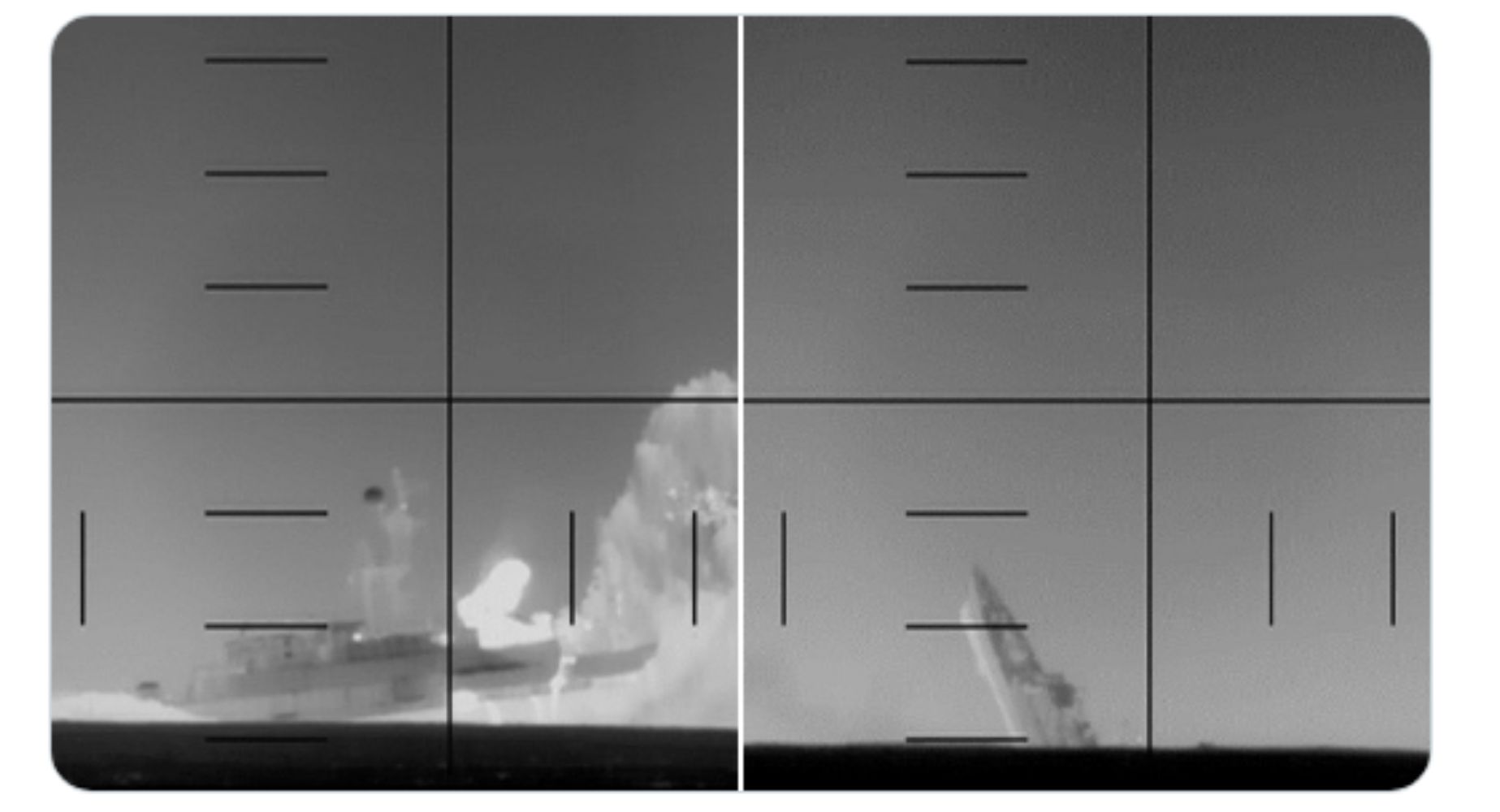
While the other fighting arms of the United States Navy, including naval aviation, the surface navy, and naval special warfare have been at war numerous times since the end of World War 2, the U.S. Navy submarine force has not actually been in recorded combat since 14 August 1945, when the Tench class submarine USS Torsk sank the Japanese Class C escort vessel (Kaibokan) Vessel #13, a ship whose ominous number indeed proved a fatal moniker. Since then, U.S. navy submarines have launched many missiles at targets ashore, but their torpedo tubes have been silent for eighty plus years. That changed on 04 March 2026 when an unidentified U.S. nuclear submarine torpedoed and sank the Iranian Navy frigate Dena, a ship not much bigger than Kaibokan #13, with a Mk48 antiship torpedo. There have been only four officially recorded sinkings by submarine since 1945, but when employed, underwater attacks had outsize effects on the actions of the opposing side’s navy and war effort. The use of a U.S. submarine in a direct antisurface action also sends a strong deterrence message in the present, not only to what’s left of the Iranian navy, but also to would-be adversaries such as Russia and China. U.S. submarines work as advertised and can strike without warning and with lethal results.
Each case of submarine attack since 1945 has generated outsize political effects. The 1971 sinking of the Indian frigate INS Khukri by the Pakistani submarine Hangor shocked the Indian navy and spurred it into greater action against its Pakistani opponent, resulting in its eventual defeat and loss of 1/3 of its fleet. The 1982 sinking of the Argentine cruiser General Belgrano by the British Royal Navy submarine HMS Conqueror was the first such combat action of a nuclear-powered submarine and caused the Argentine Navy to withdraw its navy from active participation in the Falklands war, easing the eventual British reconquest of those islands. Finally, the sinking of the South Korean Navy corvette Cheonon by an unidentified North Korean submarine nearly plunged those nations back into active conflict. The act did confirm the ongoing aggressive behavior of North Korea and demonstrated that its submarine fleet was capable of offensive action. The torpedoing and sinking of the Iranian frigate Dena equally sends a powerful message as did the three earlier sinkings in that Iranian ships are nowhere safe during that nation’s ongoing conflict with the United States and Israel. To paraphrase an old financial community commercial, “When submarines sink ships, nations listen.”
The other recipients of the message sent by the U.S. sinking of the Dena are U.S. competitors Russia and China. While the Russian surface fleet has been plagued by poor combat performance in the Black Sea its submarines have improved significantly since the end of the Cold War in terms of reliability and quiet operations. Expect to see continued Russian financial emphasis on their submarine force, likely at the expense of other arms of the Russian navy. China has already been building nuclear submarines at an advanced pace. China possesses sixty submarines of which 14 are nuclear powered. The capability of current and future Chinese submarines is uncertain, and likely not the equal of those fielded by Western states including the United States. That said, Soviet Cold War naval commander Admiral Sergei Gorshkov reputedly stated, “Quantity has a quality all its own,” and greater numbers of nuclear submarines would no doubt aid Chinese naval forces in accomplishing their wartime objectives.
Just as the sinking of the Israeli destroyer Eilat on 21 October 1967 focused the attention of world navies on the power and combat potential of cruise missile weapons, the sinking of Dena may prompt a return by navies to return to the kind of massive antisubmarine warfare exercises last seen in the waning years of the Cold War. A single nuclear submarine armed with torpedoes and cruise missiles is the modern equivalent of the famous German surface combatant raiders of the Second World War such as Bismarck, Scharnhorst and Graf Spee, but with exponentially greater stealth and combat capability, including strikes on land-based targets. During World War 2 it took dozens of warships to localize, engage and destroy these very capable surface ships. Finding and sinking a nuclear submarine is an even more wicked problem for naval forces, so expect to see them start practicing in earnest.
Armed conflict is always regrettable, but efforts to delimit Iran’s ability to build a nuclear weapon and continue to export violence through its vociferous network of terrorist proxies failed. Accordingly, Iranian leadership is experiencing first-hand the aftermath of their failure to anticipate the resolve of a determined America. That said, the images of the sinking of the Iranian ship Dena may now herald what many experts have been saying in regard to possible peer conflicts in the Indo-Pacific. Nuclear submarines are one of the crown jewels of American naval capability, and this event is a rare, but powerful example of what they can accomplished when deployed in combat.
To be clear, none of this is easy. Whether submerged or at periscope depth a submarine approach and attack is a sophisticated operation whereby a lot can go wrong. One should however remember the World War 2 U.S. navy torpedo crisis of 1941-1943 The U.S. Mk-14 torpedo’s magnetic exploder consistently failed early in the war, and multiple opportunities to sink Japanese aircraft carriers and critical Japanese logistics ships were lost. It finally took a direct complaint from legendary submarine commander Dudley “Mush” Morton to Pacific submarine commander Admiral Charles Lockwood, who already had doubts on the utility of the magnetic exploder. The results of the tests, and the intervention of fiery CNO Admiral Ernie King “lit a fire” under the Navy Bureau of Ordnance to fix the weapon by late 1943. Admiral Hyman G. Rickover later said, “Success teaches us nothing; only failure teaches,” and the U.S. Navy learned much about weapons testing from the failure of the Mk14 torpedo. Fortunately, in the case of the Dena, everything went right.
As the United States Navy did in the Red Sea against unprovoked Houthi aggression, it would be wise to take on board lessons from Operation Epic Fury in light of combat success. When our nuclear-powered submarines go to sea, shut the hatch, and dive the boat, we are always ready for war. We train, we run gun drills, and we challenge ourselves with sophisticated exercises in three dimensions at sea all the time. In this case, it paid off. The Dena was the flagship of the Iranian navy and it is now gone. The U.S. navy however must work to learn from combat against Dena and other Iranian targets, as we perfect our training, tactics, and procedures for future combat operations against potentially more powerful navies in the Western Pacific or the North Atlantic.
U.S. nuclear submarines are the best crewed examples of their type in the world, the legacy of nuclear navy founder Admiral Rickover’s endless drive for success. The U.S. has provided a small example of the fate that awaits other adversaries from our unseen deterrent under the sea. The U.S. Navy must also now keep the edge it possesses in nuclear submarine technology, and continue to learn from both success and failure. Welcome to the new century of submarine warfare.