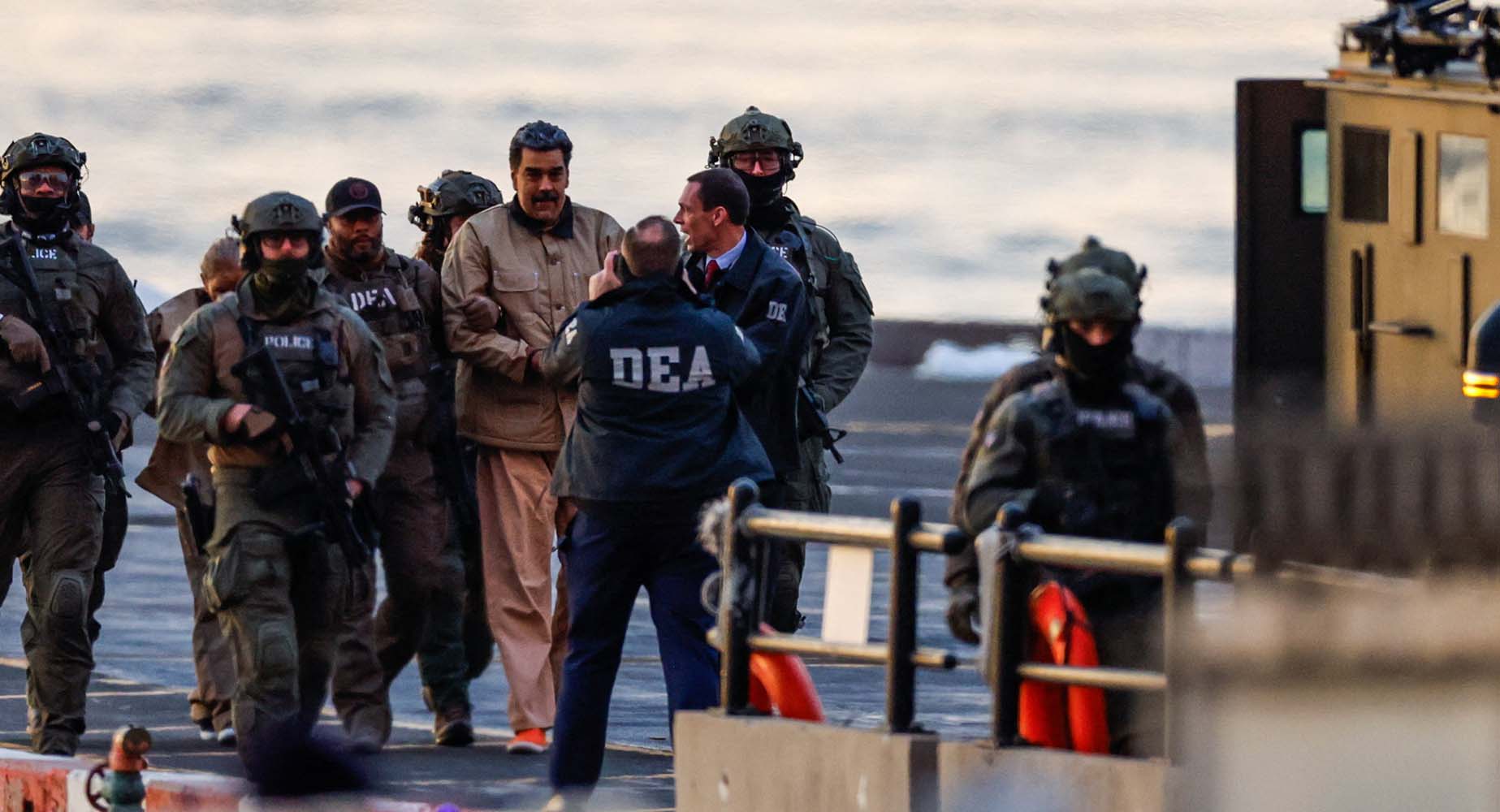
Making foreign policy is very often a compromise between supporting one’s values and securing one’s interests, between moral clarity and strategic realism. In removing Nicolas Maduro from power, Donald Trump was able to advance both American values and American interests.
Maduro, in the name of “twenty-first century socialism,” crushed press freedom and political opposition. Amnesty International reported widespread abuses including arbitrary detentions, torture and extra judicial killings. In 2024 the International Criminal Court began investigating crimes against humanity in Venezuela. While Maduro supported totalitarian regimes in Cuba and Nicaragua, hyperinflation, food shortages, and a collapse of public services drove millions to flee Venezuela.
Under economic pressure from the United States, Maduro held badly flawed elections in 2024. Opposition leader Maria Corina Machado was not allowed to run, although she did receive the Nobel Peace Prize. The true winner of the election, Edmundo Gonzalez, was forced into exile. Britain and the EU stated that Maduro was not the legitimate president of Venezuela. The Bank of England refused to transfer gold to his regime. No one should doubt that his arrest was aligned with values endorsed by the United Nations, specifically its 2005 adoption of the Responsibility to Protect against human rights abuses.
President Trump thus supported American values by removing a tyrant. He also defended American interests. There is absolutely no doubt that Maduro was involved in drug trafficking. His alliances with criminal networks, including the internationally designated terrorist organization Cartel de los Soles, transformed Venezuela into a hub for narco-terrorism facilitating drug flows that fuel violence and addiction in the United States. Neutralizing this threat was an act of self defense.
Venezuela has seized billions of dollars in assets from American oil companies without paying compensation. This was theft on a grand scale and very much at odds with accepted international law. Demonstrating that theft will not go unpunished is another American interest (and an affirmation of international law).
Since issuing the Monroe Doctrine in 1823, the United States has articulated a policy of preventing outside powers from establishing themselves in the Western Hemisphere. Initially aimed at France and Spain, today this policy targets Russia, China and Iran. But the Maduro regime invited them: Russia signed a defense treaty with Venezuela; China invests billions in infrastructure and buys discounted oil; Iran and its proxy Hizbullah act through the Lebanese Shi’ite expatriate community.
And then there are oil reserves. Economies and armies still run on oil. Venezuela has the world’s largest proven oil reserves and the United States is no more willing to let China dominate them than it was about to let Saddam Hussein threaten Saudi Arabia.
The world is retreating from a post-Cold War unipolar moment of American hegemony and returning to the more normal condition of competing power blocks. Toppling Maduro will have broad implications for many of the players in this game. Allies who depend on the United States should be encouraged by this successful operation. Like the strike on Iran’s nuclear facilities, it demonstrated Washington’s unique military prowess. After four years Russia has failed to remove Ukrainian President Zelensky. The United States removed Maduro in three hours with no loss of American life. Moscow and Beijing will take note.
As the Venezuelan oil industry recovers, global energy prices should fall. China will lose access tro discounted oil and influence in South America. Russia will see its importance to China increase as a reliable supplier of oil. Canada will become less important as a source of oil for the United States.
The biggest winner will be the Venezuelan people who now live in poverty despite their oil export potential. Saudi Arabia and Venezuela have similar sized populations, about 30 million people each. The Saudi oil-fueled economy produces per capita income of $35,000 while its Venezuelan counterpart provides only $4,500 per capita. With Maduro gone that should begin to change.
Trump has simply acted on threats identified by his predecessors. The Obama administration declared Maduro a national security threat in 2015. The Biden administration issued warrants for Maduro’s arrest, refused to recognize his legitimacy, placed a 25 million dollar bounty on his head and allowed 600,000 Venezuelans to enter the United States because their nation was deemed unsafe.
Ultimately, a legally indicted narco-criminal, widely regarded as an illegitimate ruler, was arrested. At the same time, American hegemony in the Western Hemisphere was reasserted and the deterrent effect of American military power reinforced. Global energy supplies will increase and the rule of law against illegal expropriation will be strengthened. Perhaps most importantly, eight million Venezuelan refugees will have a chance to return home to a freer and more prosperous country.