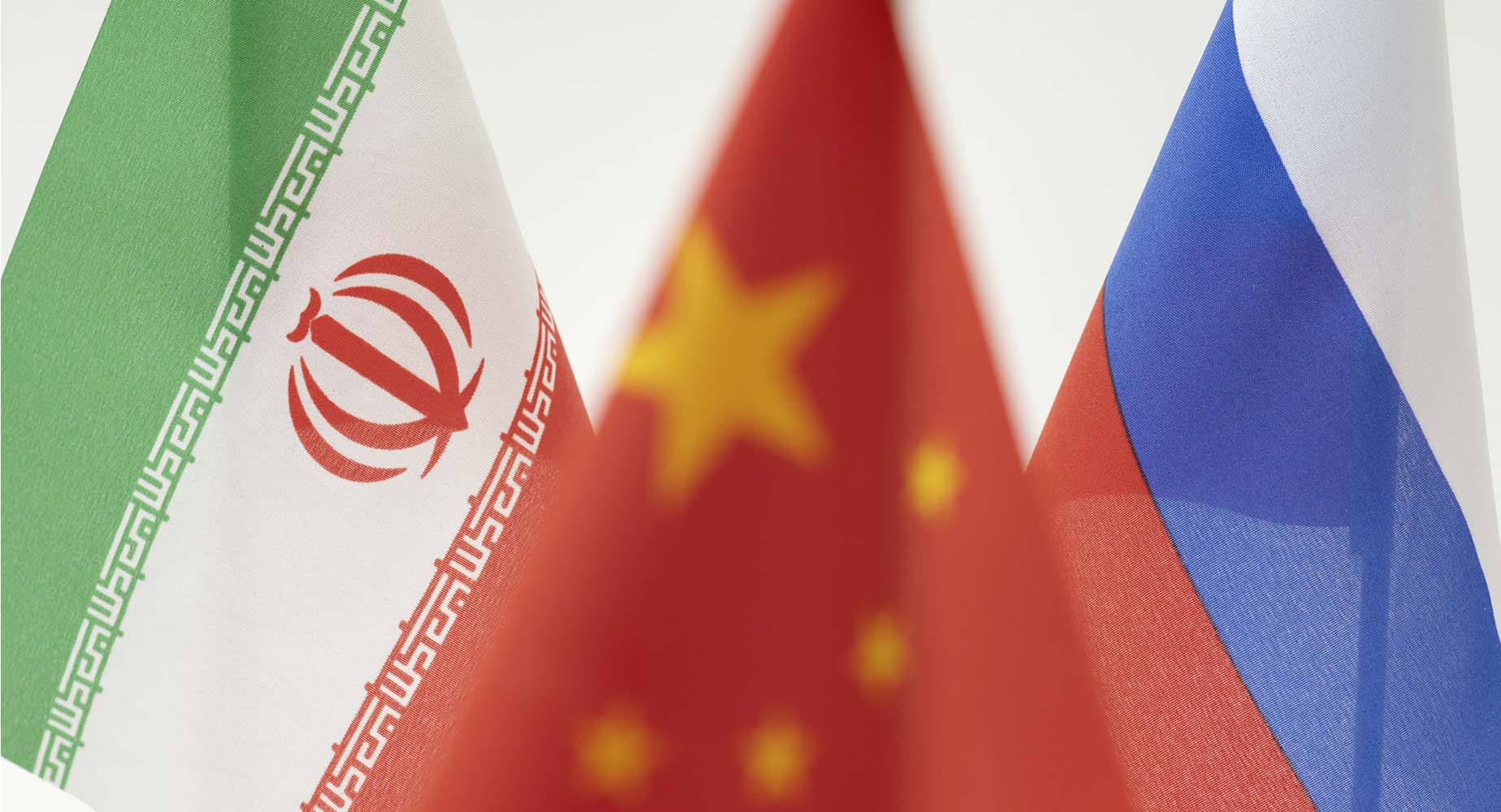
For almost five decades, the Islamic Republic of Iran has survived sustained American pressure not through strength, legitimacy, or economic resilience, but through strategic utility. Tehran has learned to convert asymmetric tools—hostage diplomacy, proxy warfare, and ideological export—into leverage within a shifting global order.
Unfortunately, Washington has treated Tehran as a self-contained Middle Eastern problem rather than as a functional node within the China–Russia strategic ecosystem. Simultaneously, it has misunderstood the internal Iranian political landscape, neglecting to recognize credible democratic leadership capable of anchoring a post-Islamic Republic transition—most notably Reza Pahlavi—while oscillating between coercion and accommodation without a coherent endgame.
Recent iterations of “maximum pressure,” including renewed sanctions, military signaling, and limited strikes, have generated tactical disruption but no strategic resolution. Iran adapts, its patrons compensate, and U.S. leverage dissipates. The result is neither behavioral moderation nor regime change, but managed persistence—an outcome that accelerates the erosion of American global might.
No doubt Iran is not the principal challenger to U.S. power. That role falls to China. Russia is the enabling spoiler. Meanwhile, Iran functions as a strategic instrument—a low-cost, high-disruption asset that absorbs American attention, resources, and political bandwidth. Beijing’s priority is to stretch U.S. commitments horizontally rather than confront it symmetrically. Iran serves this purpose well. Moscow has integrated Iranian capabilities—drones, trainers, militias—into its own peripheral theaters, particularly in Africa.
For Iran, hostage-taking is not episodic misconduct; it is foundational statecraft. Since 1979, the Islamic Republic has used detained foreign nationals—particularly Americans—as coercive bargaining chips. According to assessments by the James Martin Center for Nonproliferation Studies, the number of U.S. citizens currently detained or unaccounted for exceeds publicly acknowledged figures. The strategic logic is simple: hostages generate leverage at a negligible cost. This model persists because it works.
The Globalization of the Proxy Ecosystem: Iran’s proxy network is no longer regionally bounded. Consider Latin America. Hezbollah-linked financial and logistical cells are embedded in Venezuela and the Tri-Border Area, facilitating sanctions evasion and asymmetric reach. In Africa, Iranian-linked militias and advisors operate across the Sahel, exploiting governance vacuums while countering Western influence. Covert operations involving criminal intermediaries target dissidents and Israeli-linked sites, blending intelligence work with organized crime, as exposed in Europol and Swedish Security Service investigations. Then there is the United States. While operational penetration remains limited, threat assessments by the Department of Homeland Security note persistent IRGC-linked surveillance and intimidation activity. The strategic effect is not battlefield victory but strategic distraction. Iran does not seek escalation dominance; it seeks to complicate U.S. prioritization.
The revival of “maximum pressure” has produced measurable but limited effects. Sanctions enforcement disrupted oil revenue flows; targeted strikes and cyber operations delayed elements of the nuclear program; elite anxiety increased. Yet the strategic outcomes remain unchanged: Iran continues enrichment at adaptable timelines, as assessed by the International Atomic Energy Agency. Proxies retaliate asymmetrically, preserving escalation control. China absorbs sanctioned oil through shadow trade mechanisms detailed by S&P Global and Reuters Investigations. Russia provides selective military and technological support without formal commitments. Pressure without political strategy yields adaptation, not submission.
Four decades of sanctions, diplomacy, and deterrence have not altered the Islamic Republic’s core behaviors: ideological expansion, proxy warfare, hostage-taking, and nuclear brinkmanship. This persistence is not accidental. These behaviors are not deviations from regime identity; they are its operating system. U.S. policy has repeatedly mistaken tactics for leverage—treating negotiations, enrichment caps, or temporary de-escalations as evidence of strategic movement. They are not. Equally consequential is Washington’s failure on regime transformation—not because it pursued regime change too aggressively, but because it failed to recognize and engage the actual political actors capable of leading a democratic transition.
By refusing to distinguish between regime-sponsored “reformists,” exile opportunists, and credible national leadership, Washington has effectively ceded the political terrain. Iran absorbs pressure so China and Russia do not have to. It bleeds economically, but survives politically. It escalates just enough to distract, never enough to provoke decisive confrontation. This is the inversion of Cold War dynamics. Where the Soviet Union once bore the costs of proxy commitments, the contemporary revisionist bloc externalizes risk onto Iran. U.S. power is not defeated—it is diluted.
So far, the United States has pursued two illusions in Iran: that pressure would reform the regime, or that neglect would allow it to collapse on its own. Both have failed because Washington misidentified the problem and ignored the actors that matter. Iran endures not because it is strong, but because it is useful to America’s chief principal adversaries. Until U.S. strategy is reoriented toward denying that utility—and toward enabling a credible democratic alternative—the next decade will look much like the last, only in a more fragmented and multipolar world. If the first forty-six years were a lesson, the next ten will be a verdict.