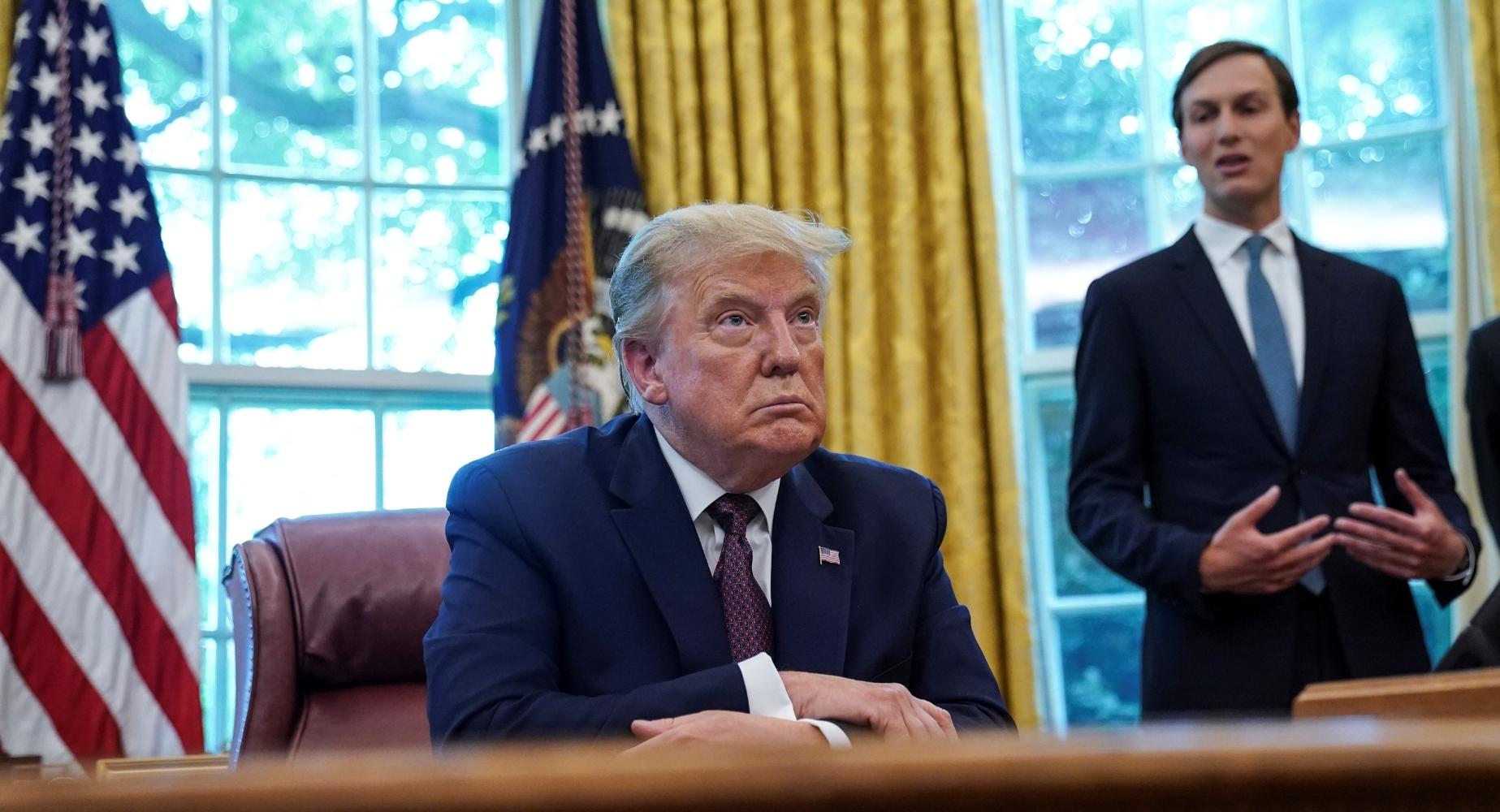
On his eightieth birthday, President Donald Trump announced what many in Washington, Jerusalem, Abu Dhabi, Manama, and beyond had been waiting to hear: the United States and the Islamic Republic of Iran had reached a framework aimed at ending a dangerous war, reopening the Strait of Hormuz, and beginning a new round of negotiations over Iran’s nuclear program.
This is good news. It should be welcomed. But it should not be romanticized.
No serious person in the Middle East is hungry for war. The people of the region—Israelis, Emiratis, Bahrainis, Kuwaitis, Lebanese, Yemenis, and above all the Iranian people themselves—have lived too long under the shadow of missiles, militias, intimidation, and ideological blackmail. They want security, dignity, prosperity, and a future for their children. They do not want another generation sacrificed to revolutionary fantasies or strategic miscalculations.
The real obstacle to peace has never been the Iranian nation. It is the regime that governs Iran against the will and aspirations of its own people—a regime that behaves less like a normal state than like a revolutionary-security cartel. Its power rests on repression at home and destabilization abroad. Its proxies have terrorized Israel, threatened Gulf stability, paralyzed Lebanon, devastated Yemen, and turned the Palestinian cause into an instrument of regional leverage rather than a path toward dignity and prosperity.
That is why this framework, if implemented seriously, represents an opportunity.
President Trump deserves credit for understanding something many traditional diplomats often miss: in the Middle East, diplomacy without leverage is rarely diplomacy; it is theater. His method has often been described by critics as transactional. Perhaps it is. But transactions can be useful when they produce results, and there is no virtue in elegant failure. If this framework stops the guns, reopens a vital artery of the global economy, reduces immediate risks to Israel and the Gulf, and creates a diplomatic window to address Iran’s nuclear program, then it is a meaningful achievement.
Now the central question is unavoidable: what happens next?
The answer will determine whether this becomes a strategic turning point or merely another pause before the next crisis.
The first principle must be clarity. Iran cannot be allowed to acquire a nuclear weapon—not under this framework, not after sixty days, not in five years, not through ambiguity, delay, concealment, or the gradual normalization of violations. The nuclear file cannot be postponed into irrelevance while sanctions relief, oil access, and frozen assets are granted upfront. Any serious diplomatic process must begin with verifiable commitments, intrusive inspections, a full accounting of enriched uranium stocks, and consequences that are automatic rather than rhetorical.
The second principle must be enforcement. An agreement with Tehran is not a contract with a normal government. It is an arrangement with a divided, opaque, militarized system in which diplomats may sign while commanders sabotage; presidents may speak while the Revolutionary Guard decides; moderates may promise while hard-liners prepare the next escalation.
This is not an abstract concern. Iran’s recent posture follows a familiar pattern: negotiate under pressure, demand relief, preserve leverage, and use regional proxies to complicate the battlefield. The Revolutionary Guard is the backbone of the regime’s coercive power at home and its projection of force abroad. Figures such as Ahmad Vahidi symbolize the problem. The West is not negotiating merely with foreign ministers and polished diplomats. It is negotiating with a security apparatus shaped by hostage-taking, proxy warfare, repression, missile programs, and ideological militancy.
That is why the framework must not be limited to the Strait of Hormuz and the nuclear file. It must also address the machinery of regional destabilization.
Iran’s ballistic missile and drone capabilities must be constrained. Its support for Hezbollah, the Houthis, Hamas, Islamic Jihad, and other armed groups must be cut, monitored, and penalized. Its financial networks, front companies, weapons transfers, training channels, and intelligence support to proxies must be exposed and dismantled.
If Tehran is allowed to trade temporary calm in the Gulf for continued proxy pressure in Lebanon, Gaza, Syria, Iraq, or Yemen, then the agreement will not bring peace. It will simply move the war from one front to another.
The third principle must be regional consultation. Israel has direct security concerns that cannot be dismissed as political inconvenience. The United Arab Emirates, Bahrain, and Kuwait live within missile range of Iranian power and within economic range of Iranian coercion. Lebanon and Yemen know the human cost of Iran’s imperial ambitions. Any serious American strategy must integrate the concerns of these states rather than ask them to trust a process designed elsewhere.
There is also a moral dimension Washington must not forget: the Iranian people.
The people of Iran are the first victims of the regime and the natural allies of any future peace. They have been beaten, imprisoned, censored, tortured, and killed for demanding the most basic rights: dignity, freedom, women’s rights, economic opportunity, and a normal life.
Washington need not make regime change the declared objective of this diplomacy. But America should not grant the regime legitimacy without conditions. Human rights must remain part of the architecture: internet freedom, political prisoners, women’s rights, the right to protest, and accountability for repression.
This is where President Trump should consider a bold political and economic complement to the security negotiations: entrust Jared Kushner with a parallel track focused on the future of the Iranian economy, but designed for the benefit of the Iranian people—not the enrichment of the regime.
Kushner’s achievement with the Abraham Accords was not merely that he helped negotiate documents; it was that he understood the strategic power of economic imagination in a region exhausted by ideology. The same logic should now be applied to Iran. Any sanctions relief, investment mechanism, infrastructure plan, or economic opening must be tied to transparency, private-sector development, young entrepreneurs, women, students, technology, and civil society—not to the Revolutionary Guard, not to the clerical establishment, and not to the regime’s networks of coercion.
Iran is a great civilization with a young, educated, creative population. It should be a bridge between Asia, the Gulf, the Caucasus, Europe, and the Mediterranean. It should be exporting talent, technology, culture, energy, and ideas—not fear, drones, militias, and repression. The purpose of diplomacy should not be to rescue the regime from the consequences of its own failures. It should be to ensure that the Iranian people, and not their jailers, become the ultimate beneficiaries of peace.
If this framework stops a war, it deserves support. If it prevents a nuclear Iran, it will deserve history’s praise. But if it allows the regime to recover, rearm, finance proxies, hide nuclear material, and repress its people with renewed confidence, then it will be remembered not as peace but as an intermission.
The Middle East does not need another illusion. It needs a disciplined peace—generous to the Iranian people, firm with the regime, and informed by the pragmatic regional logic that produced the Abraham Accords.
That is the test. And it begins now.