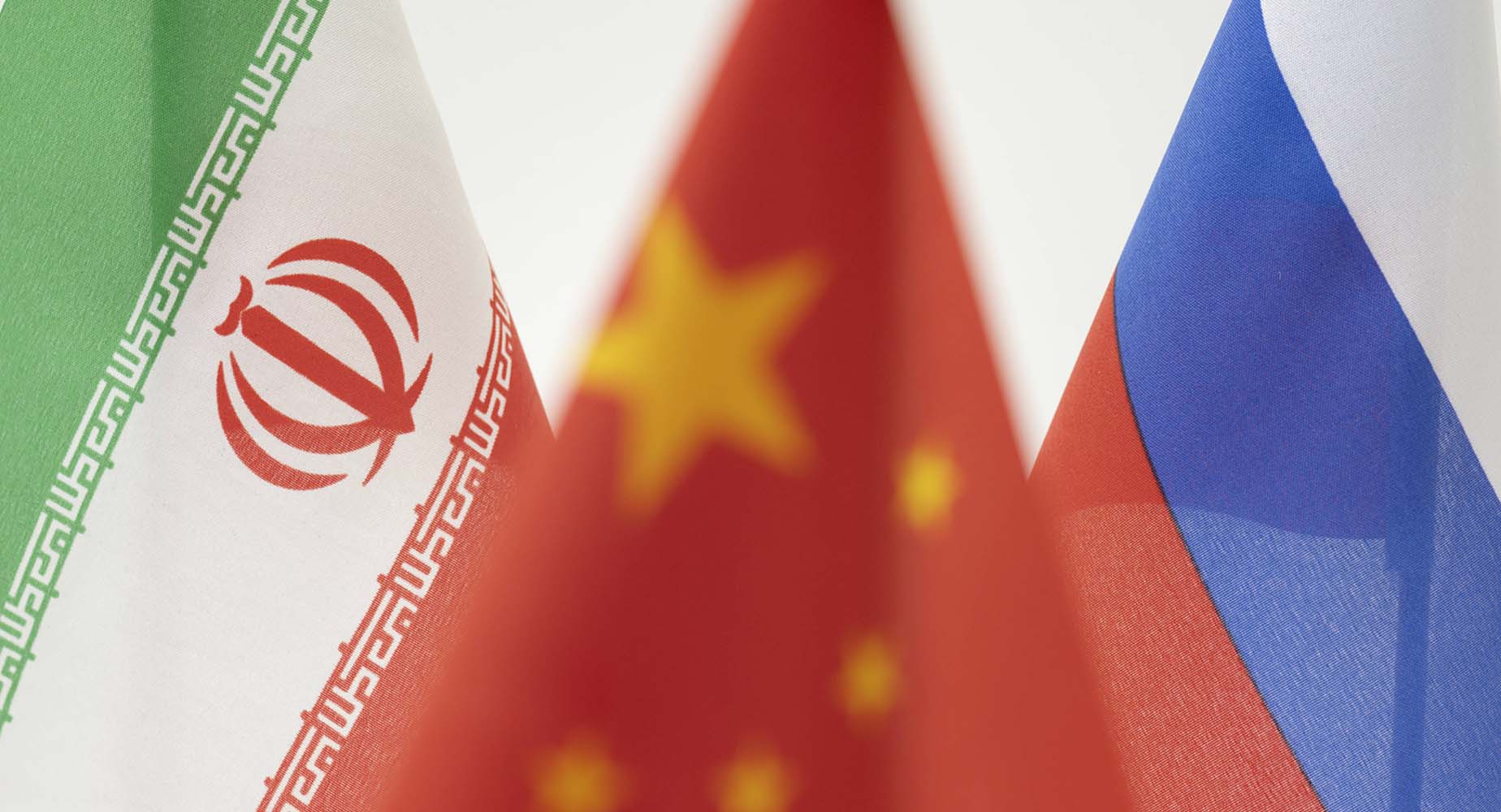
Ever since the Trump administration returned to office last year, a major foreign policy debate has raged inside the Washington Beltway. On one side are the foreign policy mavens who believe that the United States confronts a consolidated strategic partnership – an “axis of upheaval” uniting Russia, China, Iran, and other actors in a bloc that poses a fundamental challenge to the Western-led global order. On the other are those who believe that Russia’s war on Ukraine, China’s designs over Taiwan in the Indo-Pacific, and Iran’s troublemaking in the Middle East make up fundamentally different problems sets that should be addressed separately – or perhaps not at all.
Until recently, it was unclear which of these schools of thought most closely mirrored how President Trump himself views the world. Since the start of the year, however, it has become abundantly clear precisely which side of that debate the President stands on.
January’s military operation to remove Nicolas Maduro from power in Caracas effectively took an important supporting player of the “axis” off the board. In preceding years, Venezuela under Maduro – and before him Hugo Chavez – had become a gateway for Iranian penetration into the Americas and a beachhead for Iran’s principal terror proxy, Hezbollah. Caracas also built a strategic partnership with the Kremlin aimed at defying “ Western hegemony,” while deepening cooperation with China on everything from arms purchases to domestic repression.
Those activities, in turn, had played a big part in convincing the Trump administration Venezuela represented a regional threat that needed to be neutralized. Secretary of State Marco Rubio said as much when he subsequently told Meet the Press that the United States could no longer allow a nearby nation to become “a crossroads for the activities of our adversaries around the world.”
Now, the White House has set its sights on a charter member of the “axis”: the Islamic Republic of Iran. On February 28th, the Administration launched Operation Epic Fury, an aerial campaign aimed at the Iranian regime’s strategic programs and leadership structure. Officially, the effort, closely coordinated with Israel, isgeared toward “holding Iran accountable for its pursuit of nuclear capabilities, support for terrorism, ballistic missile development, and regional destabilization that endanger American security, allies, and interests.”
But the offensive has another purpose as well. It serves as a stress test for today’s anti-American axis. Iran, after all, represents a key part of that alignment.
With Russia, the Islamic Republic has forged a strategic alliance that has helped advance its nuclear ambitions, aided its military rearmament, and nurtured its terrorist proxies. In return, Iran has become a key enabler of Russia’s war on Ukraine, supplying the Kremlin with hundreds of suicide drones and the capabilities to make them. By doing so, Tehran has dramatically expanded Moscow’s ability to target Ukrainian population centers and helped to prolong the conflict.
China, meanwhile, has become a major engine of Iran’s economy, and a key stakeholder in the regime’s survival. Back in 2021, the two countries signed a sprawling, 25-year, $400 billion strategic cooperation accordthat gave the PRC preferential access to Iranian infrastructure projects, ports, and key sectors of its economy. Chinese firms have also helped the Iranian regime enhance its digital repression capabilities, providing surveillance technologies that have allowed authorities to better track and silence domestic opposition.
But those partnerships are proving to be less durable than many observers assumed. With Iran’s regime now facing massive military pressure, Beijing appears to have backed away from its Mideast partner, confining itself to diplomatic demarches and dispatching a new regional envoy to attempt political mediation. Moscow has done more of substance. The Washington Post reports that Russia has started providing intelligence to Tehran to assist Iran’s targeting of American warships and aircraft. In practice, however, strategic caution and competing geopolitical priorities are bound to limit how much either country is willing to risk in order to save their strategic partner.
In the process, they are revealing an important truth: the strategic bonds linking these nations are more brittle than commonly believed.
Today, the United States is facing a convergence of adversaries cooperating across multiple domains in a shared effort to remake the global order. Explaining how his Iran campaign is part of a larger effort to dismantle this ominous axis might be the most compelling justification President Trump can provide to Congress and the American people about why the current conflict is both necessary and prudent.