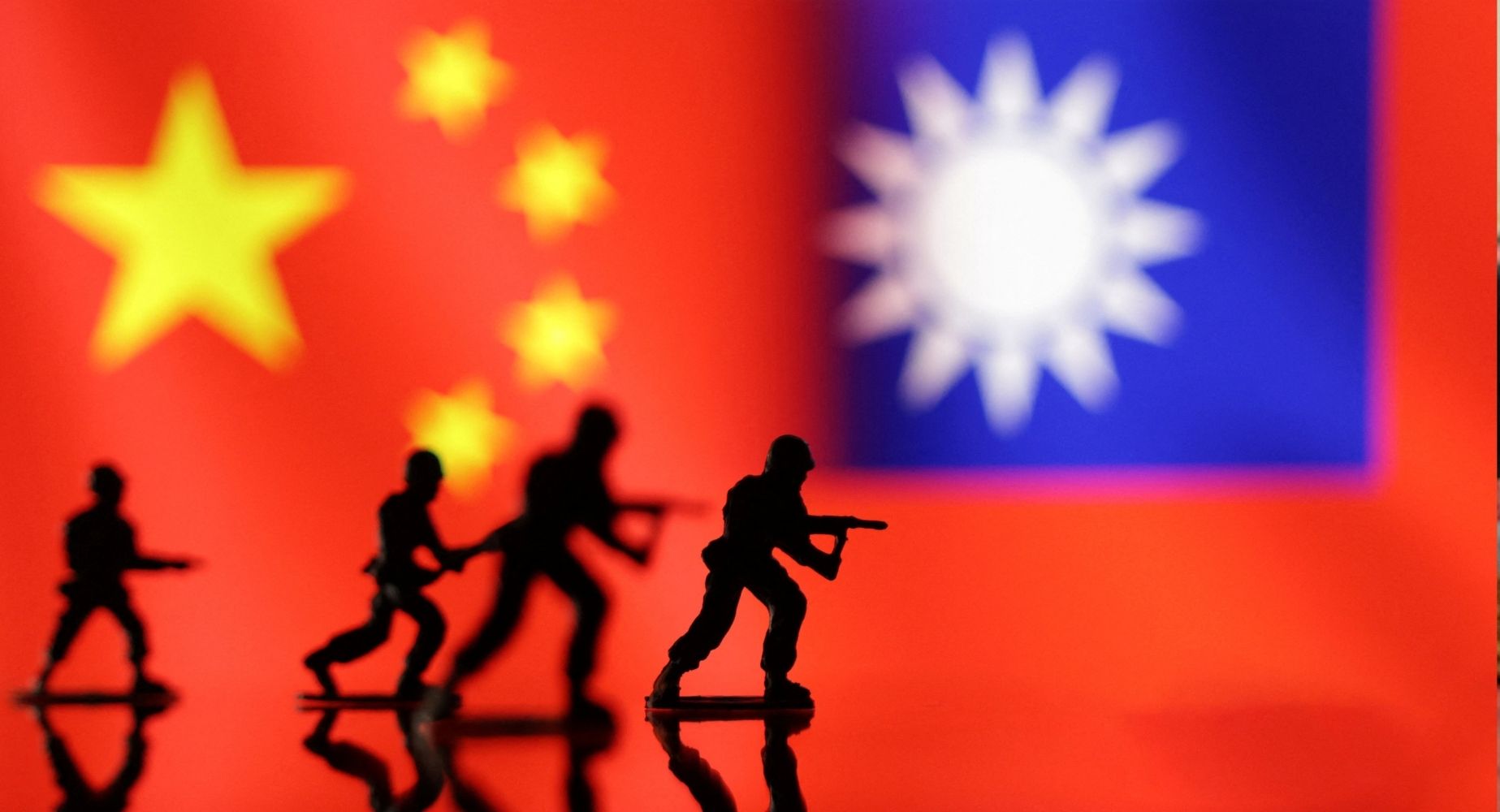
Why the Taiwan Strait is not only a political dispute, but a structural fault line in the Indo-Pacific balance of power
The conflict between China and Taiwan is often presented through the language of crisis: military exercises, elections, speeches, sanctions, visits, and diplomatic warnings. But the real importance of Taiwan does not come from any single event. It comes from geography, energy, technology, ideology, and the long-term architecture of power in the Indo-Pacific.
Taiwan is not simply an island claimed by Beijing. It is a strategic hinge between the East China Sea and the South China Sea, positioned near Japan, the Philippines, and the major sea lanes that connect Northeast Asia to Southeast Asia, the Indian Ocean, and the Middle East. Whoever controls Taiwan does not merely gain territory. It gains leverage over the maritime order of East Asia.
This is why Taiwan cannot be understood only as a sovereignty dispute. It is a test of whether the Indo-Pacific remains a plural maritime system, or whether it becomes a China-centered security sphere.
For Beijing, Taiwan is the unfinished chapter of the Chinese civil war and the symbolic wound of national division. But it is also a military-geographic problem. As long as Taiwan remains outside the control of the People’s Republic of China, China’s navy faces a barrier along the first island chain. Taiwan, Japan, and the Philippines form a maritime arc that limits China’s free access to the wider Pacific. If Taiwan fell under Beijing’s control, that barrier would be broken.
For Taiwan, geography is both shield and vulnerability. The sea protects it from easy invasion, but the same sea makes it dependent on trade, shipping, imported energy, and open maritime routes. As noted in a recent analysis by the Center for Strategic and International Studies (CSIS), Taiwan’s island status and dependence on maritime supply chains make blockade scenarios strategically dangerous even without a direct invasion.
Energy remains one of Taiwan’s deepest structural vulnerabilities. According to the U.S. Energy Information Administration, Taiwan relies heavily on imported LNG and coal for electricity generation, making maritime security inseparable from energy security. This dependence means that any prolonged disruption in shipping lanes could rapidly become an economic and social crisis.
This is why a Taiwan crisis would not necessarily begin with amphibious landings or missile strikes. It could begin with pressure: inspection zones, cyberattacks, port disruption, gray-zone naval operations, airspace intimidation, or partial maritime restrictions. The objective would not necessarily be immediate conquest, but psychological exhaustion and economic destabilization.
Taiwan’s other structural importance lies in technology. The island sits at the center of the advanced semiconductor ecosystem. This gives Taiwan extraordinary global relevance, but also creates strategic danger. Its chip industry acts simultaneously as shield and magnet. The world depends on Taiwan’s semiconductor production, yet that very dependency increases the island’s geopolitical weight. Advanced chips are no longer merely commercial products; they have become instruments of industrial power, military modernization, and artificial intelligence competition.
The Taiwan Strait is therefore not only a military frontier. It is the meeting point of three systems: China’s continental authoritarian model, Taiwan’s democratic maritime model, and America’s alliance-based Indo-Pacific order.
This is why the conflict is so difficult to resolve. Beijing sees Taiwan’s democratic existence as an ideological contradiction. Taiwan demonstrates that a modern Chinese society can exist outside Communist Party rule. That reality carries ideological implications far beyond military calculations. Taiwan is not only disputed territory; it is a political counter-model.
The United States, Japan, Australia, the Philippines, and other regional actors do not view Taiwan only through moral language or democratic solidarity. They view it through balance-of-power logic. If China absorbed Taiwan, the military geography of Asia would change dramatically. Japan’s southern flank would become more exposed. The Philippines would face greater Chinese naval pressure to its north. The credibility of American alliances across the Indo-Pacific would weaken. The first island chain would effectively fracture.
History also shapes the conflict. Taiwan’s strategic importance did not begin in the twenty-first century. Imperial Japan understood the island’s military value long before the emergence of the current U.S.-China rivalry. During the Cold War, Taiwan became part of the broader containment architecture designed to limit Communist expansion in maritime Asia. Today, the island once again sits at the center of a larger geopolitical transition.
The future may follow several trajectories. One scenario is managed tension: China continues pressure operations while Taiwan strengthens resilience and the United States maintains deterrence without direct war. A second scenario is coercive strangulation: Beijing avoids invasion but intensifies cyber pressure, maritime disruption, economic punishment, and gray-zone tactics. A third scenario is open military conflict through blockade, missile escalation, or attempted invasion. The most dangerous possibility may not be deliberate war, but miscalculation between increasingly militarized actors operating in close proximity.
Taiwan’s future will not be decided only by speeches, elections, or diplomatic symbolism. It will be shaped by ports, energy reserves, naval logistics, semiconductor supply chains, alliance credibility, and the political resilience of a democratic society under sustained pressure.
In this sense, China vs Taiwan is not a temporary geopolitical crisis. It is one of the defining structural contests of the twenty-first century: a struggle between continental control and maritime openness, between ideological absorption and democratic continuity, between coercive unification and strategic pluralism.
Taiwan matters because it is small enough to be threatened, but important enough to reshape the global balance of power.