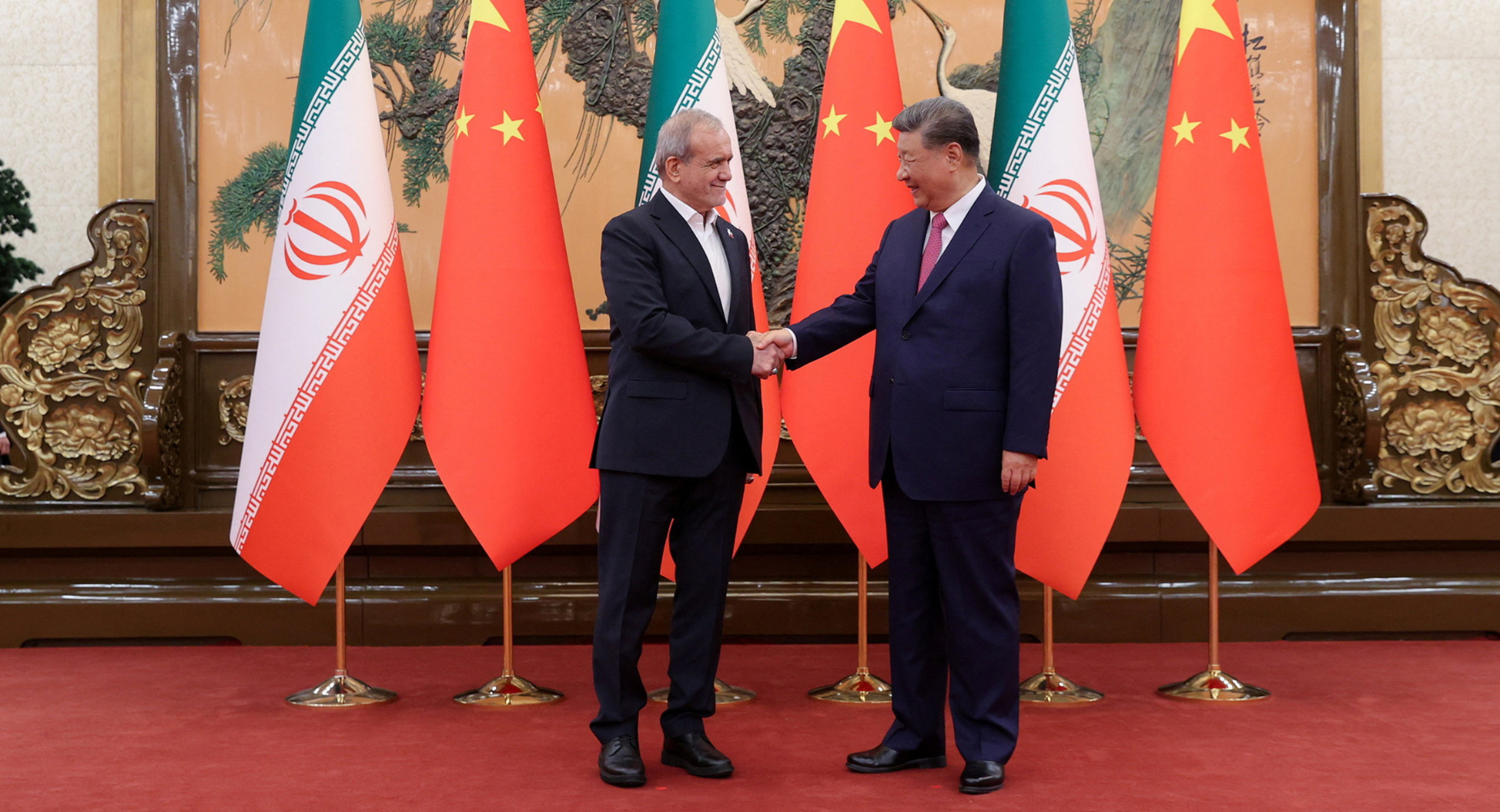
China insists it is a neutral actor in the Middle East. However, recent reports suggesting it is helping Iran rebuild its air defenses tell a very different story. Whether those reports are ultimately confirmed is almost beside the point. The real story lies in the widening gap between Beijing’s diplomatic rhetoric and its strategic behavior.
Recent reports suggest that Iran is preparing to receive the first shipment from a major purchase of Chinese-made man-portable air defense systems (MANPADS), including the QW-12 and FN-16. According to these reports, the deal, estimated at between $60 million and $70 million, is intended to help Tehran rebuild its short-range air defense network after suffering significant losses in recent military confrontations.
Beijing’s response was swift and unequivocal. China’s Foreign Ministry dismissed the reports as “groundless” and denied that such a transaction had taken place. This pattern is not an anomaly. It reflects a defining feature of Chinese statecraft in the Middle East: strategic involvement without overt ownership, influence without formal commitment, and support that remains plausibly deniable
Whether the reports ultimately prove accurate is almost secondary. The striking contrast between persistent allegations and categorical official denials illustrates a defining feature of Chinese statecraft in the Middle East: strategic involvement without overt ownership, influence without formal commitment, and support that remains plausibly deniable.
Plausible deniability is not simply a defensive response to international criticism; it has become a central instrument of Chinese geopolitical strategy. By keeping military cooperation below the threshold of definitive attribution, Beijing complicates efforts by the US and its partners to impose diplomatic or economic costs. Strategic ambiguity allows China to reassure partners such as Iran through tangible assistance while avoiding the political consequences of openly choosing sides. In this sense, denial is not evidence of restraint. It is part of the mechanism through which Beijing projects influence: expanding its regional footprint while minimizing the liabilities that traditionally accompany great-power competition.
Iran’s Strategic Value
Understanding why Beijing would pursue such an approach requires looking beyond the reported transaction itself and examining the strategic role Iran occupies in China’s wider global competition with the US.
For China, Iran is far more than another regional partner. It represents an important component of Beijing’s broader geopolitical competition with the US. Iran supplies China with heavily discounted oil, occupies a critical position within the Belt and Road Initiative, and serves as a regional actor capable of tying down American diplomatic and military resources. Every additional crisis demanding Washington’s attention in the Middle East potentially reduces the resources available for the Indo-Pacific, the theatre Beijing considers its highest strategic priority.
At the same time, China has little interest in openly aligning itself with Tehran. President Donald Trump has repeatedly warned that Chinese military assistance to Iran would carry significant economic consequences. For a Chinese economy already facing slower growth, a prolonged property crisis, weak domestic demand, and continued trade tensions with the US, additional sanctions represent a serious strategic risk.
Support Without Fingerprints
This dilemma helps explain Beijing’s preferred operating model: remaining below the threshold of political attribution. If the reported arms transfers are indeed occurring, they are alleged to rely on commercial intermediaries, shell companies, and indirect logistics networks rather than transparent government-to-government transactions. Such arrangements allow Beijing to deny direct involvement while preserving the strategic benefits of supporting an important partner.
This is not a new pattern. During the Russia-Ukraine war, China officially rejected accusations that it was supplying Moscow with lethal weapons. However, numerous Chinese companies became linked to the provision of dual-use technologies, electronic components, drones, and industrial equipment that strengthened Russia’s defense-industrial base. In both cases, Beijing has attempted to maximize strategic influence while minimizing diplomatic exposure.
The Middle East as a Military Laboratory
The significance of these reports extends well beyond the alleged arms transfers. Every major conflict generates operational data of immense military value. Combat offers insights that no testing ground can replicate. Real wars reveal how weapons perform under electronic warfare, missile saturation, degraded communications, and the relentless pressures of sustained operations. Every interception, failure, adaptation, and tactical innovation provides lessons for future weapons development.
For China, these conflicts represent a rare opportunity to observe how Chinese-designed systems perform against advanced Western technologies under real battlefield conditions. Radar effectiveness, electronic warfare resilience, interception rates, sensor performance, and battlefield survivability all provide valuable information for Chinese defense planners and defense manufacturers alike. Even when Beijing is not a direct participant, it has a clear strategic interest in analyzing every available lesson from the battlefield.
These insights may ultimately shape China’s military modernization and contingency planning in the Indo-Pacific, particularly in scenarios involving Taiwan. The Middle East is increasingly becoming a battlefield where China is not fighting but is still learning.
Enjoying Regional Stability Without Paying for It
This does not necessarily imply that Beijing has direct access to all battlefield information. However, it has a clear strategic interest in learning as much as possible from the operational performance of Chinese-made systems deployed abroad. Those lessons may ultimately influence China’s military modernization and planning for future contingencies in the Indo-Pacific, including a potential crisis involving Taiwan. In this sense, the Middle East increasingly functions as an indirect testing environment, not because China is fighting there, but because its technologies are.
Enjoying Regional Stability Without Paying for It
This approach highlights perhaps the greatest difference between China and the US in the Middle East. Washington maintains military bases, deploys tens of thousands of personnel, extends security guarantees to regional partners, and bears the costs associated with preserving the regional security order.
China has adopted a different model. Rather than replacing the US as the region’s security provider, Beijing seeks to benefit from the stability that American military power underwrites while simultaneously expanding its own economic, technological, and diplomatic influence, including with countries that often oppose Washington. It is a strategy of influence without responsibility.
Winning the Narrative War
China’s dual-track strategy extends well beyond military affairs. Over the past decade, Beijing has invested heavily in public diplomacy throughout the Middle East, presenting itself as a responsible global power committed to sovereignty, non-interference, and peaceful development. This image gained considerable momentum following China’s mediation of the 2023 Saudi-Iran rapprochement.
Nevertheless, beneath this carefully cultivated narrative lies an increasingly sophisticated image strategy. Chinese embassies throughout the region have become significantly more active in shaping public discourse, countering criticism of Beijing’s domestic policies, promoting Chinese investment, and portraying China as a more reliable and less ideological partner than the West. Turkey provides one example in which Chinese public diplomacy has intensified in response to criticism of Beijing’s treatment of the Uyghurs while simultaneously highlighting expanding economic cooperation. This image strategy complements China’s broader regional policy: expanding influence while avoiding direct political confrontation.
Balancing Tehran and Riyadh
Perhaps Beijing’s greatest diplomatic achievement has been its ability to deepen relations simultaneously with Iran, Saudi Arabia, the United Arab Emirates, and other Gulf states. From China’s perspective, there is no contradiction. Iran provides energy security and strategic leverage against the US. The Gulf monarchies provide investment opportunities, advanced infrastructure partnerships, and access to some of the world’s fastest-growing markets.
Unlike Cold War alliance structures, China’s Middle East policy is designed to avoid exclusive partnerships. Instead, Beijing seeks to maximize flexibility by maintaining productive relationships with competing regional actors simultaneously. This balancing strategy gives China something no external power has previously managed in the Gulf: deep strategic relationships with rival states that increasingly view Beijing as an indispensable economic partner regardless of their own regional rivalries. Rather than choosing between Tehran and Riyadh, China has positioned itself as a partner that both sides believe they can afford neither to alienate nor to exclude. That diplomatic flexibility has become one of Beijing’s greatest strategic advantages in the region. Watch What China Does-Not What It Says
For Israel and the US, the implications extend well beyond the question of whether Iran ultimately receives another shipment of Chinese-made missiles. The larger issue is recognizing that China is no longer merely an economic stakeholder in the Middle East. It has become an increasingly sophisticated geopolitical actor that advances its interests through carefully calibrated ambiguity.
Its official rhetoric continues to emphasize neutrality, non-interference, and dialogue. Its behavior, however, often reflects a more pragmatic strategy, one that preserves ties with Iran, deepens economic integration with America’s Gulf partners, extracts valuable military and technological lessons from regional conflicts, and simultaneously avoids assuming the responsibilities of a traditional security power.
China’s repeated denials should not necessarily be interpreted as proof of non-involvement. Rather, they illustrate a broader doctrine of plausible deniability that has become a defining instrument of Chinese geopolitical strategy. By combining practical support with diplomatic ambiguity, Beijing preserves strategic flexibility while limiting the political and economic costs of openly choosing sides. In China’s approach to the Middle East, denial is not evidence of restraint; it is an essential mechanism of influence.
For Israel and the US, this carries an important lesson. Understanding China’s role in the Middle East requires looking beyond official statements and examining patterns of behavior, technology transfers, commercial networks, and strategic incentives. In an era of intensifying great-power competition, China’s influence is exercised less through formal military alliances than through carefully calibrated ambiguity, economic leverage, and selective strategic engagement.
The question is no longer whether China is becoming a Middle Eastern power. It already has. The more important question is whether policymakers have fully recognized the distinctly Chinese way of exercising power, not through permanent alliances or military deployments, but through plausible deniability, strategic flexibility, and influence without overt responsibility.