The Current Stalemate
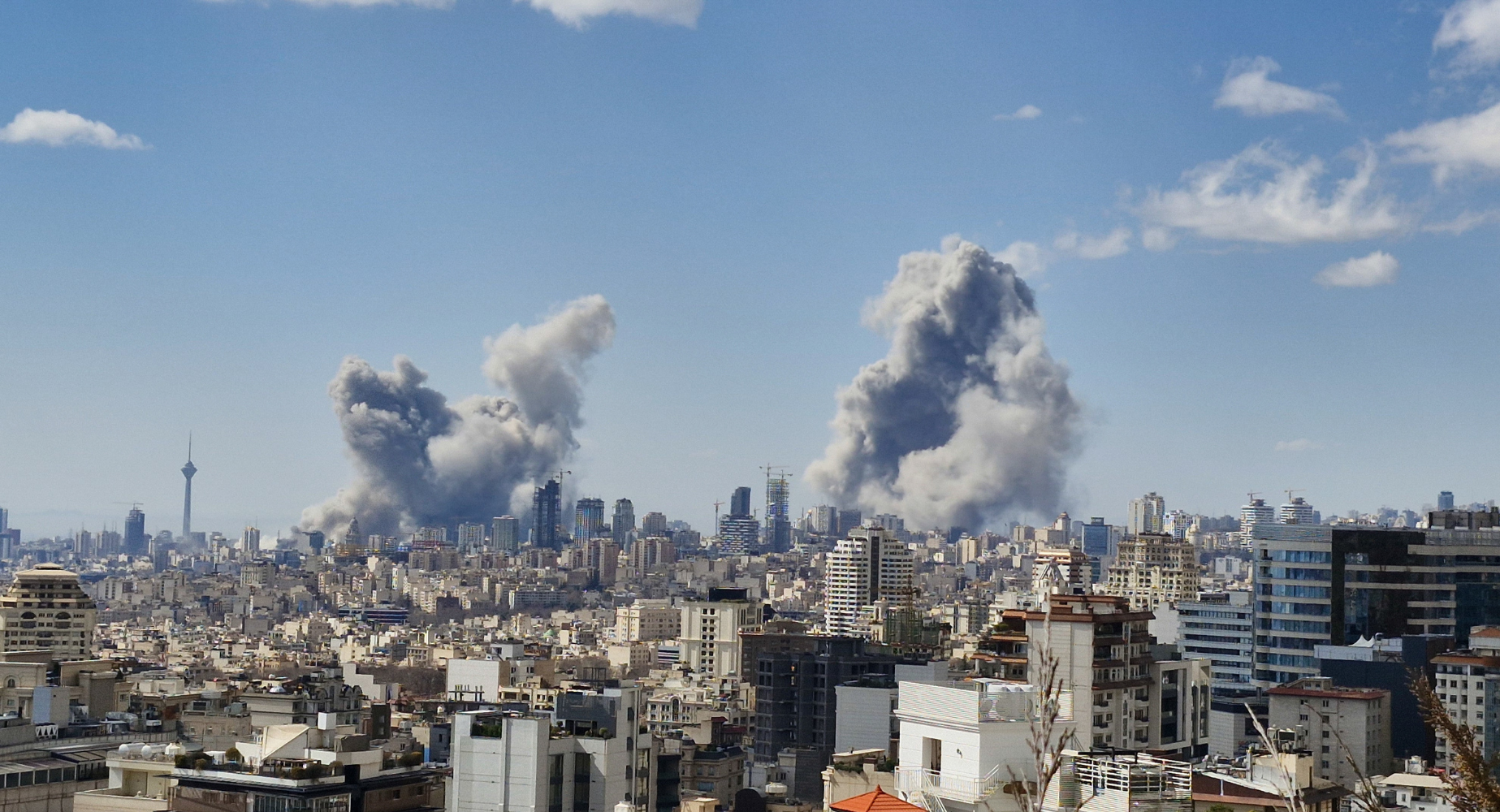
As of August 2026, nearly six months after the outbreak of hostilities on February 28, the Iran War has settled into a dangerous and unsustainable stalemate. The United States and Israel opened the conflict with a coordinated campaign that killed Supreme Leader Ali Khamenei, degraded Iranian military and nuclear infrastructure, and imposed severe costs on the regime. The subsequent US naval blockade has demonstrably bled Iran of oil revenues, while Iranian forces have exploited every operational pause to reconstitute key military capabilities. Yet the Islamic Republic endures. Calibrated pressure, intermittent diplomacy, and restraint have prolonged the war, enabled regeneration of Iranian forces, and left the core problem — the theocratic regime itself — intact. The Trump Administration must therefore adopt a clear policy of demanding the unconditional surrender of the Islamic Republic of Iran, to be followed by internationally supervised free elections. This objective should be implemented by immediately resuming air and missile attacks on a massive scale, striking strategic economic and infrastructure targets, and leveraging the still abundant classes of US munitions to overcome constraints on high-end systems such as Patriot and HIMARS. The aim must be the rapid collapse of the current regime.
The Trajectory of the War
The war’s trajectory underscores why half-measures fail. The initial US-Israeli campaign through early April inflicted heavy damage on leadership targets, air defenses, missile production sites, naval assets, and command structures. A ceasefire around April 8 provided the first significant window for Iranian recovery. The June 17 Memorandum of Understanding between President Donald Trump and Iranian President Masoud Pezeshkian temporarily lifted the US blockade, sought to reopen the Strait of Hormuz, and launched technical nuclear talks. That arrangement collapsed on July 8 due to Iranian attacks on commercial shipping. The United States reimposed its naval blockade of Iranian ports in mid-July and resumed strikes. Since early August, following the cancellation of a threatened multi-day air campaign, a new pause in major strikes inside Iran has held, even as naval enforcement continues and limited Iranian or proxy actions against vessels persist. Shipping through Hormuz remains far below pre-war norms of more than 100 vessels daily, with recent counts often in the single digits or low teens. This pattern of intense fighting followed by pauses has repeatedly allowed Tehran to adapt while the fundamental threat remains.
The Effectiveness of the Naval Blockade
The US naval blockade has proven one of the most effective instruments of U.S. pressure by directly targeting Iran’s primary source of hard currency. Hydrocarbons have historically accounted for the bulk of Iran’s export earnings. Pre-war and early-war exports hovered near 1.5–2 million barrels per day. The first blockade, enforced from mid-April, caused a dramatic collapse: May exports fell to historic lows of roughly 65,000–300,000 barrels per day according to key market trackers — less than one-sixth of prior levels and a six-year low. At conservative prices of around $90 per barrel, daily revenues dropped from approximately $165 million in March (when exports averaged 1.84 million barrels per day) to about $27 million. Cumulative losses approached $6 billion over April and May alone relative to earlier monthly returns. Floating storage built up behind the blockade line, production faced cutbacks to avoid storage overflow, and China’s independent refiners — Iran’s main buyers — faced disruptions despite discounts.
Temporary Relief for Iran Under the June Memorandum of Understanding
The June MOU provided temporary relief for the Iranian economy. With the blockade lifted on June 17 and sanctions waivers issued, Iran rapidly cleared its accumulated inventories. Exports rebounded sharply, averaging about 1.75 million barrels per day in June and totaling over 50 million barrels in the initial weeks, generating an estimated $4.5–6 billion or more in gross value. Iranian officials claimed sales exceeding 40–50 million barrels in short order, sometimes at premiums, and the Petroleum Ministry later reported significant wartime and ceasefire-period revenues that partially met annual budget targets. This surge offered a crucial financial buffer for the regime, though much of the value was discounted, delayed, or intermediated, limiting immediate liquid funds available to Tehran.
Reimposition of the Blockade and Ongoing Economic Pressure
The reimposition of the blockade from mid-July reversed these gains. July exports averaged around 967,000 barrels per day (reflecting the partial-month effect), valued at roughly $2.44 billion — down substantially from June. Loadings slowed, vessels were redirected, disabled, or boarded, and traffic remained suppressed into August. US officials, including Defense Secretary Pete Hegseth, have stated the blockade can be maintained indefinitely through ship rotations. Treasury officials have signaled further economic measures. The cumulative effect compounds wartime damage to Iran’s energy infrastructure, strains its domestic refining and industrial inputs, and heightens internal social and fiscal pressures. Iranian leaders have acknowledged that declining oil revenues contribute to their economic difficulties. While some stored oil continues to reach markets via residual pathways or earlier loadings (with payment lags of months), the blockade has bled Tehran of billions of dollars in potential revenue. Yet revenue pressure alone has not produced the political collapse of the Islamic Republic. The regime has absorbed economic pain before and retains its coercive control at home.
Iran’s Military Reconstitution During Operational Pauses
More troubling is the pattern of military reconstitution during pauses in the fighting. US and Israeli strikes in the war’s early phases heavily degraded Iran’s defense-industrial base. CENTCOM assessments indicated that over 85 percent of certain ballistic missile, drone, and naval production capacity was damaged or destroyed, along with launchers, surface facilities, and conventional naval assets. Yet Iran’s extensive underground “missile cities” and dispersed production networks have proven resilient. Tunnel entrances were collapsed, but many stockpiles survived.
During the April ceasefire and subsequent pauses, Iran prioritized rapid, targeted reconstitution. US intelligence assessments by May indicated that Tehran was rebuilding more quickly than expected, already restarting some drone production. Officials assessed that full reconstitution of drone attack capabilities could occur within as little as six months, exceeding prior timelines. Chinese components and Russian assistance reportedly aided Iran’s efforts, though the blockade complicated imports. Iranian officials claimed production never fully ceased, with drone output rising dramatically (claims of tenfold increases in some periods or tripling relative to pre-war rates) and new serial-numbered systems entering inventory. By mid-2026 assessments, Iran had restored approximately 70–75 percent of its pre-war missile and drone stockpiles according to some estimates, clearing debris from dozens of tunnel entrances with heavy equipment to regain access to hundreds of surviving weapons. Israeli officials later expressed shock at the speed of recovery, particularly in ballistic missiles. Despite expectations that the campaign had set the industrial base back by years, Iran focused its diminished resources on high-priority systems rather than comprehensive restoration. Production of new ballistic missiles reportedly resumed at rates potentially reaching 100–300 per month in optimistic scenarios, which could restore arsenals to mid-2025 levels by early-to-mid 2027. Underground facilities were reopened, forces regrouped, and adaptive manufacturing continued in surviving or improvised sites. Iranian statements asserted that forces had “rebuilt themselves” during ceasefires and that new weapons stood ready. Naval and conventional forces remain more constrained by port damage and losses, pushing emphasis toward asymmetric IRGC capabilities, such as fast boats, drones, and coastal missiles.
The Limits of Iranian Recovery
These reconstitutions are incomplete and face headwinds. The blockade restricts dual-use imports critical for advanced components. Broader industrial damage, power disruptions, and resource diversion limit the scale of Iran’s military industrial recovery. Full pre-war capacity has not returned, and sustained high-tempo operations would again deplete stocks. Nonetheless, the pauses have enabled Iran to restore sufficient residual threat capacity to impose serious potential costs on regional targets, shipping, and US forces. Every interval of U.S. restraint has been converted by Tehran into a regenerated offensive capability.
The Case for Demanding Iran’s Unconditional Surrender
These facts dictate the required policy. Negotiated arrangements that leave the Islamic Republic in power merely reset the clock for further reconstitution and renewed aggression. Ending the war with a settlement that leaves the Islamic Republic in some form in power makes about as much sense as leaving a “reformed” Nazi party in power in Germany would have in 1945. It guarantees that the war will continue indefinitely, while Iran reconstitutes its nuclear, ballistic missile and drone programs. The only durable solution is the unconditional surrender of the regime, followed by internationally supervised free elections that allow the Iranian people to choose a post-Islamic Republic government. This is not maximalism for its own sake; it is the logical endpoint of a conflict the regime itself chose to escalate through proxy wars, nuclear defiance, and direct attacks. Half-measures that preserve the clerical apparatus ensure that oil revenues, once restored, and rebuilt missile forces will again underwrite regional destabilization.
Resuming Massive Air and Missile Attacks
Implementation requires the immediate resumption of air and missile attacks on a massive scale. The objective is not attrition or bargaining leverage but the accelerated collapse of regime control. Strikes should concentrate on strategic economic and infrastructure targets: remaining oil export terminals and related facilities beyond those already degraded, power generation and transmission networks that sustain both military and civilian coercion, transportation nodes, communications infrastructure, and financial and administrative centers of regime authority. Such targeting multiplies the effects of the naval blockade by further crippling revenue generation, internal logistics, and the regime’s ability to maintain domestic order. The psychological and practical impact of sustained, high-volume attacks on the pillars of regime power can induce the fractures — elite defections, popular unrest, and command breakdown — necessary for its rapid collapse.
Overcoming Constraints on High-End Munitions
Constraints on high-end munitions must not become an excuse for hesitation. Shortages of Patriot interceptors, HIMARS rockets, and certain precision systems are real after months of high-tempo operations. These limitations can and must be mitigated by leveraging the still-abundant supply of other US munition classes. Large inventories of gravity bombs, JDAM kits, cruise missiles of available types, naval gunfire support where applicable, and other conventional ordnance remain available for mass employment against fixed economic and infrastructure targets. The United States retains the capacity for sustained high-volume strike packages using these systems, delivered by aircraft, surface vessels, and submarines. Quantity and persistence against critical nodes can achieve strategic effects even when the most exquisite munitions are conserved for defensive or high-priority missions. Production ramps already underway can further expand available stocks. The alternative — prolonged pauses that permit Iranian reconstitution — only increases the eventual cost in both munitions and lives.
Addressing Concerns About Escalation and Consequences
Some will raise concerns about escalation, humanitarian consequences, and regional instability. These risks exist under any course of action, including the current stalemate that already features shipping attacks, proxy operations, and economic hardship for ordinary Iranians. A decisive campaign aimed at rapid regime collapse will shorten the overall duration of suffering compared with an open-ended war of intermittent pressure. International supervision of post-war elections can provide a legitimate pathway for Iranian self-determination and reduce the likelihood of prolonged occupation or chaos. Regional partners who have borne the costs of Iranian aggression have a direct interest in a definitive resolution. The alternative — accepting a reconstituted Islamic Republic that retains its nuclear ambitions and proxy terrorist networks — guarantees that Iran’s malign role in the Middle East and beyond will persist and grow.
The Strategic Choice Facing the Trump Administration
The Trump Administration therefore faces a clear strategic choice. Continued reliance on the current blockade, punctuated by operational pauses that Iran exploits for military recovery, will not produce victory. Only the combination of sustained economic strangulation and massive, focused air and missile attacks on the regime’s economic and infrastructural foundations can compel its unconditional surrender. Once the political structure of the Islamic Republic collapses, internationally supervised free elections can open the way to a successor government accountable to the Iranian people. This policy aligns military means with the political aim of removing the source of the threat posed by the Islamic Republic. Delay and vacillation will only increase the costs already borne by the United States, its partners, and the Iranian population, and prolong the war indefinitely. The time for decisive action is now.