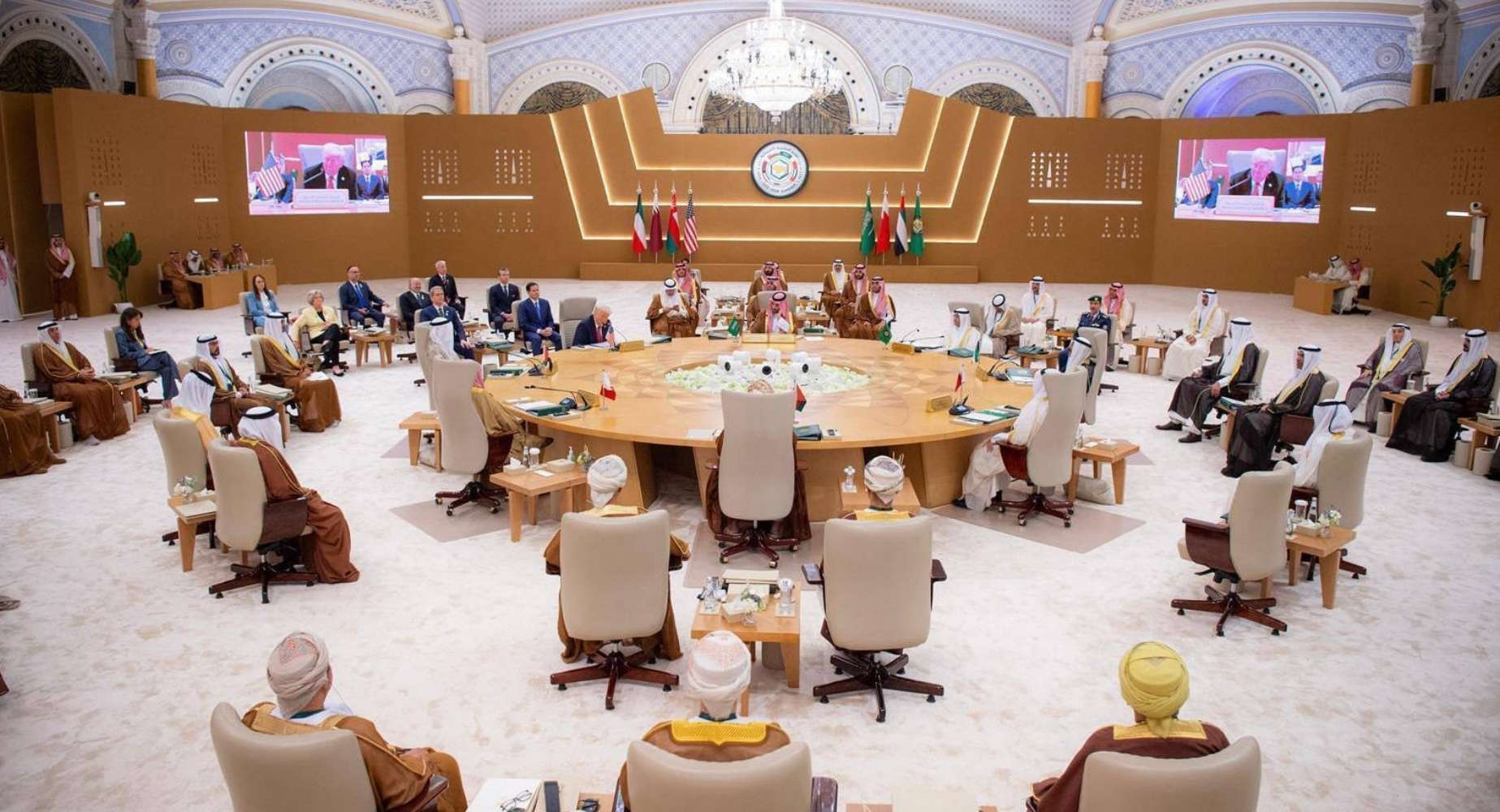
There is a question Washington should ask more directly: what do the Gulf states really want?
The official language is familiar: de-escalation, sovereignty, dialogue, Palestinian rights, regional stability, and balanced relations. These are legitimate concerns. But behind the communiqués lies a harder reality. Gulf capitals know that Israel is no longer isolated. They know that Iran is not merely a difficult neighbor. They also know that saying one thing in Washington, another in Tehran, another in Jerusalem, and another to Arab public opinion has become increasingly difficult to sustain.
Let us be precise. The confrontation is not with the Iranian people, heirs to a great civilization and among the first victims of the regime that rules over them. The confrontation is with the Iranian regime: the Revolutionary Guards, the militias, hostage diplomacy, ballistic missiles, nuclear ambitions, and the systematic destabilization of Arab states in the name of resistance.
For decades, Gulf states have tried to manage Iran, traded with Iran, mediated with Iran, denounced Iran, accommodated Iran, and then asked Washington — and sometimes Israel — to contain Iran. This contradiction can no longer be avoided.
Across the Gulf, Israel is no longer treated as a distant or isolated actor. Some relationships are formal. Others remain informal, indirect, or discreet. But the old taboo has been broken. Israel is now understood across the region as a military, technological, intelligence, economic, and strategic reality.
Yet several Gulf states continue to preserve relationships with the same Iranian regime that threatens their sovereignty. Some out of prudence. Some out of economic necessity. Some because ambiguity gives them room to maneuver. But ambiguity has a cost. In a dangerous region, permanent strategic ambiguity is not wisdom. It is exposure.
Oman is a useful example. When Prime Minister Benjamin Netanyahu visited Muscat, Oman showed that even without formal relations it understood Israel’s regional weight. At the same time, Oman has maintained relations with Iran and has often presented itself as a mediator between Tehran and the West. This is consistent with Oman’s traditional diplomatic culture: cautious, discreet, and focused on keeping channels open.
But diplomacy must also have direction. Mediation should not become a permanent substitute for strategic judgment. Oman’s challenge is to preserve its reputation as a serious diplomatic actor while recognizing that the Iranian regime is not simply one party among others. It is a hostile revolutionary power that has repeatedly used militias, coercion, and instability as instruments of regional destabilization.
Qatar presents another complicated case. No serious observer can deny its achievements: wealth, infrastructure, media influence, and a global profile far beyond its size. It hosts Al Udeid, the largest U.S. Air Force installation outside the United States and a central pillar of America’s regional posture. It also shares with Iran the North Field/South Pars gas structure, one of the most important energy assets in the world, giving Doha a structural reason to avoid direct confrontation with Tehran.
Qatar has made itself useful by speaking to actors others refuse to meet. At times, this role has mattered. But usefulness is not the same as strategic responsibility. Mediation should reduce conflict, not make the mediator indispensable to conflict. The question is whether Doha is prepared to move from tactical usefulness to a more responsible regional role.
Saudi Arabia is the most consequential case. Crown Prince Mohammed bin Salman has set an ambitious course to launch the Kingdom into a new era and, before the Gaza war reshaped the diplomatic landscape, made clear that normalization with Israel was no longer fantasy.
Saudi Arabia has also learned directly what the Iranian threat means. Its territory has been attacked. Its sovereignty has been tested. Its energy infrastructure has been targeted. Its leadership understands better than anyone the danger posed by Tehran’s regional project. Yet Riyadh restored relations with Iran while still relying on the United States to contain that same threat.
This is not a simple contradiction. It reflects the caution of a state managing religion, public opinion, regional influence, energy markets, and security at the same time. But the essential question remains: can Saudi Arabia’s public diplomacy remain behind its private strategic assessment? The answer to that question will shape the future of the region.
Bahrain chose differently. It joined the Abraham Accords and normalized relations with Israel despite its vulnerability to Iranian pressure. That decision should not be underestimated. Bahrain does not have the strategic depth, wealth, of Saudi Arabia or the UAE. Its exposure is real. Its decision therefore carried a particular meaning.
Bahrain understood that sovereignty sometimes requires a public decision. It recognized that normalization with Israel was not only a diplomatic gesture, but a statement of strategic orientation. It also showed that smaller states can exercise leadership when they are prepared to define their interests clearly and act on them.
The importance of Bahrain is not size. It is precedent. By joining the Abraham Accords, Bahrain demonstrated that vulnerability does not always produce hesitation. Sometimes it produces resolve. In a region where many states privately acknowledge the same realities, Bahrain chose to act publicly.
The United Arab Emirates also made a strategic choice. It normalized relations with Israel not as symbolism, but as policy: technology, artificial intelligence, investment, defense modernization, logistics, and global relevance. Abu Dhabi understood that Israel was not merely a security actor, but also a partner in innovation, science, agriculture, medicine, entrepreneurship, and the modernization of regional economies.
The UAE has also shown that realism does not mean weakness. It has stood firmly against the Iranian regime’s destabilizing project and understood the necessity of deterrence when that regime threatens sovereignty. This is the sophistication of the Emirati approach: strength without illusion, openness without naivety, and strategic patience without surrender.
The UAE’s importance lies in this combination. It did not choose normalization as a temporary gesture or public relations exercise. It placed it inside a larger national strategy: diversification, technology, global connectivity, and regional stability. That is why the Emirati model matters. It shows that a Gulf state can confront danger while still building for the future.
This is why the Abraham Accords matter more today than ever.
The Accords were not only diplomatic agreements. They introduced a new political language for the Middle East: development over ideology, trade over hatred, technology over militias, and opportunity over permanent grievance.
For too long, dignity has been used as a slogan by regimes, militias, ideologues, and movements that offered young people anger instead of opportunity.
But young Arabs and young Persians do not need dignity as a word. They need it as a reality: education, jobs, capital, technology, training, business opportunities, and access to the modern economy.
This is the practical promise of the Abraham Accords. Israel brings technology, science, agriculture, medicine, defense, and entrepreneurship. The Gulf brings capital, ambition, infrastructure, logistics, and a young generation ready for transformation. Together, they can offer the region an alternative model.
That is what the Iranian regime fears most. It does not fear another speech. It fears a successful alternative.
Jared Kushner’s role should also be recognized. Kushner understood that the Middle East could not be approached only through old formulas and inherited excuses. He listened widely. He connected security, economics, technology, legitimacy, and the aspirations of a younger generation. Then he helped translate that understanding into action.
Today, the Gulf states cannot continue to seek American protection, Israeli technology, Western legitimacy, Chinese markets, and Iranian restraint while avoiding the burden of public strategic choice. That is not diplomacy. It is evasion.
The issue is not knowledge. Gulf leaders understand the danger. They understand Israel’s value. They understand America’s role. They understand what their young people want. The problem is not analysis. The problem is political courage.
The Gulf states must now decide what they want the Abraham Accords to become: a diplomatic trophy, or the foundation of a new regional order.
The Iranian regime offers militias, fear, isolation, and endless confrontation. The Abraham Accords offer education, opportunity, investment, technology, business, security, and access to modernity.
That is the choice before the region. Every Gulf capital should decide where it stands.