Russia’s sudden willingness to involve Europe in peace negotiations over Ukraine is not a change of strategy. It is an attempt to turn negotiations on ending Russian aggression into negotiations on the future of the European security order. Europe and Ukraine need their own parallel strategy, built around the creation of a joint defense platform. On October 25, Yuri Ushakov, an aide to Russian President Vladimir Putin, stated that Europe’s position in the negotiations could be of key importance and that European countries should therefore be brought into the negotiating process. After Moscow had long opposed such participation, this might look like a diplomatic opening. But the Kremlin’s sudden change in rhetoric should be viewed primarily as a tactical maneuver.
Russia has never regarded its war against Ukraine as an isolated territorial dispute. Its strategic ambitions extend far beyond Ukraine. As early as the 2007 Munich Security Conference, Putin publicly challenged the European security architecture that had emerged after the Cold War. Moscow subsequently demanded that NATO return to its 1997 borders. In practical terms, this would mean reversing the results of the Alliance’s enlargement and depriving Central and Eastern European countries of the security arrangements they had chosen for themselves.
Since then, Moscow has not retreated one inch from this demand. It may therefore now seek to use negotiations formally devoted to ending the war to reopen the question of NATO’s future and the architecture of European security.
This is the trap Europe must avoid.
Russia is considerably weaker than Europe in aggregate economic, technological, and industrial terms, but it is stronger than individual European countries when they act without coordination. The Kremlin knows how to exploit their differences, political sympathies toward Moscow, and the requirement for consensus to block collective decisions. It is the logic of a broom made of individual twigs: one twig is easy to break, while a bundle of them is much harder to break. Moscow’s strategy is to prevent Europe from becoming such a bundle.
Two Parallel Tracks, One Strategic Goal
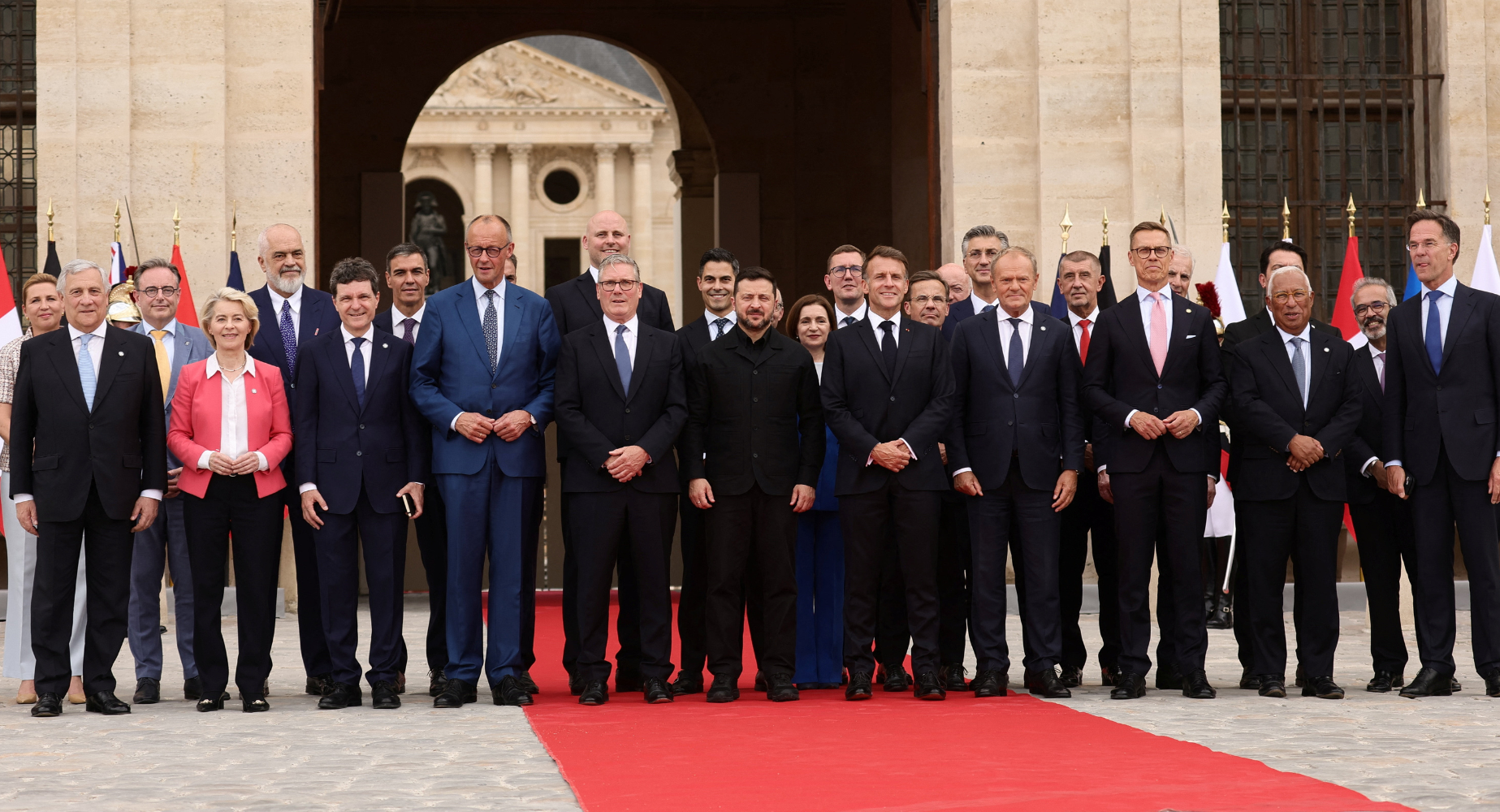
It is an obvious fact that Russia’s war against Ukraine is also an attack on the European status quo established after the end of the Cold War, on the principle that borders must not be changed by force, and on the right of sovereign states to determine their own foreign and security policies. Europe therefore has every right to a seat at the negotiating table – not as an “invited guest,” but as an independent party with legitimate security interests. However, to become a full-fledged actor, Europe must become a force in its own right and have the actual capacity to defend its own security. Statements asserting its right to participate in negotiations are not enough.
European defense ministers and national leaders have already begun openly calling Russia an “enemy”, replacing the familiar diplomatic formulations. The existence of a common enemy objectively requires a common defense capability, and that capability cannot be a bargaining chip with the enemy. Russia must not be allowed to interfere with the mechanisms designed to prevent another war. Europe and Ukraine must therefore pursue two independent but complementary tracks simultaneously.
One is diplomatic: negotiations with Russia to end the war.
The other is strategic and military: the creation of a unified European-Ukrainian defense platform. This platform must become the foundation and a necessary precondition for Europe to acquire the status of a full-fledged party to the negotiations. These two tracks must proceed in parallel, but the second must take priority and move considerably faster, because it is precisely the necessary condition and guarantee for the first track to succeed – for Europe to secure its rightful place at the negotiating table.
Why Ukraine Is Needed
Europe possesses substantial financial resources, a developed industrial base, advanced technologies, and the potential for large-scale arms production. At the same time, its defense policy remains fragmented: countries determine their needs separately, place orders independently, compete for production capacity, and often duplicate expenditures. Ukraine has experience in waging a large-scale modern war against the Russian army, knowledge of its capabilities and weaknesses, advanced expertise in unmanned systems and electronic warfare, and the ability to rapidly introduce and scale up battlefield innovations. At the same time, its resource base is limited, and the efficiency of its spending needs to improve.
Combining Europe’s economic power with Ukraine’s combat experience will create not merely an association of countries that share common values and a common understanding of threats, but a rapid pooling of capabilities and practical capacity. This will mean moving beyond the model of “Europe finances – Ukraine fights” toward jointly identifying defense needs, planning, financing, procurement, production, and oversight. Such a model will make it possible to pool resources, avoid duplication, ensure oversight of how funds are used, and make defense cooperation more resilient to political changes in individual countries.
A Dynamic Platform Instead of More Bureaucracy
To avoid becoming yet another cumbersome international organization, the platform must be built around specific projects rather than permanent structures. It will need a joint strategic body and a small, professional executive body responsible for implementing approved programs.
The key principle must be project priority, not structural priority. The platform must continuously and promptly review and adjust its organizational arrangements, team composition, and allocation of resources in response to new threats, technologies, and defense needs. Its mission, strategic objectives, and principles of financing, oversight, and accountability must remain unchanged. Ineffective programs should be discontinued, and resources redirected to areas where they deliver the greatest results. Program leaders should be selected on the basis of professional qualifications, not national quotas.
It is important that Ukraine be not merely a participant whose views are heard, but an equal partner in setting strategic priorities and shaping defense decisions. After all, a platform created to protect European security cannot ignore the experience and interests of a country that is directly confronting Russian aggression today.
This alliance will not replace NATO’s collective defense commitments. It will provide an additional pillar of the transatlantic security system, strengthen the continent’s defense capabilities, and allow countries ready to act together to avoid being held back by obstruction from individual governments.
Most importantly, such a platform will give Europe genuine political agency. Its place at the
negotiating table will be determined not by diplomatic recognition from Moscow or anyone
else, but by its own ability to defend its interests and influence the outcome. At the same
time, it will create the material foundation for the continent’s peaceful future: Russia will
clearly see that any new aggression will be met not with fragmented responses from
individual states, but with coordinated strength.
A stronger Europe, organized together with Ukraine, would also be a more capable
strategic partner for the United States – a second reliable pillar of the transatlantic security
system.
Europe, then, must not ask for a place on the periphery of the negotiating table. It must create a force together with Ukraine that will make its full-fledged participation in determining the continent’s future inevitable. This is a necessary condition both for Europe’s political agency and for lasting peace on the continent.