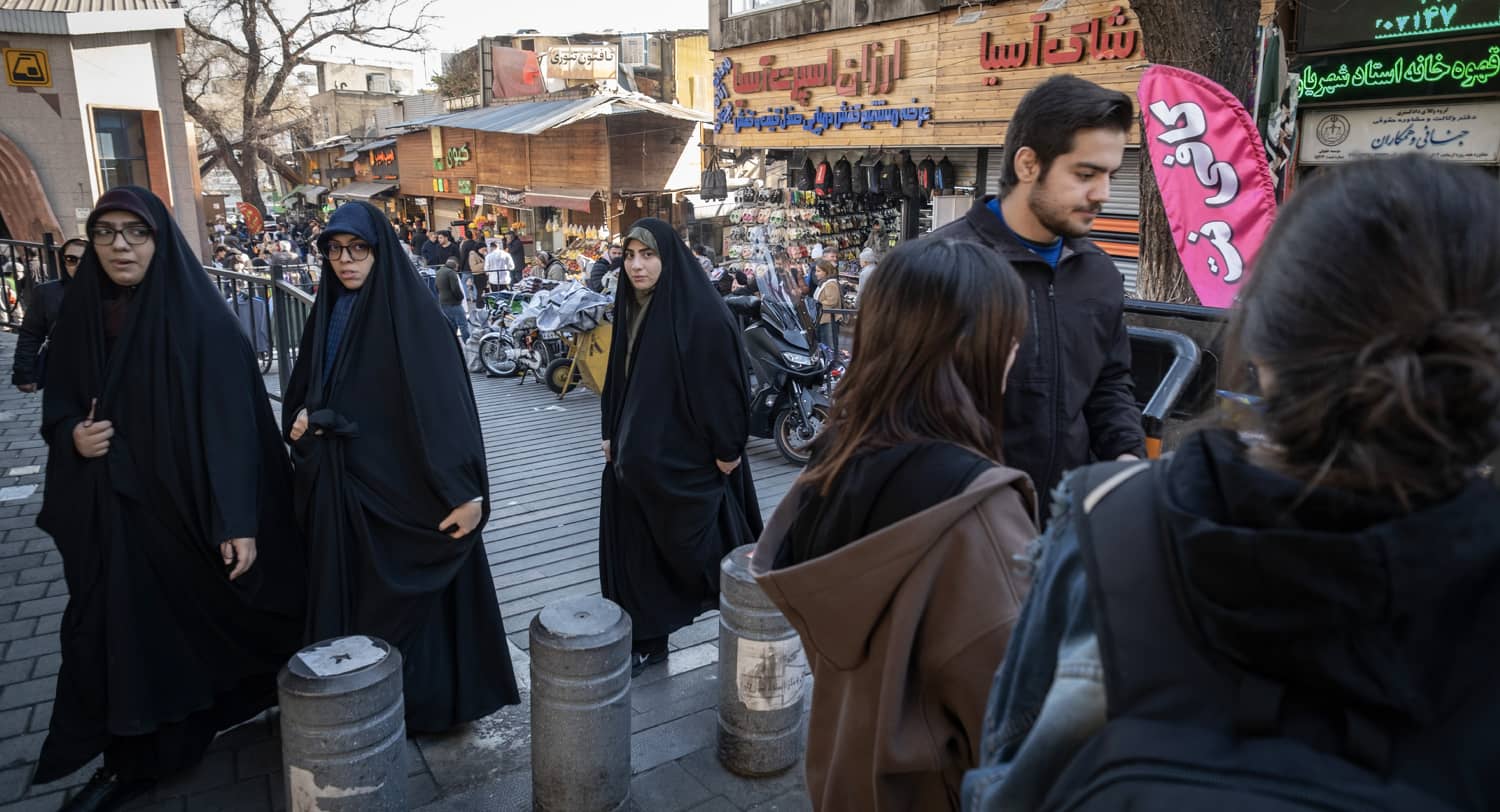
In Iran, the streets pulse with courage and moral clarity in protest against the clerical regime, yet they also reveal something else: raw anger can topple regimes but cannot construct the cultural foundations of a successor order.
This moment could mark a pivot for the civilization of Iran. Can resistance mature into a durable culture capable of sustaining civil liberties and political rights? In this context, the emergence of Prince Reza Pahlavi as a unifying opposition figure signals not a restorationist reflex, but a potential non-violent pathway toward revising and reclaiming Iran’s national identity within a forward-looking framework.
Under the Shah, State Power Without Civic Roots
Iran’s Islamic Revolution cannot be understood by focusing narrowly on the events of 1979. Its origins lie in the political, economic, and cultural transformations of the 1950s through the 1970s under the Shah.
The Islamic revolution did not arise from stagnation, mass poverty, or institutional collapse. On the contrary, it followed one of the most ambitious periods of modernization in Iran’s modern history, defined by rapid economic growth, expanding state capacity, military power, and a clear vision of national development. Yet this transformation unfolded in a way that left a profound cultural and civic vacuum.
From the mid-1950s through the mid-1970s, Iran experienced a dramatic rise in state power. Oil revenues financed large-scale infrastructure, industrial expansion, urban development, and modernization of education and healthcare. Universities multiplied, literacy rates rose, and a new middle class emerged. The military became one of the strongest in the region, and Iran increasingly perceived itself as a regional power rather than a peripheral state. This confidence was rooted in a historical narrative that emphasized pre-Islamic Persian civilization, continuity of statehood, and imperial memory.
Modernization under the Shah was explicitly nationalistic, intending to restore Iran’s dignity after decades of foreign interference and underdevelopment. Yet the model chosen to achieve these goals was highly centralized top-down reform, administered via decree, bureaucracy, and technocratic planning. Economic and institutional change moved far faster than the formation of a participatory civic culture capable of internalizing the changes.
Nationalism, therefore, remained largely a state-run narrative rather than a lived cultural movement. It did not grow out of social struggle, intellectual pluralism, or independent cultural production. Cultural life remained constrained or increasingly shaped by an emerging alliance between leftist ideologies and political Islam. As a result, modernization advanced materially while remaining culturally fragile.
The same pattern defined social reform. Women gained the right to vote without the emergence of a mass suffrage movement. Land reform redistributed farms to peasants, but without producing rural political organizations capable of articulating the interests of new landowners. Industrial workers received shares in companies and benefited from rising incomes, yet labor organizations remained weak and dependent on the state. These reforms raised living standards but did not cultivate a society experienced in civic resistance, negotiation, or political self-organization.
Civil society existed largely in state-sponsored form. Associations, unions, cultural institutions, and professional organizations were created and supervised from above. Reform was experienced as something granted rather than earned. This fostered political passivity, even among those who broadly supported the monarchy. The state became the sole engine of progress—and therefore the sole bearer of legitimacy.
Ideological Capture of Elites
In the absence of an organic narrative culture, from the 1960s onward, radical leftist and Islamic ideologies gained increasing dominance in elite spaces. These movements offered something that state-led modernization did not: moral certainty, revolutionary purpose, and a sense of authenticity grounded in struggle and sacrifice.
Leftist discourse reframed modernization as dependency. Economic growth was recast as exploitation, nationalism as false consciousness, and sovereignty as illusion. The Shah was portrayed not as a modernizing nationalist, but as a puppet of Western imperialism. Political Islam offered a parallel narrative, presenting modernization as moral decay and spiritual betrayal. In this framework, the Shah became anti-Islamic, corrupt, and alienated from Iran’s authentic Islamic identity.
These narratives did not initially mobilize the masses. They first captured students, intellectuals, writers, and clerics. Universities functioned as ideological transmission centers, producing language, symbols, and moral frameworks that gradually spread into urban society and religious communities. As economic grievances intensified, these radical ideologies fused material dissatisfaction with cultural and moral opposition.
Meanwhile, the monarchy’s natural base of support, the silent majority benefiting from stability, growth, and order, remained politically inert. Supporters assumed that the state, bureaucracy, and military would manage unrest. They lacked independent organizations, cultural platforms, or narrative confidence. Nationalist-monarchist discourse existed almost exclusively within state institutions and official media. Outside that space, it had little cultural presence.
This asymmetry proved decisive. The state retained power but lost narrative authority. When economic pressure mounted, owing to declining oil revenues, budget shortages, inflation, and rising unemployment, the ideological groundwork had already been laid. Economic crisis did not create opposition; it activated it.
The Convergence of Antisemitism and Anti-Americanism
International dynamics accelerated this internal imbalance. Both Western and Communist powers were uncomfortable with the emergence of an autonomous, nationalist Iran that combined economic ambition, military strength, and strategic independence. A “new Japan” in Western Asia — modern, sovereign, and non-aligned — did not align with bipolar Cold War power structures.
The Shah’s foreign policy sought autonomy rather than alignment. Iran expanded economic and diplomatic relations with both East and West, resisting full integration into either bloc. This approach generated suspicion, particularly in the West, where Iran was increasingly viewed less as a partner and more as an unpredictable actor. At the same time, the Shah’s strong support for Israel isolated Iran regionally and provided a potent ideological weapon to his opponents.
Leftist and Islamist movements converged around anti-Zionism, which increasingly slipped into antisemitism. Israel became a symbolic proxy through which modernization, nationalism, Western alignment, and secularism were attacked simultaneously. Antisemitic narratives simplified complex geopolitical realities into moral absolutes, making them emotionally powerful and easily mobilized.
By the late 1970s, the language of opposition was leftist and Islamist. Nationalist-monarchist discourse lacked emotional energy, cultural legitimacy, and grassroots presence outside the state. When the crisis escalated, the Shah remained institutionally powerful but socially isolated. The top-down model that had driven modernization could not sustain narrative legitimacy.
After the revolution, a new paradox emerged. Over time, the Islamic regime lost credibility through mismanagement, corruption, and strategic failure. Universities and the middle class increasingly rejected its governance. Yet the vacuum was not automatically filled by nationalism. Leftist narratives retained dominance in intellectual spaces and, paradoxically, helped stabilize the regime. Many elites understood that the collapse of the Islamic system would likely revive a Pahlavi-rooted Iranian nationalism, undermining their own ideological position.
The Solution: Cultural Renaissance
The core failure that preceded the Islamic Revolution was not institutional or economic; it was the inability to cultivate a participatory civic culture capable of sustaining modernization. Political systems can be altered through leadership change, constitutional revision, or institutional reform. Civic culture cannot. It must be slowly formed through lived experience, independent organization, and sustained intellectual engagement.
For the future of Iran, the essential task is what may be described as a Modern Iranian Ethical Renaissance — the deliberate cultivation of a stable democratic culture rooted in the habits of self-governance: tolerance for disagreement, respect for procedural legitimacy, and acceptance of political loss without existential fear. These are not abstract values. They are learned behaviors, developed through participation in independent associations, professional organizations, cultural institutions, and intellectual communities that operate beyond state control or ideological monopoly.
A central component of this ethical renaissance is the forging of a pluralistic national narrative. Ideally, this narrative would integrate Iran’s pre-Islamic heritage, Islamic history, and modern secular experience without subordinating any of its parts to one ideological supremacy. National identity must be a civic framework rather than a doctrinal test.
Equally important is rejection of the ideological hostilities that have distorted Iran’s political imagination for decades. Anti-Americanism and antisemitism have functioned as substitutes for coherent national purpose, externalizing responsibility for internal failure and legitimizing perpetual confrontation. A modern hopefully democratic Iran requires abandoning these narratives not as concessions to foreign powers, but rather as acts of national self-respect and maturity.
A modern Iran will not be secured by the fall of a regime alone. It will emerge only when culture, ethics, and civic habits are rebuilt independent of state power and ideological coercion. The long-term stability of a secular democratic order depends less on who governs than on how society understands itself, negotiates difference, and limits power. That work begins not in palaces or parliaments, but in the society that produces a democratic culture.