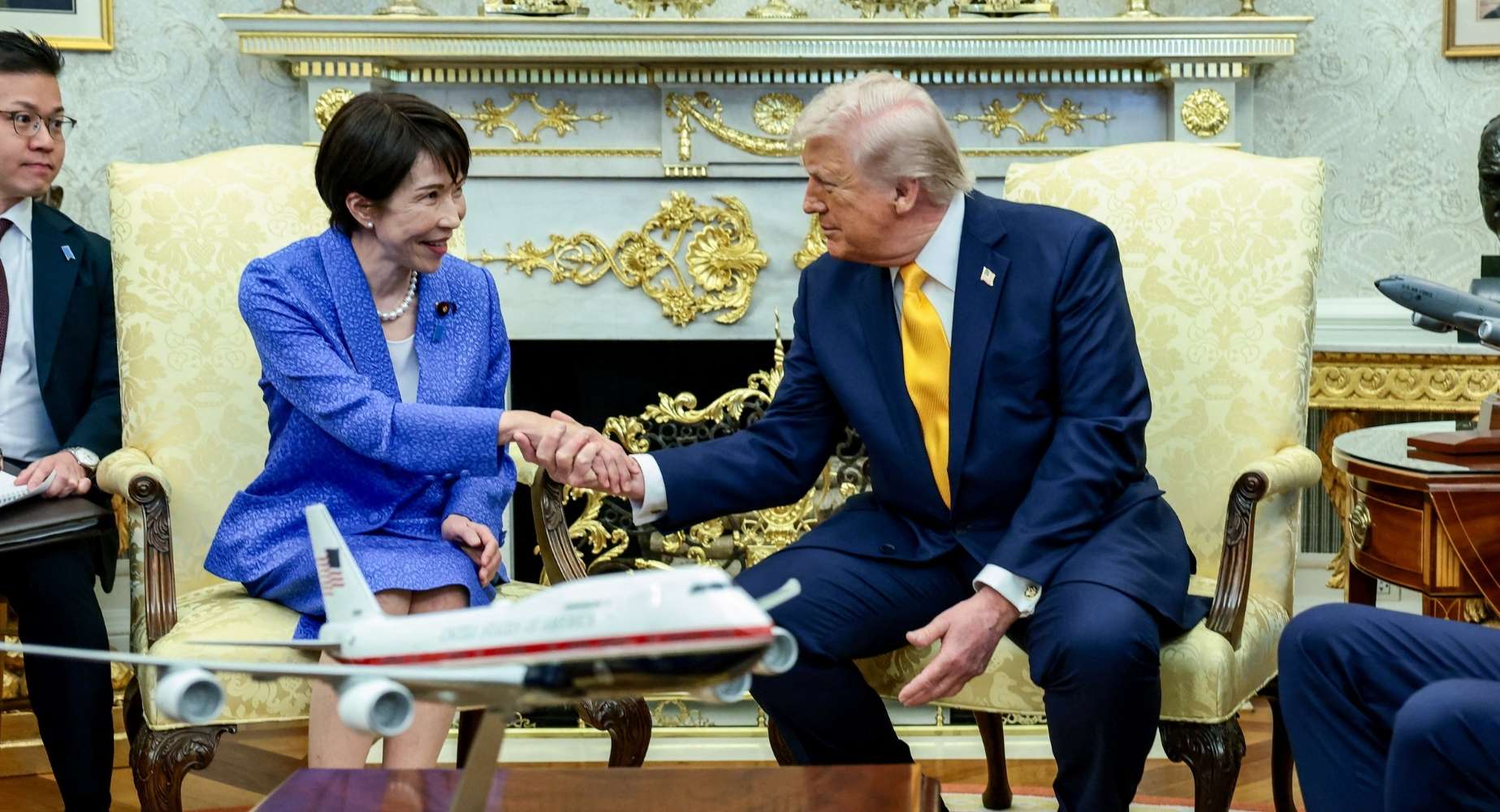
The landslide victory of Prime Minister Sanae Takaichi and her Liberal Democratic Party (LDP) in the snap elections that took place in Japan on February 8, 2026, marks a significant turning point for East Asian security. By securing a two-thirds supermajority (316 seats for the LDP alone), Takaichi has secured a massive public mandate to pursue her “Japan is Back” agenda—one that is closely aligned with President Trump’s vision of “America First”. No wonder than that her first post-election travel was to Washington DC where she was warmly hosted by President Trump in a high-profile summit on March 19. While she didn’t go as far as committing to send naval forces to help secure the safety of navigation in the straits of Hormuz as Trump hoped she’ll do, the two leaders agreed to extend existing defense collaboration between the two countries in joint missile development and production and other areas.
Meanwhile in China, the clock is ticking. On March 12 the annual meeting of the National People’s Congress approved the current 5-year plan for the People Liberation Army (PLA). This plan contains the 2027 Centennial Goal – a major milestone for military modernization – an ominous signal of readiness to launch an offensive move. As there is no end in sight for Russia’s war in the Ukraine and as the US-Israel war with Iran continues to escalate, the Chinese may be tempted to expedite their plans and make an aggressive move against Taiwan in the coming months.
Takaichi is explicitly hawkish toward Beijing and supportive of Taipei, arguably more so than any Japanese Prime Minister in decades. For the U.S., this means a once in a generation opportunity – an ally that is finally ready to move from “passive support” to active partnership. She has specifically warned that the U.S.-Japan alliance would “collapse” if Japan remained passive during a Taiwan crisis. Thus, she is expected to integrate Japanese and U.S. military contingency plans more deeply than any of her predecessors. Her mandate will enable rapid buildup of military might, allowing Japan to act as a shield that can do more than just defend Japan borders, potentially reducing the burden on Taiwanese and U.S. forces in case of a Chinese invasion to Taiwan.
As a former Minister of Economic Security, Takaichi views trade and technology through national security lens. She is pushing to reduce reliance on Chinese supply chains, particularly in semiconductors and critical rare-earth minerals. At the same time, she has already moved to uphold a $550 billion investment pledge into American strategic sectors.
The impact of her victory on China’s drive to annex Taiwan is complex, acting simultaneously as a deterrent and a catalyst for regional friction. First, let’s examine the cooling effect.
Takaichi has stated that a Chinese blockade or attack on Taiwan could be viewed as a “survival-threatening situation” for Japan. This provides the legal basis under the 2016 Peace and Security legislation for Japan to deploy its Self-Defense Forces (SDF) alongside U.S. forces.
With a supermajority in Parliament, Takaichi can now accelerate Japan’s defense budget toward 2% of GDP (approximately 9 trillion yen). This includes investments in counter-strike capabilities and long-range missiles, making a cross-strait invasion significantly more costly for the PLA.
The two-thirds majority in the Lower House brings Japan closer than ever to amending Article 9 (the pacifist clause) of its Constitution, which would formalize Japan’s right to maintain a military force for more than just “self-defense.”
While Takaichi’s strength may deter a sudden strike, it is also likely to escalate the “gray zone” tensions already present.
China has already labeled Takaichi a “militarist” and a “disturber of the status quo.” Her victory will likely lead to increased Chinese naval and aerial incursions near Japanese waters (the Senkaku Islands) as a form of punishment or show of force.
We can also expect China to retaliate economically. Following Takaichi’s previous comments on Taiwan, Beijing suspended seafood imports; further sanctions on electronics, tourism, or supply chains are highly probable as she moves forward with her defense agenda.
Takaichi’s close relationship with President Trump and their statements on “limitless” alliance potential signals a unified front. Beijing often views such tightening of alliances as containment, which can lead to a more aggressive Chinese posture to break the encirclement.
Takaichi’s win signals that Japan is no longer a “sleeping giant” in the Pacific. For Xi Jinping, the “Taiwan Question” now officially involves two major military powers (the U.S. and Japan) instead of one, which significantly complicates the calculus for any aggressive takeover attempt soon.