Now that they have won a sweeping victory in the midterm elections, one of the questions facing the Democrats is how to reconcile political diversity with a recognisable set of shared principles – particularly on Israel, where disagreements over its government and its identity as a Jewish state have exposed deep ideological fault lines within the party.
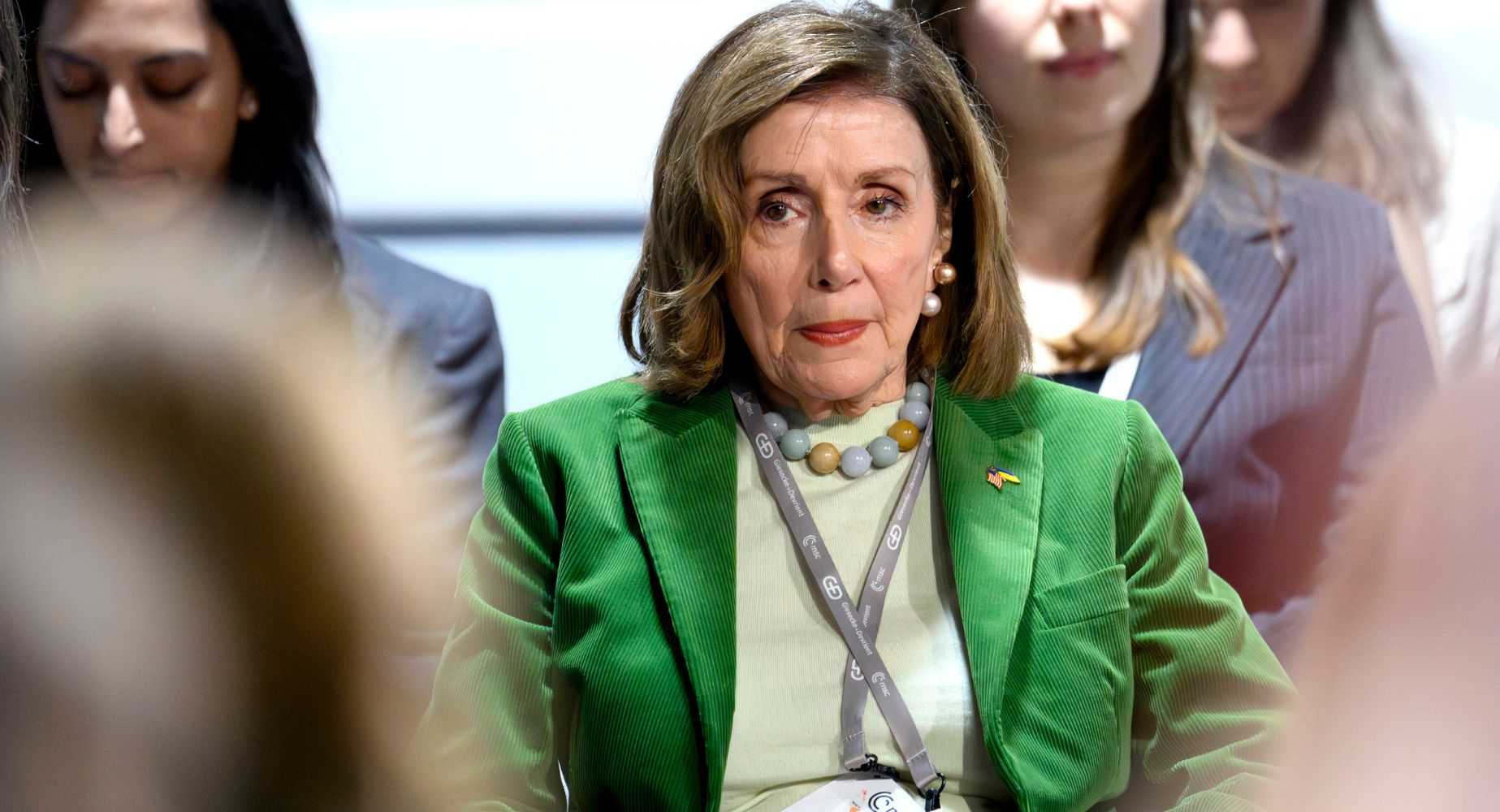
When Nancy Pelosi told Donny Deutsch’s On Brand podcast that certain views on Israel were “more than concerning,” and “wrong,” she was not breaking news. She was settling an argument the Democratic Party has been avoiding for two years. Her target was the stance, attributed to New York Mayor Zohran Mamdani and Michigan Senate candidate Abdul El-Sayed, that Israel should not exist as a Jewish state. Her sharper point was that this stance does not speak for congressional Democrats.
The context matters. Deutsch, a lifelong Democrat who is Jewish, asked how someone like him can stay comfortable in a party where such views get a hearing. Pelosi also said she could not account for everything Mamdani has said. Her office later clarified that she still backs El-Sayed’s candidacy on health care, the economy and democracy. She disagrees with him on one question, and she said so.
Two arguments that get conflated
The Israel debate in Democratic politics is really two debates, and the trouble starts when they merge.
The first is about policy: the conduct of the war in Gaza, settlement expansion, the Netanyahu government, conditions on military aid. Democrats have always fought over these questions, and many hold sharply critical views. Nothing in Pelosi’s remarks narrows that space.
The second is about legitimacy: whether a state defined as the national home of the Jewish people can be reconciled with liberal democracy at all. This question is structural, not tactical. Answering “no” means disputing the country’s existence, not its government.
Mamdani and El-Sayed deserve fair description here. Mamdani has said he supports a state with equal rights for all and objects to one that privileges a religion. El-Sayed has reportedly been unwilling to affirm Israel as a Jewish state. Neither position is, by itself, proof of bigotry, and their defenders can fairly say that insisting on equal citizenship is a democratic instinct. But the argument is incomplete, and Pelosi’s rebuke exposes the gap. Highlighting this gap sharply, Mark Dubowitz, chief executive of the Foundation for Defense of Democracies think tank, posted on X, “Mamdani is either wilfully ignorant or maliciously mendacious”, adding that “Israel has no official state religion”.
The consistency problem
Liberal democracies routinely embed a national or cultural identity in their institutions. Ireland, Finland, Japan and dozens of others do. Palestinian statehood, which most Democrats support, would also be an expression of national self-determination. If a people’s right to a state is generally accepted, a principled objection to Jewish self-determination specifically has to explain why this case is the exception.
Critics of Israel have real answers: the displacement of Palestinians, the unequal status of non-Jewish residents, the occupation. These are serious, and they argue for reform, equal rights and a negotiated settlement. They do not obviously argue for the abolition of the state. A politician can demand all of the former without taking up the latter. Many Israelis do.
There is also a human dimension. For many American Jews, Israel is not a seminar topic. It is the answer, however imperfect, to a history that ended in Auschwitz. A candidate who treats its existence as an open question should expect that voters will hear something other than abstract constitutional theory.
Why a party leader has to speak
Pelosi’s statement is also institutional. Big-tent parties survive by being clear about what the tent covers. Democrats include socialists, moderates, labor Democrats and evangelicals’ worst nightmares, and they have tolerated that range by letting each member speak for a district, not the party. Pelosi’s point is that district-level authority is not the same as party doctrine. A candidate can win a primary, as El-Sayed did, without his every view becoming the caucus position.
Her approach also avoids a trap. Demanding total ideological separation would have turned a policy dispute into a purge, and she did not do that. She marked a boundary and kept working with someone on the other side of it. Whether that is wisdom or hedging depends on your view of the boundary.
The case against Pelosi
A fair reading requires the counterargument, and it is not frivolous. Critics say the question put to these candidates is a loyalty test with no equivalent for other countries, and that “Jewish state” can mean very different things: a refuge, a demographic majority, or legal privileges for one group. Rejecting the third is not rejecting the first.
What the episode settles
It settles less than either side will claim. It does not resolve whether Israel’s laws on nationality and citizenship meet democratic standards, and it does not close the argument over American aid. What it does is restate a distinction: a party can be harshly critical of an Israeli government and still affirm that Israel has a right to exist. That position is not the property of any faction. It has been the Democratic mainstream for decades.
The harder test comes next. If Democratic leaders defend the line only when a podcast host asks, it will look like convenience. If they defend it consistently, while condemning antisemitism and Islamophobia with equal firmness, it will look like principle.
The party’s future will not be decided by one interview. But Pelosi has forced a question that many Democrats had hoped to leave unanswered, and in politics that is no small thing.