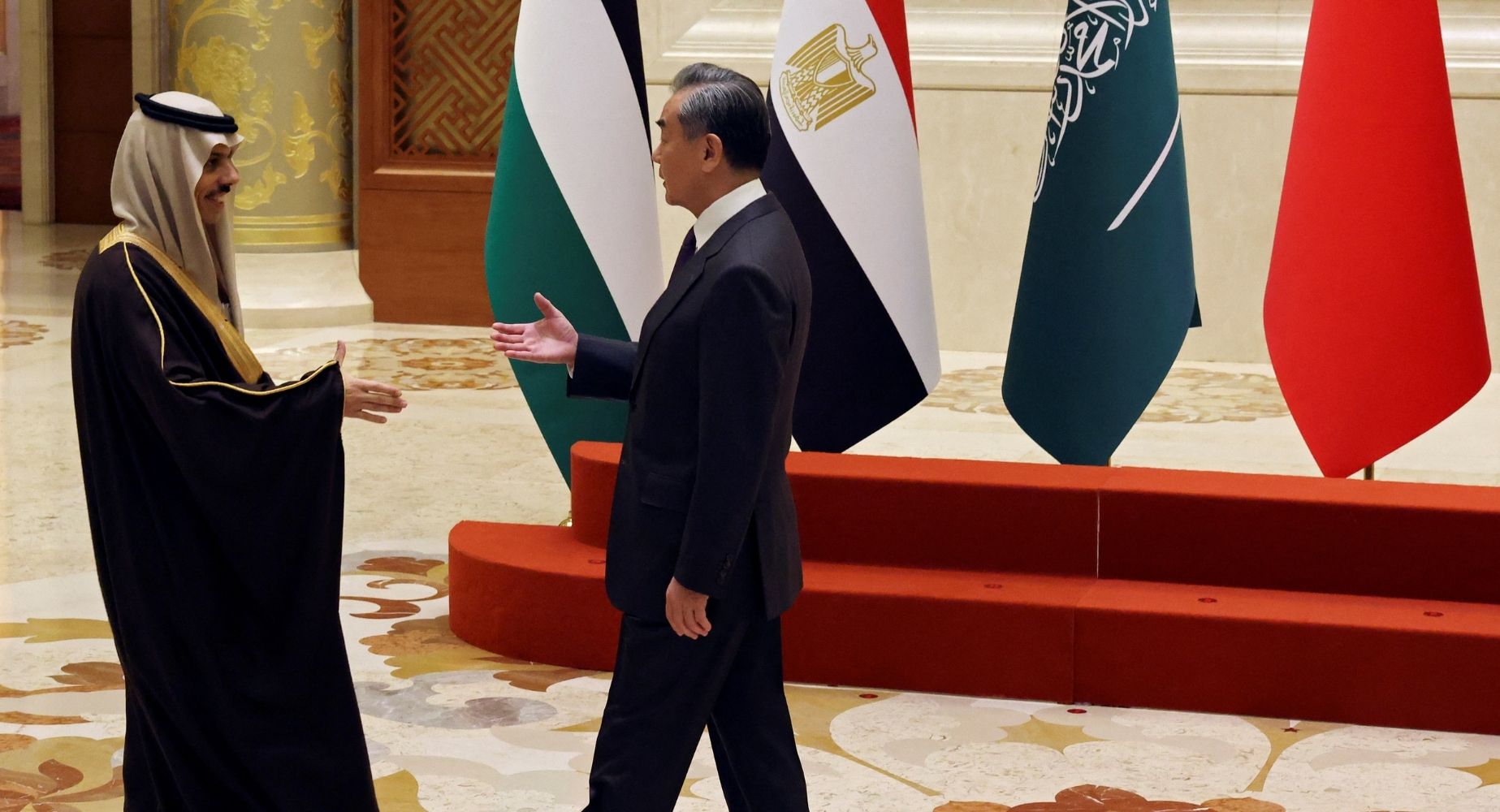
China has become one of the Middle East’s largest economic stakeholders. However, when war threatens the region, Beijing still looks more like a diplomatic actor than a security provider. That paradox lies at the heart of China’s Middle East strategy. As its dependence on regional energy, trade, and infrastructure has expanded, so too has its interest in preserving stability. But despite its growing economic footprint, China remains reluctant to assume the military and political burdens traditionally associated with great-power leadership. Beijing wants stability but prefers someone else to enforce it.
The latest confrontation between the US, Israel, and Iran illustrates this dilemma. After American forces struck Iranian nuclear facilities and Israel expanded its campaign against Tehran, China reacted swiftly. China condemned the attacks, called for an immediate ceasefire, urged all parties to return to negotiations, and dispatched its Special Envoy for the Middle East, Zhai Jun, to help contain the crisis. Chinese Foreign Minister Wang Yi intensified consultations with regional and European counterparts, warning that further escalation threatened international peace and global economic stability. Nevertheless, beneath this burst of diplomatic activity lay an important reality: no one seriously expected China to intervene militarily or fundamentally alter the course of the conflict.
That reaction captures China’s growing strategic dilemma in the Middle East. Over the past two decades, Beijing has become one of the region’s largest economic stakeholders. It imports enormous quantities of Gulf energy, has invested billions of dollars in ports, industrial zones, and infrastructure under the Belt and Road Initiative (BRI), and has cultivated partnerships with nearly every major regional actor. Nevertheless, despite these expanding interests, China remains deeply reluctant to assume the security responsibilities traditionally associated with great powers. China wants stability. It simply does not want to become the region’s security manager.
Why Beijing Wants Peace
China’s preference for de-escalation is driven less by ideology than by economic necessity. Roughly half of China’s imported crude oil originates in the Middle East, making uninterrupted energy flows a vital national interest. The Strait of Hormuz remains one of the world’s most important maritime chokepoints, and any prolonged disruption would raise transportation costs, increase global energy prices, and complicate China’s already slowing economic recovery.
The stakes extend well beyond oil. Chinese companies have invested heavily across the Gulf, Egypt, and North Africa through industrial parks, logistics hubs, telecommunications networks, renewable energy projects, and transportation corridors. Regional instability threatens these investments while undermining the broader Belt and Road vision of connecting Asia, the Middle East, Africa, and Europe through integrated trade and infrastructure networks.
War also carries geopolitical costs. Beijing has spent years presenting itself as a responsible global power that emphasizes dialogue, sovereignty, and negotiated solutions rather than military intervention. Particularly across the Global South, Chinese leaders seek to contrast their diplomatic approach with what they portray as Washington’s reliance on force. The challenge, however, is that projecting the image of a peacemaker is far easier than possessing the tools necessary to enforce peace.
Influence Is Not the Same as Leverage
The latest crisis has exposed the fundamental asymmetry in China’s Middle East strategy: Beijing possesses substantial economic influence but limited strategic leverage. These two concepts are often confused, yet they are fundamentally different.
China’s influence stems from trade, investment, energy purchases, infrastructure financing, and technological cooperation. These relationships provide Beijing with access, goodwill, and channels of communication across the region.
Leverage, by contrast, derives from security commitments, military alliances, deterrence capabilities, intelligence cooperation, and the willingness to employ force. In the Middle East, those instruments remain overwhelmingly concentrated in American hands.
This distinction explains why China can facilitate dialogue but struggles to shape battlefield outcomes. Beijing can encourage restraint, but it cannot deter military operations once leaders conclude that force better serves their interests. Economic interdependence creates opportunities for persuasion. It does not automatically translate into coercive influence during wartime.
The Limits of China’s Strategy
Three structural constraints further narrow Beijing’s room for maneuver. First, China’s regional strategy depends on maintaining productive relations with mutually hostile states. Unlike the US, whose alliance structure clearly differentiates partners from adversaries, Beijing has deliberately cultivated close ties with Iran, Saudi Arabia, the United Arab Emirates, Israel, Egypt, and Turkey. This balancing strategy has served China remarkably well during periods of relative stability. As conflicts intensify, however, maintaining equidistance becomes increasingly difficult. Each side expects stronger political backing, clearer diplomatic positions, and occasionally material assistance. The broader the conflict becomes, the harder it is for China to satisfy everyone without alienating anyone.
Second, China has consciously avoided becoming a military guarantor in the region. Although it maintains a naval facility in Djibouti and has gradually expanded its overseas military presence, Beijing lacks the alliance network and force posture necessary to manage regional crises. Its comparative advantage lies in commerce rather than coercion. Third, Iran itself represents both an asset and a constraint. China remains Tehran’s largest oil customer and one of its few major economic lifelines under Western sanctions. These ties provide Beijing with privileged channels of communication unavailable to most Western governments. However, economic dependence should not be mistaken for political control. Should Iranian leaders conclude that regime survival is at stake, domestic security considerations outweigh Chinese preferences for restraint.
Beijing’s Five Options
Given these constraints, what can China realistically do if tensions again escalate toward war? The first option is active diplomacy without coercion. This remains Beijing’s preferred approach. China can dispatch special envoys, support ceasefire proposals, encourage negotiations through regional mediators such as Oman and Qatar, and maintain communication with all major actors. This strategy is relatively inexpensive, consistent with China’s longstanding foreign policy principles, and reinforces its international image as a responsible diplomatic actor.
The second option is quite pressure on Iran. While Beijing is unlikely to criticize Tehran publicly, private diplomacy offers greater possibilities. China has strong incentives to discourage actions that could close the Strait of Hormuz, attack Gulf energy infrastructure, or provoke broader regional escalation. Behind closed doors, Beijing may possess more influence than its public statements suggest.
Third, China can pursue coalition diplomacy by working alongside middle powers and multilateral institutions rather than acting alone. Coordinating with Gulf governments, European partners, and the United Nations allows Beijing to broaden diplomatic pressure for de-escalation while avoiding the appearance of defending Iran unconditionally.
The fourth option is strategic insulation. Rather than attempting to prevent every crisis, China has increasingly sought to reduce its own vulnerability. It has diversified its energy imports, expanded its strategic petroleum reserves, accelerated the development of renewable energy, and reduced its dependence on any single supplier. The more resilient China’s economy becomes, the less pressure Beijing faces to assume risky security commitments abroad.
Finally, there is strategic passivity wrapped in diplomatic activism. This may appear contradictory, but it reflects an enduring feature of Chinese grand strategy. Beijing can condemn military escalation, advocate negotiations, and portray itself as a champion of peace while simultaneously avoiding direct involvement in a dangerous conflict. Such an approach allows China to preserve its relationships across the region, minimize strategic risk, and contrast its diplomacy with American military intervention. Limited instability may expose the costs of US regional leadership without requiring China to offer an alternative security architecture.
A Growing Strategic Paradox
Ironically, China’s success in the Middle East has created a strategic trap. Two decades ago, Beijing could afford to remain largely indifferent to regional conflicts because its economic exposure was relatively modest. Today, the opposite is true. Chinese prosperity has become increasingly intertwined with Middle Eastern stability. However, while China’s interests have expanded dramatically, its willingness to underwrite regional security has not kept pace.
This gap between expanding interests and limited security commitments may become one of the defining dilemmas of Chinese foreign policy over the coming decade. The more deeply Beijing becomes embedded economically, the greater the expectation that it should contribute to regional stability. However, accepting that responsibility would require abandoning the low-risk model that has largely underpinned China’s rise.
Peace Without Responsibility
The Middle East illustrates a broader challenge facing Chinese grand strategy. Beijing seeks many of the benefits associated with great-power status, access to markets, diplomatic influence, strategic partnerships, and political prestige, without assuming the costly military commitments that have traditionally sustained regional order. That model has served China remarkably well during periods of relative stability. It becomes considerably more difficult when wars erupt.
China will continue to condemn escalation, dispatch envoys, coordinate with regional governments, encourage restraint in private, and call for negotiations through multilateral forums. These efforts may help reduce tensions at the margins, but they are unlikely to determine whether war occurs. The decisive choices will continue to be made in Washington, Tehran, and Jerusalem.
For now, China remains what it has increasingly become in the Middle East: an indispensable economic power, an increasingly active diplomatic actor, and a reluctant security provider. That combination allows Beijing to shape the region’s long-term political economy, but not, at least for now, to guarantee peace in the region.