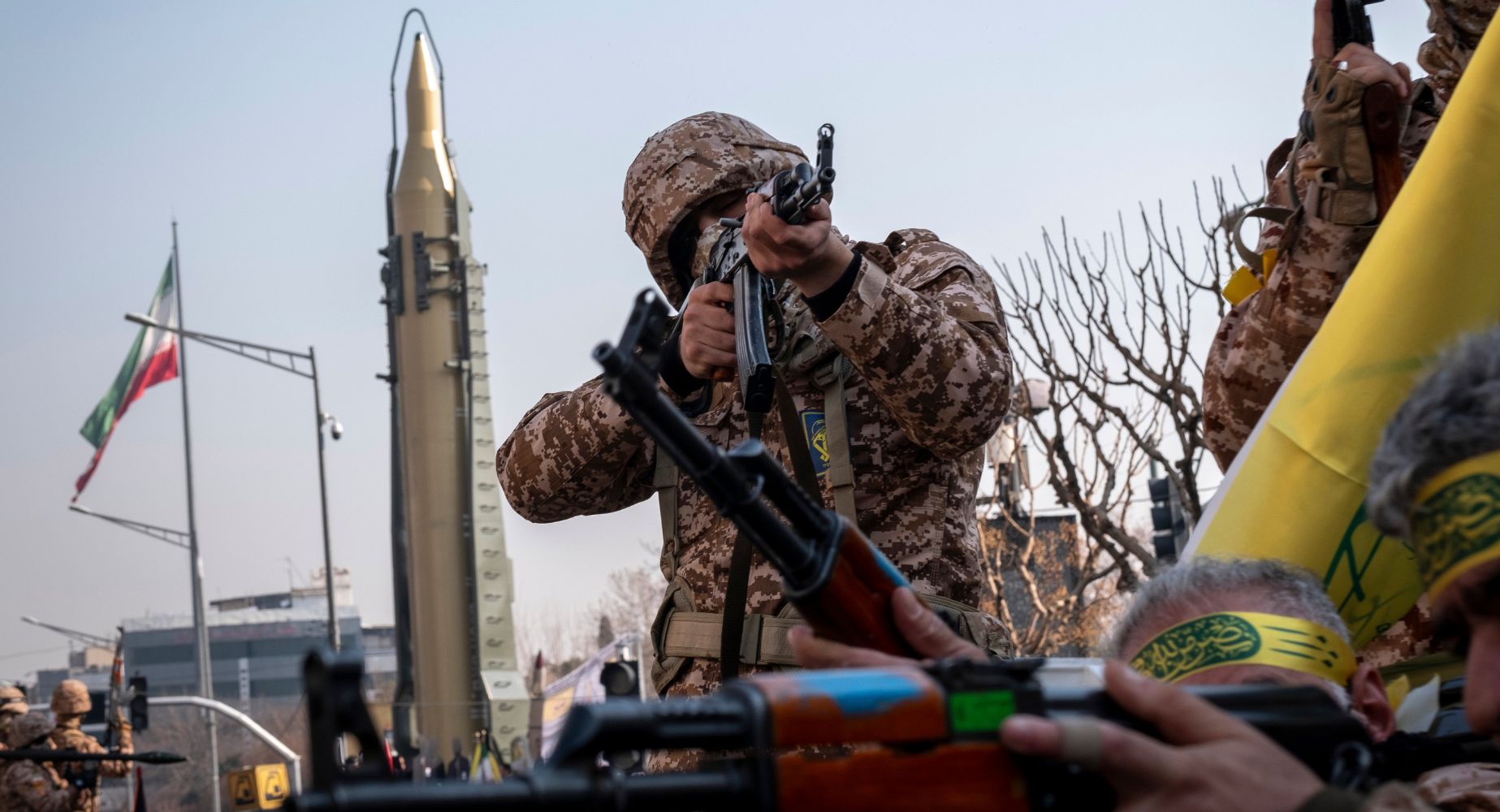
Sadly, the present combination of power players in Tehran seems intent on staying in power: after all, if they were to face the full force of their people’s frustration, they are likely to end up decorating the city’s lampposts and crans – hence their tenacious and brutal grip on the tools of repression. The cracks may be showing: on one hand, the “face to the world” – President Masoud Pezeshkian, Majlis Speaker Mohammed Bagher Ghalibaf, Foreign Minister Abbas Araghchi – are in principle willing to negotiate, well aware of what is at stake. However, with the nominated Supreme Leader – Khamene’i’s son, Mojtaba – reportedly badly wounded, and yet to be seen or even heard in his own voice in public, real authority has in effect been delegated to the remnants of the Revolutionary Guards leadership, with the Basij as their arm of repression. They make a mockery not only of the Iranian political figures’ promises but also, quite blatantly, of President Trump for being so naïve as to believe that Iran is ready for significant concessions. Ultimately, both the diplomatic chatter and the IRGC boasts and threats are aimed at eroding American and western resolve, and fending off the firm demands made by the US team in the previous round of talks in Islamabad.
What all this adds up to is the very real threat that the actual rulers of Iran, the aggressive and arrogant IRGC elements now in full power, would soon feel free to ignore the so-called (and essentially fictitious) “Fatwa” forbidding nuclear weapons, and thus try to dash to the bomb. As in the case of North Korea, they are bound to use this option to secure the regime’s survival in the long term. Yet unlike the case in North Korea, such a turn of events would also be used to destabilize the entire region, offer a strategic umbrella to proxies, and putting Israel’s survival at risk. It is also bound to ignite a highly dangerous nuclear arms race. The stakes could not be higher.
With about a thousand pounds of Uranium enriched to %60 still apparently available to them – even if buried under the rubble of attacks in June 2025 and again now – the IRGC regime may well be tempted to take this ultimate step. Tragically, the one lesson they seem to have learned in recent weeks is that it is in fact possible for them to take the world – or rather, the world economy – hostage, and to see (as they claim) the presumably all-powerful American power blink first, and even appear eager to cut a deal. Iranian Embassies around the world have echoed this mockery, indicating that they also feel they can twist the lion’s tail.
If this arrogant state of mind persists, it may well be that only the renewed use of force, or a credible demonstration of the will to do so, can impose on Tehran’s real rulers (over whom neither Pezeshkian nor Ghalibaf have much leverage) an outcome that the region, and the world, can safely live with. Full extraction of the entire enriched stockpile (60% and 20% alike), and a very long, total suspension of all enrichment activities – a far stricter set of requirements than those of the JCPoA in 2015, with its “sunset clauses” – must be the non-negotiable core of any deal: if Iran still refuses to comply, the stranglehold on its economy must come into effect. Moreover, the blockade, or the option of imposing it again at any moment, must remain a key tool of US and allied policy: wavering in the face of Iranian threats and provocations would have severe consequence (and may force Israel to go it alone, as it did in the first days of the fighting in June 2025).
While two goals, namely stopping the nuclear project and opening the Hormuz Straits – are often mentioned together, in the common context of the need to deny Iran the ability to destabilize to global system, there is nevertheless a difference. At the end of the day, dismantling the nuclear project is the most important goal, insofar as the failure to do so will sooner or later drag the region and the world into the abyss. On the other hand, the question of who controls the traffic in the Straits of Hormuz and the effective blockade of Iran’s ports are essentially tools for a purpose: their importance at this stage lies mainly in their impact as a test of wills.
Iranian behavior, including the refusal to come to the negotiating table unless their conditions are met, clearly reflects a perception that they have the upper hand, in the face of what may seem as inconsistent and at times incoherent American positions. Moreover, the blunt manner in which Israel was ordered to cease its strikes against Hizbullah targets in Lebanon fed the notion in Tehran that they are now able to dictate their terms – even if the US Administration tried to de-link the effort to bring together Israel and Lebanon from the American-Iranian talks. Unless such perceptions are to be swiftly and decisively done away with, the likelihood of Iranian compliance with basic American positions on the nuclear file seems dim.
The broader question of the future of the regime calls for greater clarity as to what may constitute a war aim – in the operational sense – and what may be defined as grand strategic consequences, that military action may (or may not) hasten but cannot bring about directly. If the goal of denying the present regime in Iran its nuclear ambitions would be effectively achieved, it will then be the turn of the Iranian people to ask: what was the purpose of the painful deprivations they have suffered now for decades? If the bomb was never to be reached, why was so much sacrificed in order to achieve nuclear status? With no true religious authority to offer them theologically oriented answers – Mujtaba will not be in a position to do so, even if he miraculously recovers – they would be entitled to vent their growing anger at those who brought Iran so low, to no avail. The regime may see its own survival as a “victory”. The people may not see it that way. But it remains a fool’s errand to try and predict with any accuracy when and how their anger will erupt again.