It is remarkable to witness the level of ignorance displayed by certain public officials, segments of the media, and various analysts when evaluating the rationale behind the joint American–Israeli military operation against Iran.
For Americans, it is natural to perceive Russia and China as primary threats, given how deeply U.S. strategic thinking has been shaped by the Cold War. Yet this perspective often overlooks another adversary that operates through asymmetric warfare and can pose dangers comparable to—if not greater than—those presented by China or Russia: radical Islamist movements.
The attacks of 9/11 took place almost twenty-five years ago. That passage of time does not mean the threat has disappeared, as Tucker Carlson has suggested.
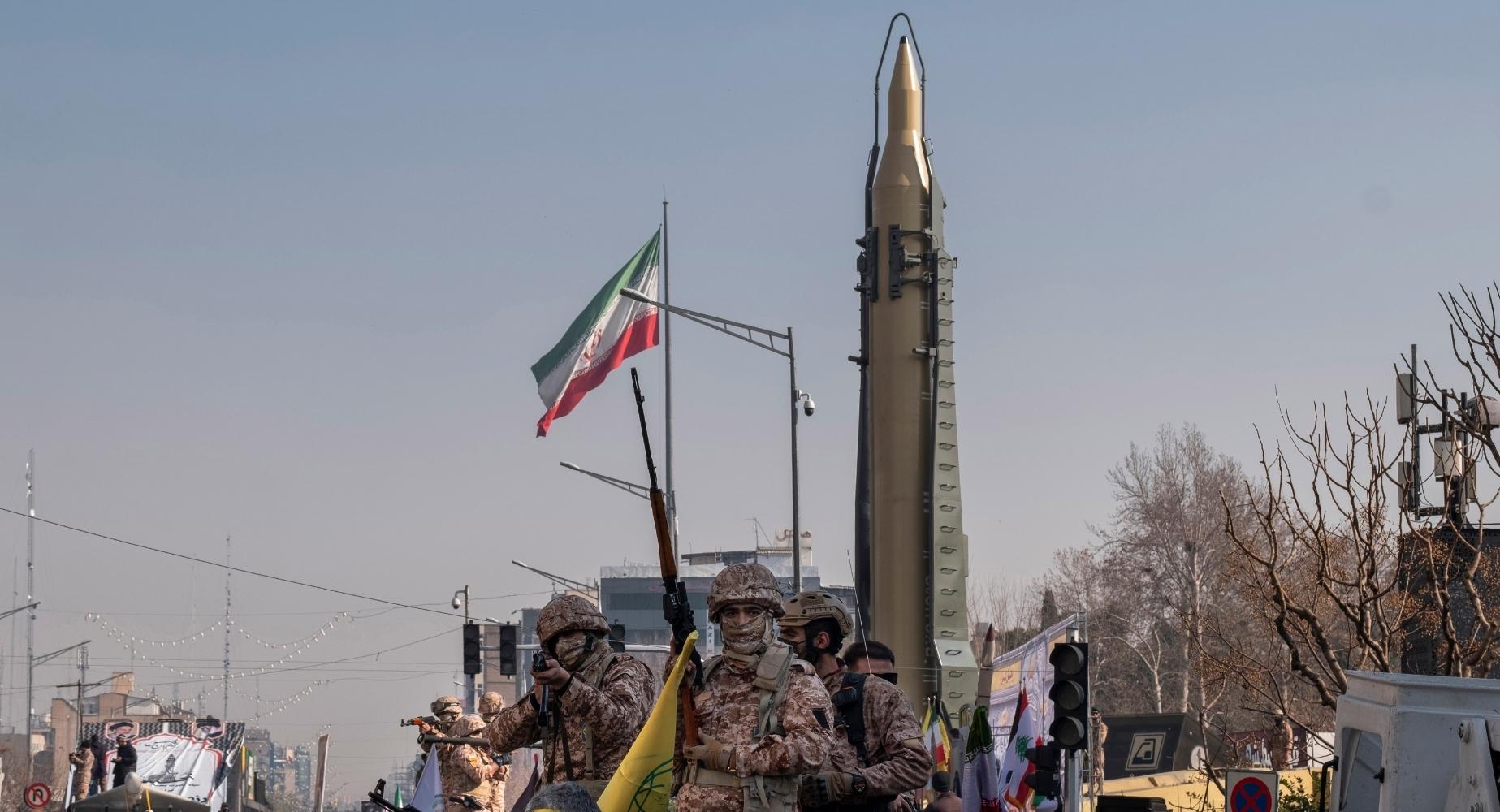
Iran continues to pursue uranium enrichment in its effort to develop nuclear weapons. It also manufactures missiles capable of striking U.S. allies in the Persian Gulf and Europe, while the regime remains one of the world’s principal sponsors of asymmetric warfare in the Middle East and beyond.
Iran’s use of Hezbollah to carry out attacks against American servicemen in Beirut in 1983, as well as the bombings of the Israeli Embassy and the Jewish Community Center in Buenos Aires in the early 1990s, helped shape and inspire the terrorist tactics later adopted by Al Qaeda.
Indeed, the 9/11 attacks against the United States must be understood within the broader evolution of mass-casualty terrorism that emerged during the 1980s and 1990s. Whether Sunni or Shia, when the adversary is the United States, the West, or Israel, these traditional religious rivals not only draw inspiration from one another but at times also cooperate.
As an example,, after the 9/11 attacks, several of Al Qaeda’s founding leaders fled to Iran, where they lived in Tehran for years. Later, some of them left Iran and returned to Pakistan to rejoin Al Qaeda.
Likewise, Iran has developed ties with Hamas and Palestinian Islamic Jihad (PIJ), both Sunni movements, to present itself as a pan-Islamist power rather than an exclusively Shiite one.
The Sunni–Shiite divide has always existed but the broader political role of Islam proved more important than sectarian differences.
At the same time, Iran’s tensions with Saudi Arabia and other Persian Gulf states stem largely from Tehran’s opposition to their modernization efforts and their alliances with the West. One notable exception is Qatar, whose leadership has maintained close ties with the Muslim Brotherhood and has at times shown support for Iran. In the past, Sunni Sudan maintained close relations with Tehran. More recently, Sunny Turkey and Shiite and Shiite Iran have intensified their cooperation in several areas, despite finding themselves on opposite sides of the Syrian conflict.
Thus, Iran has been the principal sovereign state supporting terrorist groups and destabilizing countries such as Lebanon, Iraq, and Yemen contributing to instability across the Middle East.
Iran has also extended its violent reach into Europe, where it has reportedly used underworld criminal groups such as Foxtrot and Rumba to carry out acts of terrorism. In the United Kingdom, authorities have identified around twenty Iranian-backed plots targeting British citizens and residents. Similarly, in Germany and France, Iranian operatives have allegedly used European drug traffickers to conduct surveillance on Jews and Jewish businesses.
An interactive map produced by the Washington Institute for Near East Policy documents nearly 500 cases of Iranian plots around the world, including in the United States, involving assassinations, abductions, and other hostile activities.
In Latin America, Iran has also cultivated relationships with several far-left governments, including Venezuela, Nicaragua, Cuba, and Bolivia under the MAS party. Through these partnerships, Tehran appears to seek a strategic position in the Western Hemisphere that could enhance its deterrence capabilities against the United States.
In this context, two particularly concerning elements emerge. First is the possibility that, because of their geographic proximity to the United States, countries such as Venezuela, Cuba, or Nicaragua could serve as strategic platforms if Iran were attacked or perceived a direct threat. Some reports point to the existence of facilities in Venezuela dedicated to assembling Iranian-designed drones, a capability that has emerged from long-standing military cooperation between Caracas and Tehran.
According to Francisco Santos, a former Vice President of Colombia, Iran provided logistical support and training related to missile operations to Venezuelans and has also taught Colombian guerilla groups how to use drones.
The continued development of Iranian missile and drone technology increases potential risks, particularly if such capabilities were deployed from Latin American territory toward the United States. The geographical proximity of some of these countries could amplify the strategic implications of such deployments.
Through its proxy Hezbollah, Iran established connections with criminal structures linked to drug trafficking, smuggling, and money laundering across parts of the region.
Hezbollah has been deeply involved in money laundering operations in Latin America, often in cooperation with regional drug cartels. The so-called Tri-Border Area—where Brazil, Argentina, and Paraguay meet—has long served as a major hub for Hezbollah’s financial and logistical activities, including smuggling and money laundering schemes designed to generate funds for the organization.
Since the early 2000s, investigations by U.S. and Colombian authorities have uncovered networks linking Hezbollah operatives to narcotics trafficking and financial laundering operations connected to Latin American criminal organizations.
Venezuela has been an important operational environment for Hezbollah-linked networks. Analysts and intelligence reports suggest that the country has facilitated activities related to drug trafficking, money laundering, and logistical support, while also enabling operatives to obtain travel documentation and move more freely across the region and even beyond.
In addition, Hezbollah operatives and associated networks have reportedly cooperated with criminal structures involved in narcotics trafficking and smuggling throughout Latin America, allowing the group to generate revenue and expand its logistical reach.
The U.S. Drug Enforcement Administration (DEA) initiative Project Cassandra documented extensive links between Hezbollah’s financial and logistical networks and South American drug cartels, showing that operatives connected to the Lebanese organization helped facilitate cocaine trafficking to Europe and the United States. The probe uncovered business relationships between Hezbollah’s Business Affairs Component (BAC) and criminal syndicates such as Colombia’s Oficina de Envigado and individuals like Chekri Mahmoud Harb, a Lebanese-Colombian trafficker whose network routed cocaine shipments from South America to the Middle East and Europe, with a portion of proceeds reportedly benefiting Hezbollah.
In Brazil, law enforcement and investigative reporting have suggested connections between traffickers tied to Hezbollah and the dangerous criminal gang Primeiro Comando da Capital (PCC). These links reportedly involve intermediaries in the international arms market and collaboration in smuggling explosives and military-grade matériel, a partnership rooted in broader smuggling and money-laundering networks operating in the tri-border region of Argentina, Brazil, and Paraguay.
U.S. authorities and court filings have also identified Lebanese-Colombian kingpins such as Ayman Saied Joumaa, who was designated under the Foreign Narcotics Kingpin Designation Act for his role in laundering drug proceeds and trafficking cocaine in partnership with criminal organizations. Joumaa’s network allegedly connected Colombian suppliers, Mexican cartels such as the murderous and brutal organized criminal group Los Zetas, and Hezbollah’s financial apparatus, underscoring the operational overlap between terrorist financing and global criminal enterprises.
In addition, there is alleged involvement of Hezbollah in illegal extraction and smuggling of natural resources—such as gold and other strategic minerals—as part of broader illicit finance operations tied to corruption and weak governance. These activities are said to form part of a diversified funding base that complements narcotics trafficking and money laundering networks.
Given the evidence outlined above, it seems unreasonable to oppose military action against Iran on the basis that it “does not constitute an imminent threat.” Hearing such reasoning suggests that the free world may be left vulnerable.
We understand International law recognizes the right to self-defense, though preventive wars remain legally and politically controversial. However, should we be waiting for another attack on the scale of 9/11 before acting in defense of our and our allies’ security?