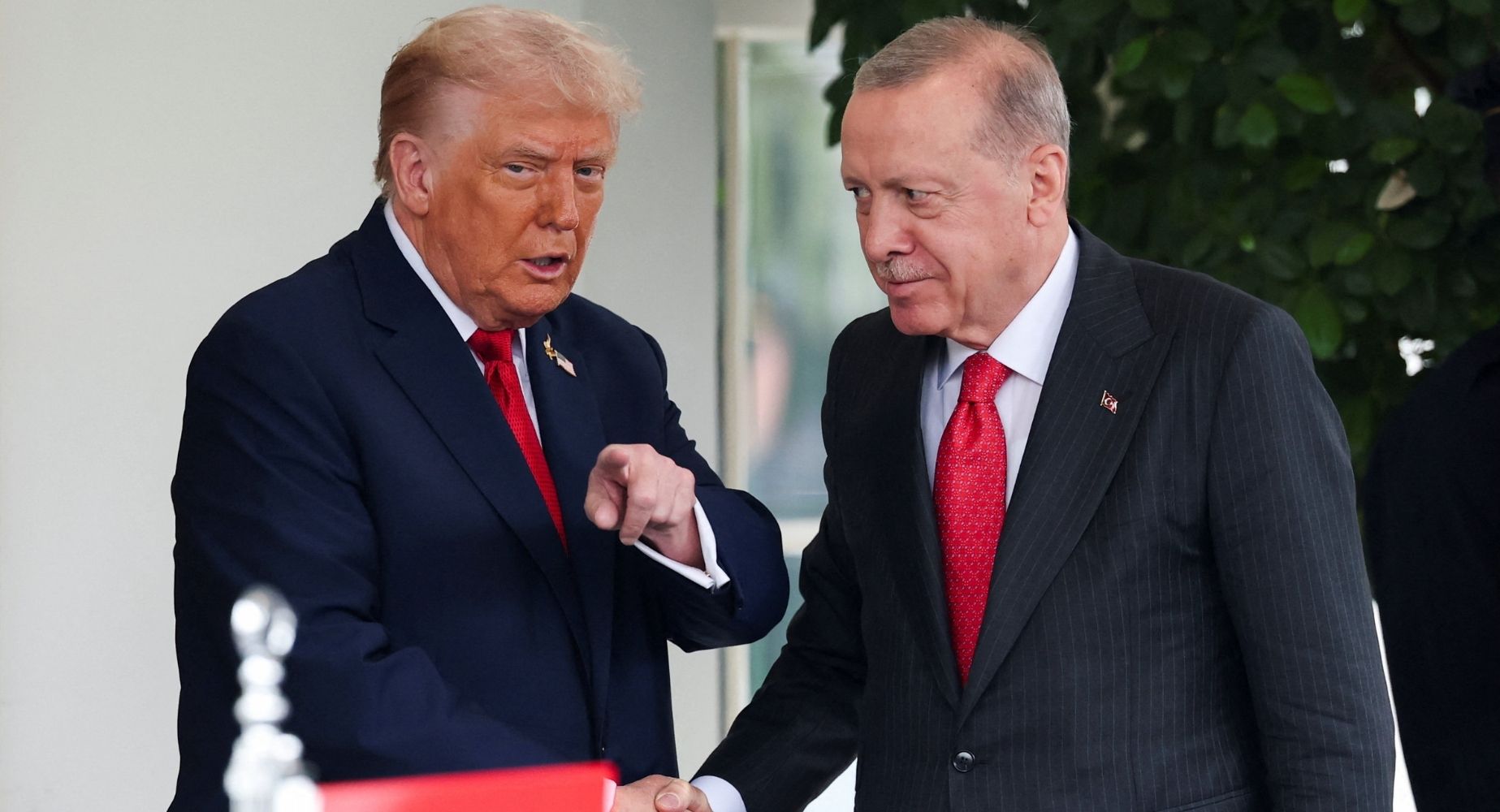
In early March when the campaign against Iran had just begun, it seemed that U.S. president Trump wanted to use Iranian Kurdish groups to help overthrow the regime. Then he abruptly changed his mind, saying he would not look to the Kurds for assistance. It seems highly likely that Turkish president Erdogan, with whom Trump has a good relationship, convinced him not to pursue a Kurdish-centric strategy.
Iranian Kurdish groups want to use the opportunity this war provides to liberate themselves and the rest of Iran from the mullahs’ regime, of course, but they also do not want to lose thousands fighting the regime only to have the U.S. do what it did in Syria, where the U.S. allowed Turkey to attack Syrian Kurdish groups and ended up supporting a centralized government based in the capital.
In order to join the war against the Iranian regime, therefore, the Iranian Kurdish opposition groups, which are far and away the most significant armed opposition groups in Iran, need assurances that could amount to something as simple as this: Washington states that as long as Kurds in Iran do not try to change the country’s borders, the U.S. will support their demands for democracy, decentralization and federalism, and it will use its air power to help protect them from the regime as well as any outside powers that try to intervene against them (e.g. a warning to Turkey not to try and repeat its invasions of Syria in Iran). That would almost certainly be enough for Iranian Kurds to take action and join the U.S. and Israel’s war against Tehran. This is also probably the only approach that could lead to regime change in Iran, which would in turn be the best way to end that country’s nuclear weapons aspirations and other malign activities in the region and beyond.
A liberation of Iranian Kurdistan led by the Kurdish opposition groups could well provide all the Iranian people a spark to revolt and a physical location to rally and seek sanctuary in. The Kurdish parties claim that their forces of a few thousand armed and trained peshmerga would rapidly swell in such circumstances to hundreds of thousands of volunteers in Iranian Kurdistan, and a liberated zone would give regular Iranian army units a place to defect to. Persian opposition groups would also then have a strong incentive to agree to democratic federalism – which virtually all the non-Persian groups in Iran (some 50% of the population) are demanding — and start operating out of these liberated areas too. This would mirror what the Iraqi National Congress (INC) did out of Iraqi Kurdistan from 1991 to 2003. The INC was primarily made up of Arab Iraqi opposition groups, both Sunni and Shiite, and based out of Iraqi Kurdistan while Saddam was in power.
This appears to be the only strategy that could effect regime change within the short term in Iran without any significant number of boots on the ground from the U.S. or Israel. The revolt could then spread to Khuzestan, Baluchistan, Azeri areas and more, supported by U.S. and Israeli air power.
It was not so long ago that former President Obama faced a similar dilemma. In Syria no one seemed capable of standing up to the so-called Islamic State (ISIS). The CIA wasted hundreds of millions of dollars on a joint “train and equip” program with Turkey aimed at creating an Arab and Turkmen force to fight ISIS, only to see that force surrender and/or defect to ISIS as soon as they crossed the border from Turkey. Faced with no other options and not wanting to send in large numbers of U.S. ground troops, Obama in 2014 chose to work with the Syrian Kurds, whose main party (the Democratic Union Party – PYD) was also a kind of Syrian national branch of the PKK.
Desperate to stop ISIS, the Syrian Kurds entered into an alliance of sorts with the U.S. without any demands or preconditions. The alliance succeeded brilliantly at defeating ISIS in Syria and also kept a large chuck of Syria outside the control of Assad’s regime. In January of this year, however, the U.S. abruptly ended the relationship by supporting the reassertion of centralized control by the new Ahmed al-Shara’a-led government over the regions the Kurds governed autonomously. This was almost universally viewed by Kurds everywhere as a yet another serious betrayal by the U.S.. Iranian Kurds are not so desperate as their Syrian kin were, and will thus require strong assurances that the same fate will not await them should they join hands with America.
Turkey, however, considers such an approach as anathema. Given Turkey’s own Kurdish minority (some 20% of Turkey’s population) and the insurgency they long waged for more rights, Ankara views any change in Iran that produces Kurdish autonomy there as a threat. A popular quip in Turkey is that they “oppose Kurdish independence anywhere, even on the moon.” It also does not help matters that while there are several Iranian Kurdish armed opposition parties, one of the major ones – the Party for Free Life in Kurdistan (PJAK) – is essentially a national branch of the Kurdistan Workers’ Party (PKK), the party that has been fighting Ankara since the early 1980s.
As a major NATO ally and a country whose leader Trump reportedly has a good relationship with, Turkey’s concerns carry weight in Washington. The war with Iran is not, however, going nearly as quickly and smoothly as President Trump may have wished. The question thus arises: Will Trump continue to defer to Turkey’s preferences on the matter, or will the imperative to win this war take precedence? Alternately, one could ask if Ankara’s Kurdophobia and Washington’s tendency to pander to it are dooming the Iranian people to the status quo under a regime most of them hate?