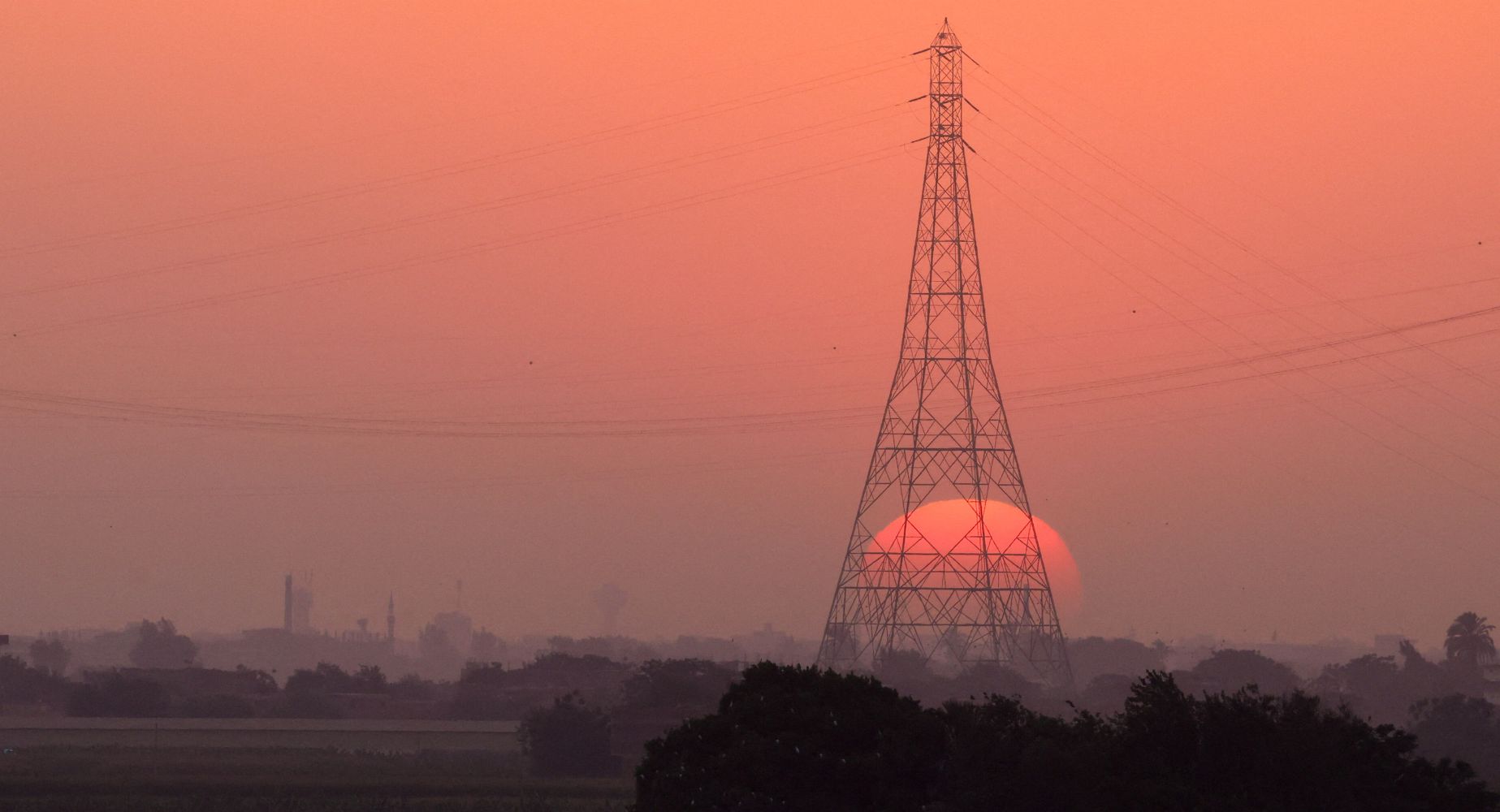
Climate finance is growing — but it won’t solve energy poverty unless we finance the diverse energy portfolios that developing economies actually need.
When nearly 200 countries adopted the Belém Political Package at COP 30 last November, they pledged $1.3 trillion per year in climate finance and tripled the adaptation target—then failed to agree on any roadmap for trasitioning away from fossil fuels somewhere later in mid-century. The disconnect was not suprising. It was structural. The global debate over energy transition (and addition) remains trapped in a false binary: fossil fuels or renewable, growth or sustainability, Wall Street or Planet Earth. That framing is not merely unproductive. It is dangerous—because it obscures the financial architecture that actually determine where capital flows and to whom.
Last January, the New York Times declared that Wall Street had “turned its back on climate change.” The narrative was irresistible — and fundamentally wrong. What collapsed was not climate finance but a model of voluntary corporate virtue preformative signaling—symbolic, but not functional. Meanwhile, $6.2 trillion in green and sustainability bonds have been issued with legally binding covenants, $2.3 trillion flowed to the energy transition in 2025 alone, and alternative asset managers have replaced traditional banks as the de facto infrastructure financiers for decarbonization. The story of climate finance is not retreat. It is maturation — from pledges to plumbing capital flows to viable and sustainable projects.
But maturation for whom? Here lies the energy transition’s inconvenient paradox. The same capital markets now deploying trillions into clean energy are largely bypassing the regions where energy poverty is most acute. 730 million people still lack access to electricity, the vast majority in sub-Saharan Africa, where nearly 600 million live without power. Africa receives just 2 percent of global clean energy investment despite having 20 percent of the world’s population. Energy investments on the continent are one-third lower today than in 2015. We are building the architecture of a clean energy future — but we are building it almost exclusively for those who already have energy.
Part of the problem is a false binary that has dominated climate policy: the assumption that the energy transition means an immediate, universal shift from fossil fuels to renewables. For a data center in Virginia or a factory in Bavaria, that framing may work. For a country where the cost of capital for energy projects is two to three times higher than in advanced economies, where grid infrastructure barely exists, and where population growth outpaces new connections, it does not. The energy transition must accommodate diverse energy portfolios tailored to where countries actually are — not where some climate advocates wish they were.
This means financing natural gas as a bridge fuel in regions still dependent on coal, biomass, or diesel generators — as the United States did when coal-to-gas switching drove an estimated 85 percent of its 21 percent emissions reduction since 2005. It means embracing nuclear energy, where more than 70 GW of new capacity is under construction globally and small modular reactors are approaching commercial deployment. It means investing in distributed energy generation and storage — rooftop solar paired with batteries, microgrids serving rural communities — that can bypass the centralized grid infrastructure developing economies lack. And it means scaling carbon capture, utilization, and storage, which offers the only viable pathway for decarbonizing heavy industry while turning captured carbon into economically productive inputs.
Even California — the world’s most aggressive renewables adopter — has found that pursuing an exclusively renewable grid without sufficient storage and dispatchable baseload power leads to record curtailment of clean energy and continued dependence on natural gas peaker plants, undermining the emissions reductions the policy was designed to achieve. If the wealthiest state in the wealthiest country cannot make a renewables-only approach work, we should not expect Senegal or Bangladesh to do so. As McKinsey’s Global Energy Perspective 2025 concludes, there is no universal solution — successful transition will rely on a diverse mix of renewables, gas, nuclear, and electrification shaped by each country’s resources, infrastructure, and development needs.
The financial architecture to support this diversity is underdeveloped. Current green bond taxonomies and sustainable finance frameworks overwhelmingly reward pure-play renewables and penalize transitional energy investments. They may make people feel good, even if there not doing much good. The November 2025 International Capital Markets Association (ICMA) Climate Transition Bond Guidelines represent a breakthrough — the first credible framework for financing decarbonization pathways in hard-to-abate sectors. But transition finance instruments for gas-to-renewables pathways, grid hardening, and baseload power in developing economies remain scarce. The IEA estimates that energy investment in Africa must double to over $200 billion annually by 2030 to meet the continent’s development goals — and that $28 billion in concessional and catalytic capital will be needed just to mobilize the required $90 billion in private clean energy investment.
Blended finance mechanisms offer the most promising bridge. Evidence shows that $1 of catalytic capital can unlock up to $30 in private investment by reducing risk for commercial investors. But the scale remains inadequate. Just Energy Transition Partnerships with South Africa, Indonesia, and Vietnam have pledged $46 billion combined — yet only 1.5 to 4 percent comes as grants, raising concerns about adding to sovereign debt rather than enabling genuine transition. Meanwhile, the ILO projects a net gain of 18 million jobs from decarbonization by 2030, but those jobs will not appear where old ones disappear without deliberate investment in workforce transition and local manufacturing capacity.
A decade ago, a group of us convened by the Rockefeller Foundation at Bellagio identified the core challenge: the development and sustainability sectors needed to create investable structures — securities, bonds, risk-sharing mechanisms — that could attract private capital on its own terms. The $6 trillion in labeled bonds built since then represent extraordinary progress. But those structures were designed primarily for investment-grade markets and proven technologies. The next generation of climate finance instruments must be designed for the messier reality of emerging economies: mixed-fuel portfolios, off-grid systems, local currency markets, and projects that combine energy access with economic development.
The question is no longer whether capital markets will finance the energy transition. They demonstrably will. The question is whether we will finance the transition that developing economies actually need — one that acknowledges the distance between where countries are and where they need to go, and provides the diverse energy pathways and financial instruments to close that gap. An energy transition that leaves 730 million people in the dark is not a transition. It is a privilege the future cannot afford.