From IMEC to China’s Belt and Road, global powers are converging on one of the world’s oldest geopolitical crossroads
The war involving Iran is often described as a Middle Eastern crisis. In reality, its consequences extend far beyond the Gulf. As tensions disrupt shipping routes, energy markets and regional alliances, the ripple effects are reshaping one of the world’s most important geopolitical arenas: the Red Sea and the Horn of Africa.
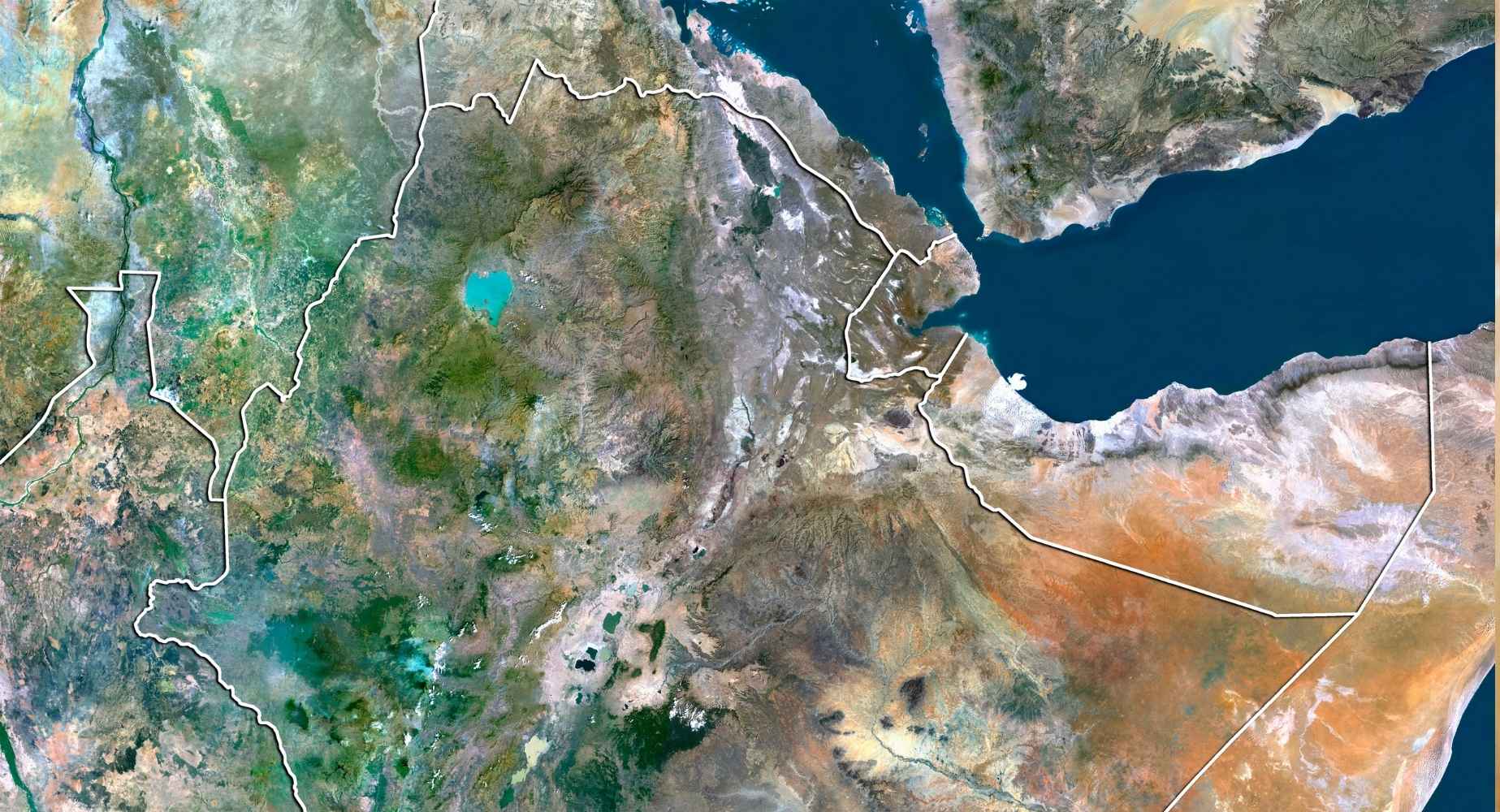
The same shipping lanes threatened by escalation around Iran pass through the Bab el-Mandeb Strait, the narrow gateway between the Red Sea and the Indian Ocean. That geography places Africa, particularly the Horn of Africa, directly along the fault line of a conflict that could reshape global trade routes and power balances.
From Gulf investment and Turkish security partnerships to China’s infrastructure networks and emerging trade corridors such as the India-Middle East-Europe Economic Corridor (IMEC), global powers are increasingly converging on the same strategic geography. At the center of that competition sits Africa.
African leaders have responded to the escalation with a mix of concern and restraint. The African Union warned that further confrontation could destabilize global energy markets and deepen inflation and food insecurity across already fragile economies. Governments from Nigeria to Kenya, Ghana to Algeria have largely called for de-escalation and diplomacy.
Several African states also condemned missile attacks targeting Gulf countries, emphasizing sovereignty and regional stability. This response reflects more than diplomatic principle. Over the past decade, Gulf states have become major investors across Africa.
Ports, logistics corridors, renewable energy projects and agricultural partnerships funded by Gulf capital are now embedded in development strategies across the continent. For many African economies, instability in the Gulf is therefore not distant geopolitics but an immediate economic concern.
Yet the deeper story unfolding beneath the surface is more significant. The Iran conflict is accelerating a structural shift already underway: Africa is becoming one of the central arenas of global strategic competition.
A continent at the center of global rivalry
Africa occupies an increasingly pivotal position in the emerging global order.
The continent holds vast reserves of critical minerals essential for advanced manufacturing, defense technologies and the global energy transition. Cobalt from the Democratic Republic of Congo, platinum from South Africa and lithium from southern Africa are critical for batteries, semiconductors and clean energy technologies.
Africa also sits astride vital maritime corridors connecting the Atlantic, the Mediterranean and the Indian Ocean trade networks. With the world’s fastest-growing population and expanding consumer markets, the continent is becoming an increasingly important arena for economic influence.
China has been the most visible external actor over the past two decades. Beijing is Africa’s largest trading partner, a dominant infrastructure financier and a major buyer of critical minerals. Chinese-backed projects now span railways, highways, ports and industrial zones across the continent.
The Iran war intersects with this relationship in important ways. China absorbs the overwhelming majority of Iran’s oil exports, accounting for roughly 80 to 90 percent of Tehran’s overseas oil sales. Disruptions to Iranian supply or instability along maritime routes quickly ripple through global energy markets, affecting African economies already vulnerable to fuel price volatility.
In this sense, the Iran conflict is not simply a regional confrontation. It is a stress test for a wider economic system linking the Gulf, Asia and Africa.
Turkey’s expanding presence
China is not the only external power expanding its footprint.
Over the past two decades, Turkey has significantly deepened its engagement across Africa under President Recep Tayyip Erdogan. What began as diplomatic outreach has evolved into a broader strategy combining trade, infrastructure investment and security cooperation. Turkey has expanded its diplomatic presence dramatically, growing from only a handful of embassies in the early 2000s to more than forty today. Turkish Airlines now connects dozens of African cities to Istanbul, turning Istanbul into a major aviation hub linking Africa with Europe and Asia.
Trade between Turkey and African countries has surged to roughly $37–40 billion in recent years. Turkish companies have built airports, housing projects and transport infrastructure across the continent, while Ankara has become an increasingly visible security partner through drones, military training and defense cooperation agreements.
For African governments, Turkey represents another partner in an increasingly multipolar environment. For Ankara, Africa offers both economic opportunity and geopolitical influence.
Gulf investment reshaping Africa’s economic landscape
Alongside Turkey and China, the Gulf states have emerged as major economic actors shaping Africa’s future.
The United Arab Emirates in particular has become one of the largest sources of foreign investment on the continent. Emirati companies have invested billions of dollars in African ports, logistics networks and infrastructure, linking maritime trade routes with inland supply chains and integrating African markets into broader Gulf logistics networks.
For Gulf countries, Africa serves several strategic purposes: diversifying economies beyond hydrocarbons, securing long-term food supplies and strengthening influence along maritime corridors connecting the Indian Ocean, the Red Sea and the Mediterranean.
The Horn of Africa: an enduring strategic crossroads
Few regions illustrate these overlapping dynamics more clearly than the Horn of Africa. For centuries, the area has served as a maritime crossroads connecting Africa, the Middle East and Asia. Today, its strategic relevance is once again intensifying.
The Horn sits along the Bab el-Mandeb Strait, one of the world’s most important maritime chokepoints. A significant share of global trade and energy shipments passes through this corridor.
The region’s importance has grown further with new connectivity initiatives such as the India-Middle East-Europe Economic Corridor (IMEC), announced at the 2023 G20 summit. The project aims to link India with Europe through maritime routes to the Gulf and rail networks crossing Saudi Arabia, Jordan and Israel before reaching the Mediterranean.
If fully realized, IMEC would create a major economic corridor connecting India, the Gulf and Europe. Saudi Arabia sits at the geographic center of the proposed land route, making Riyadh’s participation a decisive factor in the project’s long-term viability.
Yet regional dynamics suggest alternative configurations may also emerge. As Saudi Arabia increasingly coordinates regional diplomacy and security with partners such as Turkey and Egypt, Israel, the United Arab Emirates and India have explored complementary trade and logistics frameworks that do not rely exclusively on Saudi participation.
Recent diplomatic developments also reflect growing attention to the African side of the Red Sea system. Israel’s recognition of Somaliland highlights the strategic importance of the Gulf of Aden coastline near the Bab el-Mandeb Strait, one of the most critical maritime chokepoints in global trade.
Ports and logistics infrastructure along this coastline are increasingly viewed as potential gateways linking the Indian Ocean, the Red Sea and emerging African markets. In this context, the Red Sea and the Horn of Africa remain strategically important regardless of how IMEC ultimately develops.
Multiple powers are already competing for influence across the region. China operates its first overseas military base in Djibouti. The United States and several European countries maintain military facilities there as well. Turkey runs a military training base in Somalia, while the United Arab Emirates has invested heavily in ports along the Red Sea coastline.
The Horn’s strategic importance is reinforced by Ethiopia’s growing demographic and economic weight. With more than 120 million people, Ethiopia hosts the headquarters of the African Union and the continent’s largest aviation hub through Ethiopian Airlines.
After the Iran war
How the Iran conflict ultimately unfolds will shape the strategic environment surrounding the Red Sea and Africa. If the Iranian regime survives, proxy competition could intensify across the Red Sea basin, with Iranian-aligned actors threatening shipping routes and prompting greater security involvement from Gulf states and global powers. If the regime collapses, Gulf countries may expand their economic and security presence westward across the Red Sea, accelerating investment in ports, logistics infrastructure and regional connectivity across East Africa.
Africa’s strategic moment
Uncertainty surrounding IMEC could further increase Africa’s importance. If political shifts or regional tensions slow the corridor’s development, global actors may increasingly look toward alternative logistics routes linking the Indian Ocean, the Gulf and the Mediterranean through Africa itself. Investments in ports, rail corridors and digital infrastructure along Africa’s coasts could therefore serve as complementary pathways for global trade.
Regardless of how the conflict unfolds, Africa’s strategic importance will continue to grow. The Iran war did not create this shift, but it is accelerating it.
In the emerging contest over trade routes, resources and influence, the Red Sea and the Horn of Africa may once again become one of the decisive geopolitical crossroads of the twenty-first century.