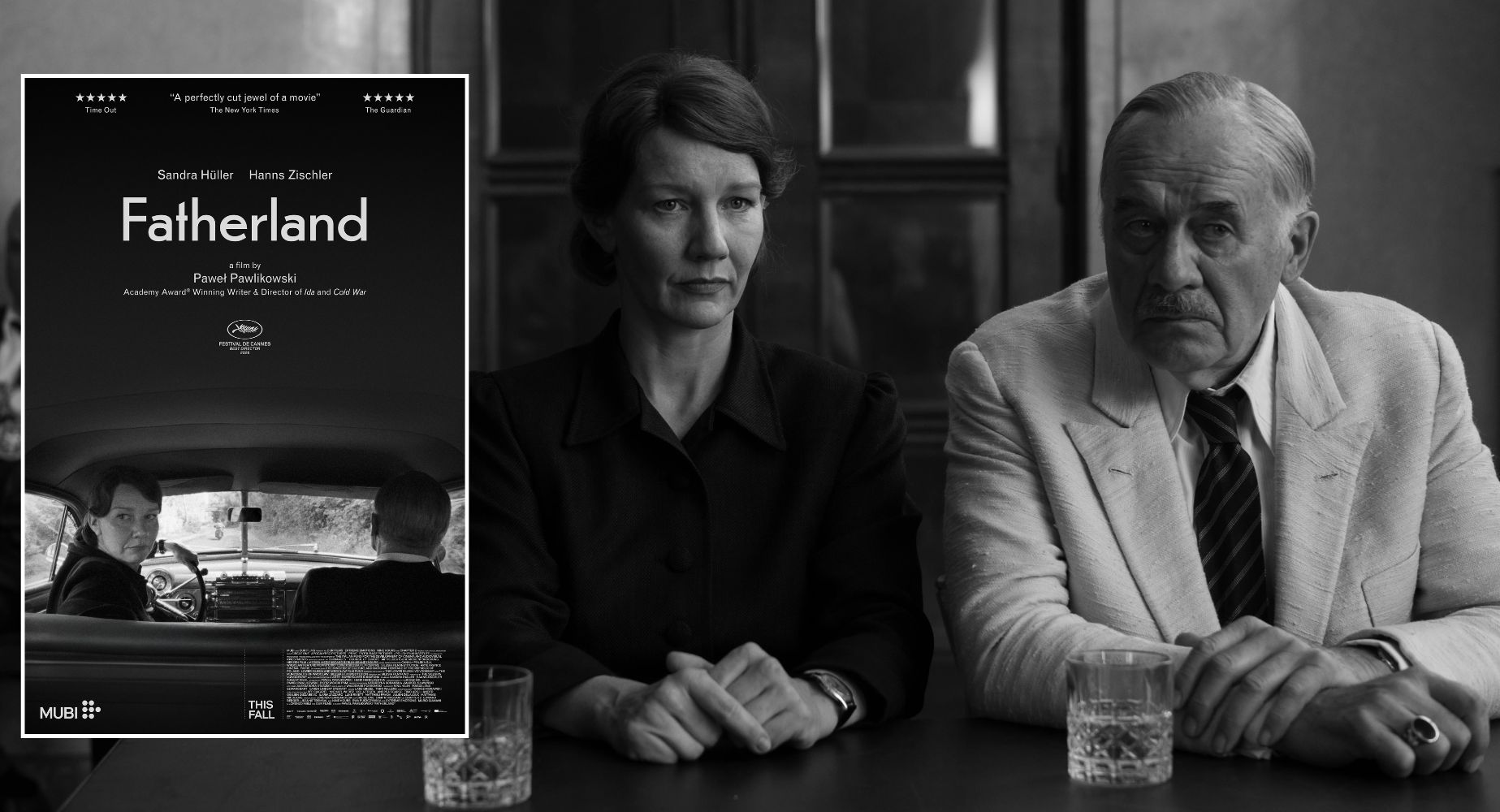
In 1949, Thomas Mann visited Germany, which was sundered in two between the western allies and the Soviet Union. The occasion was the bicentenary of the German novelist and poet Johann Wolfgang von Goethe. Mann, who had left Nazi Germany in 1933 and later emigrated to America, traveled to first to Frankfurt, where Goethe was born, and then to Weimar, where he served as Privy Counselor and wrote many of his major works, including Faust. In Weimar, Mann received the city’s Goethe prize.
After his tour concluded, Mann, who won the Nobel Prize for literature in 1929, wrote an essay in the New York Times about it. At the outset of his visit, Mann had declared “I know no zones. My visit is to Germany itself, Germany as a whole.” In his Times essay, Mann observed that his visit had aroused considerable contention, enough to require police protection in West Germany: “Curiously enough, my existence and the reaction to it in Germany have assumed a certain symbolic significance. Discussion of them which is far too common scarcely carries the character of literary criticism any longer. It has become a controversy between two views of Germany, a dispute over the road to Germany’s future.”
In his superb new black-and-white film, Fatherland, Pawel Pawlikoski traces Mann’s journey to his homeland after years of exile. The movie is a kind of road trip, following Mann as he is chauffeured around by his audacious daughter Erika, a former race car driver, in a glossy new Buick that serves as a symbol of American economic prowess. The subtle and evocative film deftly explores both the legacy of the Nazi era and the incipient cold war, offering a convincing and lightly fictionalized portrait of Mann as he seeks to navigate turbulent political waters.
Mann had good reason to be wary. His first foray into Germany literature and politics had arrived during World War 1, when he wrote Reflections of an Nonpolitical Man, a prolonged and cantankerous defense of an anti-western Germany. The book was an embarrassment. After the war ended and the Nazi movement emerged, Mann morphed into a defender of the democratic Weimar Republic. He aired the arguments for and against authoritarianism in his famous 1924 novel The Magic Mountain, which featured a lengthy debate between a Jesuit communist named Naphta and an idealistic champion of the Enlightenment named Lodovico Settembrini (who was modeled on his brother Heinrich). Mann made it clear that he did not share Naptha’s endorsement of violence—“what our age needs, what it demands, what it will create for itself is—terror”—but suggests that Settembrini’s well-intentioned and hapless humanism may end up on the losing end.
Six years later, during an address at the Beethoven Hall in Berlin, Mann himself openly denounced the Nazis. After the September 1930 Reichstag elections, in which the Nazis suddenly became the second-largest political party, Mann delivered an address called “An Appeal to Reason.” In it, he described the National Socialist movement as consisting of “a giant wave of eccentric barbarism and primitive mass-democratic fairground vulgarity.” It was disrupted by the catcalls of SA members and the right-wing novelists Arnolt Bronnen and Ernst Jünger.
With the Nazis rise to power in 1933, Mann remained in Switzerland and his family soon followed. Under the 1934 Nuremberg race laws, Mann’s children were considered Jewish. His wife, Katia, was the daughter of a prominent Jewish Munich industrialist. In 1936 the Nazis revoked Mann’s German citizenship.
Mann became the leading figure in the German exile community after he emigrated to America in 1939, declaring “Where I am is Germany.” Mann had long had a soft spot for America. In his 1909 satirical romance, Royal Highness, Mann depicted an American millionaire called Samuel Spoelmann who rescues the German Duchy of Grimburg from financial disaster (interestingly, in his 1924 novel, Hotel Savoy, the Austrian writer Josef Roth features a not dissimilar figure named Henry Bloomfeld). Mann, who was living in California in what became known as “Weimar on the Palisades,” delivered a series of radio addresses on the BBC that were transmitted into Germany and that excoriated the Nazi regime.
In 1945, in a letter titled “Why I will not return to Germany,” he admonished Germans for their collective responsibility for Nazi war crimes. Several writers who had remained behind in Germany reacted like stung hornets to this charge, averring that they had gone into “inner emigration” and complaining that Mann had deserted Germany—a charge that is raised at the outset of the Fatherland movie and easily rebuffed by Mann, who observes that he would not be present to answer the query had he remained in the Third Reich.
In a stark scene, Erika is shown being accosted at a reception in Frankfurt for her father by her former husband–the famous actor Gustaf Gründgens, who went from endorsing communism in the 1920s to becoming a favorite of Hermann Goering’s during the Third Reich. Klaus Mann depicted him in his 1936 novel Mephisto as epitomizing the capitulation of German artists to the Nazi regime: “Encapsulated by his ambition as in a prison cell, insatiable and tireless, always in a state of extreme hysterical tension, Hendrik embraces a destiny that seems to him exceptional but is in fact nothing but a vulgar arabesque at the edge of an enterprise doomed to collapse.” Erika slaps her ex across the face after he tries to elicit her sympathy by recounting his stay in a Soviet internment camp after the war ended.
Thomas Mann resisted being coopted by either West or East Germany. In the film, he is shown as being pushed by Johannes R. Becher, who became the cultural minister of East Germany, to become the head of the Academy of Arts. Mann declines. He suggests that his brother, Heinrich, a lifelong socialist and himself a gifted novelist, would be a more apt choice. But Becher makes it plain that he prefers the big kahuna—Thomas Mann.
Mann’s air of lofty detachment only cracks towards the end of the film. Together with Erika, he enters a bombed-out cathedral, listens to an organ haltingly begin to play Bach’s aria “Jesu, Joy of Man’s Desiring,” and weeps. It is a moving conclusion to a movie that provides another reminder that the scars left behind by the Third Reich have yet to heal fully. Despite formal reunification, Germany, as its latest elections have shown, remains as divided as ever between East and West.