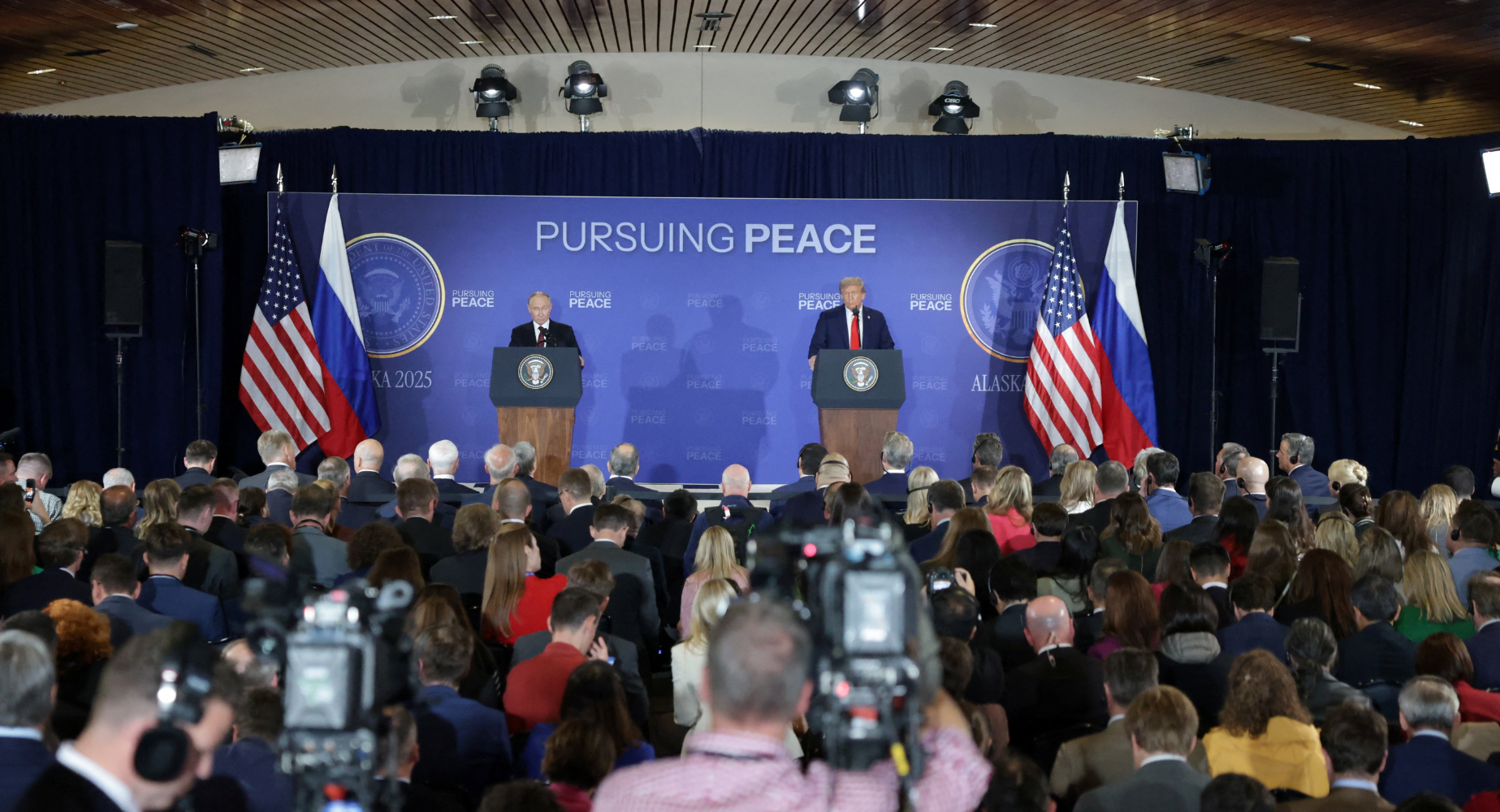
After seeing Kyiv firsthand, Jared Kushner and Steve Witkoff have an opportunity to reshape Washington’s approach—but a durable settlement will require confronting the Kremlin’s ambitions and bringing Vladimir Putin to the negotiating table.
When Jared Kushner and Steve Witkoff traveled to Moscow and Kyiv by train in early September, they sought to bring peace to Ukraine. Critics of the trip quickly asserted that the two U.S. special envoys had not produced anything of substance, but Ukrainian President Volodymyr Zelensky struck a more conciliatory tone. He suggested that the Trump administration was in fact playing a constructive role in pushing for a de-escalation of the fighting during the winter that might lead to a more durable peace.
Indeed, it now appears that the Trump administration will intensify its efforts to arrive at an agreement by assigning a more prominent role to CIA Director John Ratcliffe who has reportedly been pushing for a three-way Trump-Putin-Zelensky summit meeting.
The detractors of the visit missed another point: Kushner and Witkoff finally saw Kyiv for themselves. That is no small matter. After Witkoff’s repeated trips to Moscow–eight in all–Russian president Vladimir Putin’s narratives and talking points have influenced the US negotiating team. Now Kyiv’s charm offensive was on full display: Kushner and Witkoff dined on Crimean Tatar food during their journey, enjoying their meals on placemats that proclaimed “Crimea is Ukraine”; they were met with a sign proclaiming “PEACE EXPRESS” when they arrived in Kyiv; and they were warmly greeted by President Zelenskyy at St.
Sophia’s Cathedral, another dig at Putin’s bogus narrative that Ukraine is not an independent and sovereign nation. St. Sophia’s Cathedral, a UNESCO World Heritage Site, was first built in the eleventh century more than one hundred years before the city of Moscow was founded.
Meanwhile, in Moscow Putin blustered about the “Kyiv regime” — code for his claim that Ukraine consists of a bunch of unrepentant Nazis, even though President Zelenskyy is himself proudly Jewish and the great grandson of a Holocaust survivor. A day later, a Ukrainian negotiator presented Witkoff and Kushner with “Kyiv regime” T-shirts as a joke. If nothing else, Kyiv won the optics volley.
Alas, the war isn’t just one of optics and it’s not going anywhere. So what are the current impediments to a genuine peace settlement—and what course should the Trump administration pursue to help create one?
There can be no gainsaying that the main obstacle to an end to hostilities remains Putin’s irredentist aspirations in Ukraine. It is important to remember that Russia initiated the war. Ever since it invaded Ukraine in February 2022, Moscow has sought not merely conquest of territory but to extirpate Ukrainian nationhood. Its methods include torturing and murdering priests, kidnapping thousands of children, and destroying schools and textbooks. In this regard, Putin has returned to a traditional Russian imperial textbook, which views Ukraine not as an independent and sovereign nation, but a colony whose population and resources are to be exploited on Moscow’s behalf. In a February 21, 2022 speech, for example, Putin made clear his disdain for the country, stating that “modern Ukraine was wholly and fully created by Bolshevik, communist Russia.” Such piffle may play well to a motley crew of Russian nationalists, but it does not provide the basis for any substantive negotiations.
Putin’s willful invasion has prompted successive American administrations and western Europe to support Ukraine financially and militarily. The Trump administration has continued delivery of billions in weaponry under the provisions of the Ukraine Security Assistance Initiative. Then there is the European Union. Earlier this year it approved a two-year $106 billion package for Ukraine. Now it’s grappling with a fresh request to fill a sudden $27 billion gap in the Ukrainian defense budget.
With populist political parties on the rise in Europe, the request comes at an inopportune moment.
Ukrainians can continue to hold off the Russians indefinitely so long as technological innovation continues apace. Again and again, Ukrainian ingenuity has ensured that its military remains a step ahead of Russia’s. But the upcoming winter will present a variety of hardships. For one thing, Russia is preparing a triple whammy: jet-powered drones that whizz by Ukraine’s air defenses without any known remedy, cheap mid-range rockets and more ballistic rockets. Kyiv may have committed a tactical error this summer by repeatedly striking Wildberries, the biggest Russian online retailer.
Putin retaliated by targeting Odesa, where vital Ukrainian grain storage and loading facilities are located.
As a result, Ukraine’s economy is suffering. The country relies on support from the West to fund everything from government employees to teachers. Unfortunately, an $8.1 billion package approved this past February by the International Monetary Fund to stabilize the economy and promote structural reforms will fall far short of what’s needed. On the plus side, meteorologists are projecting that a “Super El Niño” could ensure a balmier winter than the previous one, which might help mitigate the effects of Russian targeting of Ukrainian energy facilities.
A lack of western interceptors, however, has rendered Ukraine vulnerable to attacks from drones and missiles. Washington deserves some of the blame. Certainly Russia’s jet-powered drones and constant reign of terror that it unveiled at the beginning of September has driven remarkable innovation, prompting Ukrainian engineers to work around the clock to develop interceptors that can destroy the latest Russian drones, many of them capable of reaching speeds of up to 300 miles per hour– two to three times faster than previous versions.
However, there will be at least a two-month gap before new interceptors can come online, which means that December and January will be extraordinarily daunting for ordinary Ukrainians.
Still, Moscow has real reason to seek an accommodation with Kyiv, at least on paper. Its promised 72-hour war has turned into a strategic morass. This summer Ukraine struck every major Russian oil and gas facility, forcing Moscow to stop exporting diesel fuel. The economy is faltering—the Russian economic ministry has projected a growth forecast of just 0.4 percent for 2026. Lines have become routine at gas stations. Nor is the war going well. Russia has made no real gains on the front lines during the past year and Ukrainian forces have recently forced it to retreat in northeastern Ukraine near the town of Lyman. Its military leadership is pleading for an additional 800,000 recruits.
After Russia’s September parliamentary elections, Putin is widely expected to authorize a fresh mobilization order. But Putin’s calculus isn’t a balance sheet. The Russian president bet the house on his “special military operation” in Ukraine and his initial aims remain unchanged.
How can the Trump administration promote peace? First, talk about the war accurately. Kushner has at times described the war as a business conflict, but the true sources of the conflict rest elsewhere.
Professor Eugene Finkel’s Intent to Destroy, which examines the historical origins of the conflict, is a good place to start. Second, words matter. Putin is not a businessman; he’s a long-time KGB officer and he knows exactly what he’s doing as he flatters the team and offers sweetener after sweetener in the form of potential business deals. But Russia’s record in dealing with western businesses does not inspire much confidence. It has either fleeced or outright expropriated them through legal shenanigans and threats of violence. ExxonMobil, Shell and BP have all written off billion dollar deals that went south.
Third, Putin, not Zelenskyy, is the problem. Putin began the war. Putin is terrorizing Ukrainian citizens. And Putin is threatening Europe.
Put bluntly, this Russian war criminal must be stopped. The Trump administration can leverage American power to apply real pressure against Putin. A sound move would be to give Zelenskyy the right to license Patriot missile interceptors. Then permit Ukraine to employ Starlink in Russia. Finally, open the full suite of American intelligence and provide Kyiv with real-time intelligence. Peace is possible but it starts by recognizing that the Kremlin, for all its bravado, can be cornered. The time has come to isolate Putin and force him to the negotiating table.