Recalibrating its strategy in the wake of the Iran war, a focus on the carrot as opposed to the stick would go far towards advancing Israel’s security aims
The details of the emerging US-Iran deal, while taking shape in the MOU, are yet to be written, with a final text supposedly to be completed in the next two months. And while it would be foolhardy to rule out a potential return to hostilities, a far safer conclusion is that Israel is about to enter a period of intense soul-searching. Triumphalist rhetoric of an overthrow of the Iranian regime following its slaughter of likely 30,000 of its own citizens has given way to overreach. While voices in Israel are already castigating the US administration for a lack of willpower to “finish the job”, it is unlikely, at least for the near future, that Israel will have as promising an opportunity to overthrow the Islamic Republic by kinetic means. On top of this, Israel is slated for elections in October, and while it is anybody’s game, Israeli voters will head to the polls with a serious question: What now?
Israel’s moment of self-reflection is coming at a time when it is in the very clear strategic need for the country to demonstrate that it can be “an adult in the room”. The volatility that 3 years of conflict has engendered, topped off by the recent closing of the Strait of Hormuz, has sapped reserves of goodwill for Israel. Washington’s increasing balancing of regional perspectives, its elevation of actors such as Turkey and Qatar, comes both as a result of and at the expense of reduced Israeli influence. To regain trust, Israel’s western allies and its neighbors, to put it diplomatically, want to see an Israel that can be a constructive actor in the region.
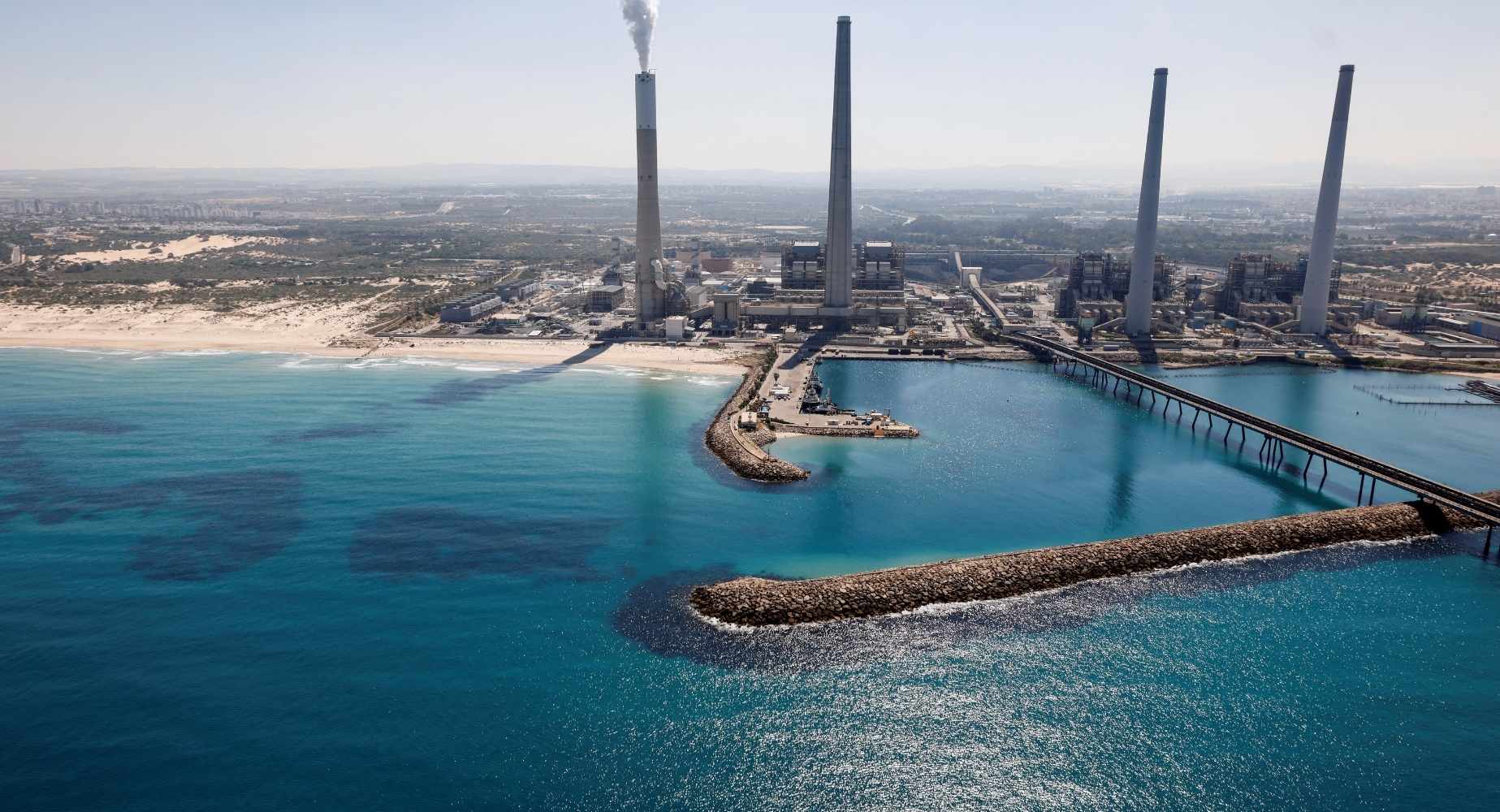
Israel, though, does not need to reinvent the wheel to engender goodwill. With the failure of air superiority to defeat Iran, Israel can pivot to its other strategic advantages, to make more friends, while it figures out how to defeat its enemies. Specifically, Israel can tap its industrial expertise in the production of the basic commodities needed for life in a warming and increasingly fracturing world, its ability to provide both power and water.
MENA has a younger population than the global mean. While many countries with greying demography envy this position, the Middle East’s growing population is coming of age in a region where all its nations are in water debt, overdrawing from their naturally replenishable water resources. Food, like water, is also something the MENA region is short on. MENA’s position as a net food importer, is a strategic vulnerability in a world where the global agricultural trade is increasingly disrupted by conflict, as demonstrated by both Ukraine and Hormuz. Water required to boost domestic agriculture, meet requirements from economic growth, and climate stress to existing water sources will only further risk water scarcity for the nations of the region. The best equipped to handle this challenge is Israel. Israel’s prowess with drip irrigation, grey water recycling, and desalination is well known. Pre-White paper reports from the British colonial period stated that the population of Mandate Palestine, then less than 1 million, and its ability to absorb Jewish immigration would be directly tied to the land’s “absorptive capacity”, such as its available water resources. Today, an Israel of over 10 million is refilling the Kinneret. Israel learned how to make more water so it could come into being; now those gifts must be shared with the region.
Closely tied to the ability to produce water is energy. Again, climate change and demography stress the Middle East’s ability to provide the basic inputs needed for existence. Growing youthful Middle Eastern populations will have both greater quantity and per capita energy requirements, due to desalination, air conditioning, and hopefully greater incomes. The region needs new growth models to ensure social stability. Growing populations will demand jobs, with youth unemployment at 24% (double the global average). The demand for greater employment opportunities comes at a time when the region’s existing fossil fuel-driven economic models have never been more fragile, given the vulnerabilities exposed in the recent Hormuz conflict. New trans-border energy infrastructure, geared to regional consumption as opposed to foreign market fossil fuel export, will be essential to enabling new economic sectors.
The strategic logic in making friends, or at least removing enemies from the board, has not been lost on past Israeli governments. Declassified reports from the government of Prime Minister Rabin show that one of the guiding motivations for entering the Oslo Accords was to consolidate Israel’s first and second spheres, to better focus on rising Iranian power. Improving relations with the Palestinians (the first security sphere), and with its Arab neighbors (the second sphere), would allow Israel to better focus its defense resources on a belligerent and hostile power, whose government has made central to its ideology Israel’s destruction.
Israeli-Arab infrastructure regionalism is also not hypothetical. Despite the war in Gaza, Egypt and Israel signed a deal for 35 billion in gas sales by pipeline until 2040, a lifeline to an Egypt suffering from rolling blackouts. Less able to weather the political fallout of the conflict, has been desalination and solar infrastructure planned between Israel and Jordan. Project Prosperity, envisioned using Israeli desalination capacity, powered by Jordanian solar fields, to meet by one estimate 1/2 of the latter’s water overdraw (~20% of national consumption), but was scuttled following public outrage in Jordan over the war in Gaza. With a potential period of calm, Israel must redouble, triple, quadruple efforts to do more of exactly these types of projects. Israel’s neighbors and Israel’s allies need to see what the advantages are of cooperation as opposed to endless conflict. Already, new regional multi-lateral arrangements are emerging that bypass Israel in military and infrastructure realms. To avoid an increasingly regional view of Israel as something to work around, or worse, to coordinate against, the case for cooperation needs to be made as powerfully as the consequences of conflict. Carrot and stick must go hand in hand.
And then of course there’s Gaza. The costs of reconstruction will be immense (roughly 80 billion), and while conflict has yet to cease entirely, Israel has a crystal-clear incentive to demonstrate that a better existence can be provided to Palestinians North of the yellow line in Gaza than what is lived under Hamas rule in its south.
The wounds of October 7th and the resulting war in Gaza will not be forgotten anytime soon by either Israelis or the Palestinians. The author has been to the killing fields of Nova and seen a flattened Gaza; neither populace will forget for generations. However, the provision of basic infrastructure needed for life in Northern Gaza can help demonstrate to the region that Israel can be a constructive force, and to the Palestinian people that Hamas is not the answer. Gaza will not be able to be fully reconstructed until Hamas is removed as a governing and military actor. To enable this, there is no more literal line in the sand contrast that Israel can draw of what a world without Hamas could look like than aiding reconstruction of the section of Gaza not under its control.
Fair or not, the West and the MENA region, for the last three years, have grown accustomed to seeing Israel as a place from which kinetic strikes emanate. Perceptions, though, are fluid. In a volatile region, Israel must maintain the lethality of its arms, and while some will be drawn to the promise of an expanded Israeli weapons industry, the most effective tool is not always a hammer. If it is to bolster existing relationships and build a bloc against its adversaries, Israel must also show more of its creative energies as well as the capabilities of its arms. Other countries, too, have the capacity to produce weapons; few match Israel’s excellence in what is needed to sustain life.
To Egypt, to Jordan, and when the political circumstances enable, to Lebanon and Syria, Israel must build great sweeping conduits to carry power and water. To find acceptance in the region and the world, Israel must build into existence the physical infrastructure required for that world. Plus, at the end of the day, there is nothing more Jewish, more Israeli, and we are never more at our best than when we can make the desert bloom.