When the USSR collapsed, many did not expect the eight new states in former Soviet Central Asia and the Caucasus to survive, let alone to thrive. Inter-ethnic tensions, radical religious movements fanned by foreigners, the lack of many laws and institutions that modern life requires, and the hangover of habits formed under nearly two centuries of Russian colonial control all augured ill for the new countries.
The years since 1991 have been difficult, with many setbacks along the way. Some challenges remain to be addressed and others scarcely acknowledged. Yet three decades after regaining independence all eight of these new sovereignties have not only survived but have thrived, in spite of formidable challenges. This is therefore an opportune moment to pause and ask how this was achieved, what is the state of the region today, and what it might become in the future.
Phase I: Building Sovereignties.
Reclaiming or creating national identity after being subservient to a foreign culture and polity was no simple matter. The first focus of the presidents who emerged after 1991 was on reclaiming what they saw as their national cultures and histories and on establishing new national power centers. This led to curious phenomena. Ancient national histories were reclaimed or invented, statues of national heroes were raised, and half-forgotten languages and customs reclaimed from the shadows to which imperialism had consigned them. In Turkmenistan, where tribal divisions and external pressures had prevented the emergence of a single power center, the president assigned to himself the role of father of the nation.
In all the new countries this process laid bare internal divisions that had long existed but had been swept under the carpet. Such differences at times to armed conflict and, in Tajikistan and Georgia, to civil war. To reverse this doleful situation, the new presidents claimed for themselves authoritarian powers and used them to suppress opponents. Some of the perceived threats arose from home but others, especially Islamic extremism, were fomented from abroad.
Thrown on the defense and scrambling to avoid chaos, the new governments adopted many policies that put them at odds with their neighbors. The definition of new national borders led to conflicts both in Central Asia and the Caucasus. Worse, the introduction of strict visa requirements, heavy duties and imports, a residual Russian military presence, and ominously militarized border regimens not only discouraged trade and development but isolated from each other peoples and cultures that had interacted intensely and productively for millennia.
It helped that the new presidents and their cohorts had all spent decades working in the same Soviet system. Not only did they share the Russan language of their rulers but they knew one another and in most cases could anticipate how the others would react to initiatives from elsewhere. While providing a degree of stability in a fundamentally unstable situation, over time this began to open a gap between the first generation of post-Soviet rulers and the rising generations in all the countries, younger men and women who emerged in the first heady days of sovereignty and who gradually began to look beyond their national borders to the world outside. Most of them shifted to their national language while many chose English to communicate internationally.
Phase II. Embracing the World.
To their credit, the new authoritarian rulers were well aware of these fundamental shifts and even quietly promoted them. President Islam Karimov of Uzbekistan, during a visit to Washington, was asked why he did not introduce the basic reforms that so many thoughtful people thought were needed. To this he bluntly replied that no one should expect his generation of leaders to do this, “for we were formed in a different world.” Then another reporter asked if he did not fear that the thousands of Uzbek students studying abroad might bring back alien ideas that would destabilize their homeland. “Yes, it is true,” he replied. “They return home more like you than like us. But they are ours, and they will enrich us with unfamiliar ideas and fresh methods.” In the Caucasus, Georgians’ enthusiasm for joining Europe required restraint, lest it trigger a Russian reaction.
Nor did students from the Caucasus and Central Asia need to go abroad to encounter new ideas. From Armenia and Georgia in the west to Tajikistan and Kyrgyzstan in the east several dozen new institutions of higher education were opened, often with international support and international teaching staffs. Several of these have already appeared in major international rankings.
Reform at the school level was slower in coming, but widespread access to the internet has transformed the cultural and intellectual environment of teenagers across the region.
To be sure, this has occurred at a cost, as many traditional skills have been lost. But thanks to education and the new media, the rising generation has been exposed from an early age to ideas and tastes that are regional or international in character, rather than purely local or national.
Even though the main thrust of regional development after the collapse of the USSR occurred at the national level, there were international and region-wide initiatives from the outset. Even before the Belovezha Accords that ended the Soviet Union, the five Central Asian leaders held a summit meeting in Almaty in June, 1990. This was followed in August 1991 by a meeting in Tashkent that established a regional Consultative Council. Interestingly, Azerbaijan participated in this Central Asian assemblage. Then in December 1991 the Turkmen president Niyazov proposed the establishment of a Central Asia Confederation, which was shelved when Kazakhstan’s President Nazarbayev judged it too controversial. Undaunted, Niyazov then suggested in 1993 that Central Asia become a nuclear free zone.
This in turn led to a conference in 1997 in Tashkent and then to a UN treaty, signed at Semipalatinsk in Kazakhstan in 2006. Meanwhile, Kazakhstan’s President Nursultan Nazarbayev in 1992 had proposed a “Conference on Interaction and Confidence Building Measures in Asia.” That a newly sovereign country in a heretofore neglected region of Asia should propose such a forum astonished many, yet the initiative, by convening frequent meetings, helped integrate the new states into the worldwide dialogue on peace and security. It helped that western institutions like the George C Marshall Center at Garmisch-Partenkirchen, Germany, began training officers and analysts.
The exploitation of the oil, gas, and mineral resources of the Caucasus and Central Asia emerged as another powerful force for integrating the region with the world economy and, eventually, within itself. In 1992 Kazakhstan helped create an international consortium to build a pipeline from the Tengiz oilfield to Novorossiysk on the Black Sea, and engaged Italian and British companies to develop the Karachaganak gas field. The following year it signed with the American firm Chevron an unprecedented forty-year agreement known as the “contract of the century.” Meanwhile, Kyrgyzstan entered into agreements with Canadian and Chinese firms to develop its gold resources. Even though some of these deals were later modified or even cancelled, the overall thrust was to integrate the resources of Central Asia and the Caucasus with the world economy.
Phase III. Addressing Old Conflicts.
With the dawn of independence, countries of the region had to resolve old intra-regional conflicts and address new ones. Old Soviet borders left a region-wide residue of ill will between neighbors. These old tensions came to the fore with independence and called for diplomacy on the part of all parties. For example, it took years for Kazakhstan and Kyrgyzstan to address the causes of tensions on their mutual borders. And when Turkmenistan’s president Saparmurat Niyazov proposed to Beijing to build a pipeline for Turkmen gas to China he faced a formidable obstacle: the pipeline had to cross Uzbekistan, and Uzbeks and Turkmen tribes had been at crossed swords for centuries. However, when presented with this rare opportunity, the two sides promptly made peace and have maintained cordial relations ever since.
Over all these developments has hung constant pressure from Russia, whose leaders seem to believe that its interests are best served by fostering instability in its former domains.
Three decades after the collapse of the USSR several of these conflicts remained unresolved. Only in 2025 did Tajikistan and Kyrgyzstan strike a bargain on the delineation of their mutual border. Meanwhile, conflict between Armenia and Azerbaijan over the territory of Karabakh resulted in two wars. Again, it was only in 2025 that presidents of the two countries could strike a deal and even this remains tentative until related constitutional issues are resolved. Meanwhile, although their mutual relations have significantly improved, Baku and Erevan have yet to open diplomatic relations.
Among the old conflicts that came to the surface after independence was between the state and religious institutions. Soviet rule had suppressed many aspects of religious life among both Muslims in Central Asian and Azerbaijan and between differing Christians in Georgia and Armenia. Independence brought demands for greater autonomy and for contacts with co-religionists abroad, especially among Muslims. The new governments met these head-on, with legal protections for the practice of religion but the strict exclusion of religion from the political realm. At the same time the new states honored religious traditions as historical and cultural phenomena. In most cases religious elites and the public acquiesced with these arrangements but tensions remained in several countries and actual conflicts lingered, especially in Tajikistan, where the government followed a hard line, and Kyrgyzstan, where the government attempted to accommodate the faithful.
III. The Rise of a Regionwide Consciousness.
To this day the countries and regions of Central Asia and the Caucasus remain poorly linked with each other. But where air and rail services remain inadequate, individuals have used their private cars to enhance intra-regional connectivity. The proliferation of foreign license plates on the streets of all the major capitols attest to this, while scores of new hotels in all the major centers serve both regional and foreign travelers.
Foreign powers have contributed significantly to the rise of a regionwide consciousness across the entire Caspian region. From the first days of independence international businesses interested in doing business with the regional countries had no choice but to meet regularly with legal and logistics experts from all the relevant countries and to help iron out differences among them.
Faced with such difficulties, it was Japan that did most to foster communication and a regional consciousness among the five states of Central Asia, if not the Caspian region as a whole. It did so beginning in 2004, when it convened Central Asian presidents to meet with their own president. These sessions were immediately expanded to include other officials and businessmen. Through this initiative, which was sparked by Kazakhstan’s Minister of Foreign Affairs and future President Kassym-Jomart Tokayev, the Japanese government hoped not only to identify areas in which the region could cooperate with Japan but also, as Japan’s Foreign Minister Taro Aso put it, in which the Central Asians could then work with each other. It is notable that Japan also included Afghanistan as an observer.
The following year South Korea launched a similar program at the presidential level and in 2009 Turkey founded a “Turkic Council” that evolved into an Organization of Turkic States. Unique in that membership was based on ethnicity rather than geography, this group included five members, and extended observer status to Turkmenistan, Hungary, and even Northern Cypress.
In 2017 the U.S. founded its own geographically based organization for Central Asia. Prompted by Kazakhstan’s ambassador in Washington, Secretary of State John Kerry proposed the creation of C5 + 1 (.e.g. the U.S.). This group held high level discussions over the following years but only in 2026 did a U.S. president preside over its annual meeting. However, this unleashed a flood of new interactions between American investors and Central Asian entrepreneurs and, inevitably, among the locally based entrepreneurs themselves. The European Union then followed suit when Antonio Costa and Ursula von der Leyen launched what they named a Strategic Partnership with all five of the regional states. This occurred a full two decades after Japan’s initiative.
Taken together, this bewildering array of organizations encouraged frequent interactions among the founding presidents, which then spread to senior officials. Old rivalries and tensions among the presidents seemed to have faded and were replaced by growing cordiality and a desire to promote common interests.
IV. Triumph to Tragedy: The Rise and Fall of the Central Asia Union
It was but one step further for the regional presidents to institutionalize and regularize their frequent meetings and consultations. Back in 1993 The presidents of Kazakhstan, Uzbekistan, and Kyrgyzstan had put in place an Economic Union, which they described as “a single economic space.” Tajikistan, torn by civil war, eventually joined, but Turkmenistan, citing its declared neutrality, stayed aloof. This embryonic organization included even a Council of Defense Ministers. In 1998 this entity was reconstituted as the Central Asia Economic Union, which its founders optimistically described as “a single economic space” and proposed to create a Central Asia Bank for Cooperation and Development. In 2002 this entity, with the addition of Tajikistan, was again reconstituted as the Central Asia Cooperation Organization or Central Asia Union.
Momentum for creating region-wide institutions soared briefly after 2000. Building on earlier contacts and understandings, this regionwide coordinating body covered not only such core economic functions as customs, tariffs, and border regimens but also security. This important departure was none too soon. Ever since independence Islamic extremists had waged war in Tajikistan and posed a threat to all Central Asia.
This threat grew steadily until May, 2005, when a large band of heavily armed Islamic extremists took over the Uzbek city of Andijan, leading to a bloody conflict that claimed nearly two-hundred lives. This led President Karimov to harden further Uzbekistan’s borders with all its Central Asian neighbors and to limit interactions that he considered peripheral to national security, including with the Central Asia Union.
Meanwhile, Vladimir Putin had risen to power in Moscow and embraced the Eurasian movement’s mystical and sinister vision of Russian imperial power. This ideology, with roots tracing to Russian intellectuals and ex-tsarist officers and officials in the wake of World War I, aspired to reconstitute Russia as the leader of a vast, multi-national, and anti-western empire embracing all of inner Asia. He perceived the new Central Asia Union as a threat to this project.
Proceeding carefully, he first asked to be allowed to attend as an observer. The Central Asians cautiously asked the major powers East and West for their views on the matter. All replied that it was purely up to the Central Asians. Having found no support for a more firm stance, the leaders admitted Russia as an observer. Then Putin asked to become a full member and again the Central Asians consulted with China, Europe, the US, etc. All repeated the diplomatic line that this, too, was solely up to the Central Asians.
Once he became a member of the Central Asia Union, Putin began forming his own Eurasian Economic Union, into which he finally merged the Central Asia Union in 2005. Russian neo-imperialism had won the day.
In both its notable success and forced demise the Central Asia Union left an important legacy. It culminated a sustained process of interaction among the new sovereignties that began as the Soviet Union collapsed and deepened steadily thereafter. Its existence stands as testimony to the importance of institutionalizing cooperation at the regional level, and for leadership in that process at the presidential level. While it did not come close to matching the achievements of ASEAN or any other of the world’s regional collaborations, it demonstrated the practical possibility of region-wide institutions in Central Asia and pointed the way to its future as a self-governing world region.
V. Bridging the Caspian.
In spite of their differences of history, language, and faith, peoples on both sides of the Caspian Sea have interacted for centuries. Even though the USSR strictly differentiated the two regions in many spheres, communications and travel between them flourished during the final Soviet decades. When late Soviet l leaders resorted to fomenting tension in the USSR’s South, they did so within the Caucasus region—i.e., between Armenia and Azerbaijan—rather than between the Caucasus and Central Asia. The sad story of relations between these two proud countries repeats the oft-told history of diverse people who had long coexisted on the same territory descending into conflict with the rise of nationalism. And as often occurs elsewhere, outsiders—in this case Soviet officials, specifically Mikhail Gorbachev– manipulated the hostility for their own benefit.
Today the two governments are on the verge of setting aside or resolving the issues that have divided them for two generations. Whether or not they succeed, broader developments in economics and geopolitics are raising the price both countries must pay for the continuation of their mutual hostility and steadily nudging Armenia and Azerbaijan together.
Meanwhile, the same economic and geopolitical factors that may foster cooperation between Armenia and Azerbaijan are bridging the Caspian Sea. Both Kazakhstan and Turkmenistan are urgently seeking more direct access to European markets for their oil and gas, a goal that is best attained by building pipelines beneath the Caspian. And both European and Chinese manufacturers are seeking an alternative land route across the heart of Asia in the event that the existing railroads and roads through Russia and Iran are too slow or costly, or are closed, as recently happened. This has generated demand in both East and West for a trans-Caspian transport corridor for energy and goods, which is fast becoming a reality.
Developments in civilian air transport and the exchange of information are further erasing the Caspian Sea as a barrier to region-wide development. Air traffic between the national airports of Central Asia and the Caucasus has soared. Meanwhile, satellite systems now bridge the Caspian, creating a growing single information space. This fulfills the dream of the nuclear physicist Roald Sagdeev, a Kazakhstani Tatar, who first proposed what he called a “Silksat” a generation ago.
The importance of these developments is amplified by what can only be considered geopolitical shifts. Putin’s war on Ukraine has drawn Moscow’s attention away from Central Asia, while Moscow’s failure to champion Armenia against Azerbaijan has encouraged Erevan to renew its frayed relations in the Caucasus and with Turkey, and Europe, and to create de novo ties with Central Asia. Manifesting these striking developments have been a series of unprecedented visits in both directions by the presidents of all three countries of the Caucasus and the presidents of all five states of Central Asia.
V. The Way Forward
When Putin moved to close down the nascent Central Asia Union he administered a shock to the Central Asians’ regional aspirations but failed to kill them. However, the regional cause advanced further only after a further decade had passed and only after a crucial change in leadership in Tashkent.
The death of Uzbekistan’s first president, Islam Karimov in 2016, marked the end of an era for the region as a whole and the start of a new one. Often criticized for imposing excessively rigid a rule at home and closing off his borders to neighbors, Karimov nonetheless successfully built domestic peace, imposed stabilizing institutions, and successfully confronted Islamic extremism. He was succeeded by his long-term prime minister, Shafkat Mirzioyev. Mirzioyev lost no time in opening the borders, lifting the most onerous controls, and opening the economy to foreign investors.
He also quickly established cordial relations with his counterparts across Central Asia. Some, like the presidents of Tajikistan and Turkmenistan, had long focused mainly on domestic affairs. Kyrgyzstan’s president had been in office for only four years. But all three of these had concluded that stronger regional links would best serve their own countries. Kazakhstan’s long-serving first president Nazarbayev had long supported regional collaboration and, though mindful of contrary pressure from Russia, had stood by every effort to institutionalize it. Mirzioyev, long preoccupied with domestic issues, benefited from the steady counsel of his experienced and adroit minister of foreign affairs Kamilov, who had held office for years and knew intimately the tangled history of regional collaboration in Central Asia.
Thanks in part to Kamilov, Mirzioyev well understood both the possibilities before him and the danger he would face. The buoyant mood he himself had created at home emboldened him to act decisively. With this background, in 2017 he proposed to the United Nations General Assembly the creation of a new regional consultative body. He prudently described it as “flexible and sovereignty-respecting,” in other words, what regional presidents had been proposing for a quarter century. The UN nodded it through and the next year the five presidents convened the first “Consultative Meeting of the Heads of State of Central Asia.”
Their timing was not accidental. Early in 2024 Ukrainians had thrown out their Russian-backed president. In September the Russian army invaded and occupied Crimea and, through an election judged illegitimate, incorporated it into the Russian state. Back in 2005 the Central Asians had buckled before Putin’s threat to their sovereignty. This time, keenly aware of their earlier experience, the presidents acted decisively and together.
They began at once to convene on a regular basis. Even though this intra-regional process of consultation and joint action is still in its infancy, its importance cannot be overstated. This is best understood by comparing it to the annual meetings of Central Asian leaders under foreign auspices that had been occurring annually since Japan launched its “Central Asia Plus Japan” in 2001.
For all their virtues, all these formalized annual meetings had one glaring fault: they all exert a powerful and contradictory centrifugal pressure on the regional presidents and the region as a whole. For all their good intentions, they pull the region in contradictory directions as much as they foster unity. It is for this reason that the launching of the new intraregional meetings and structures are so important. While they certainly don’t oppose the existing arrangements with foreign powers, they provide the only venue where Central Asian officials meet purely among themselves, without outside participants or observers.
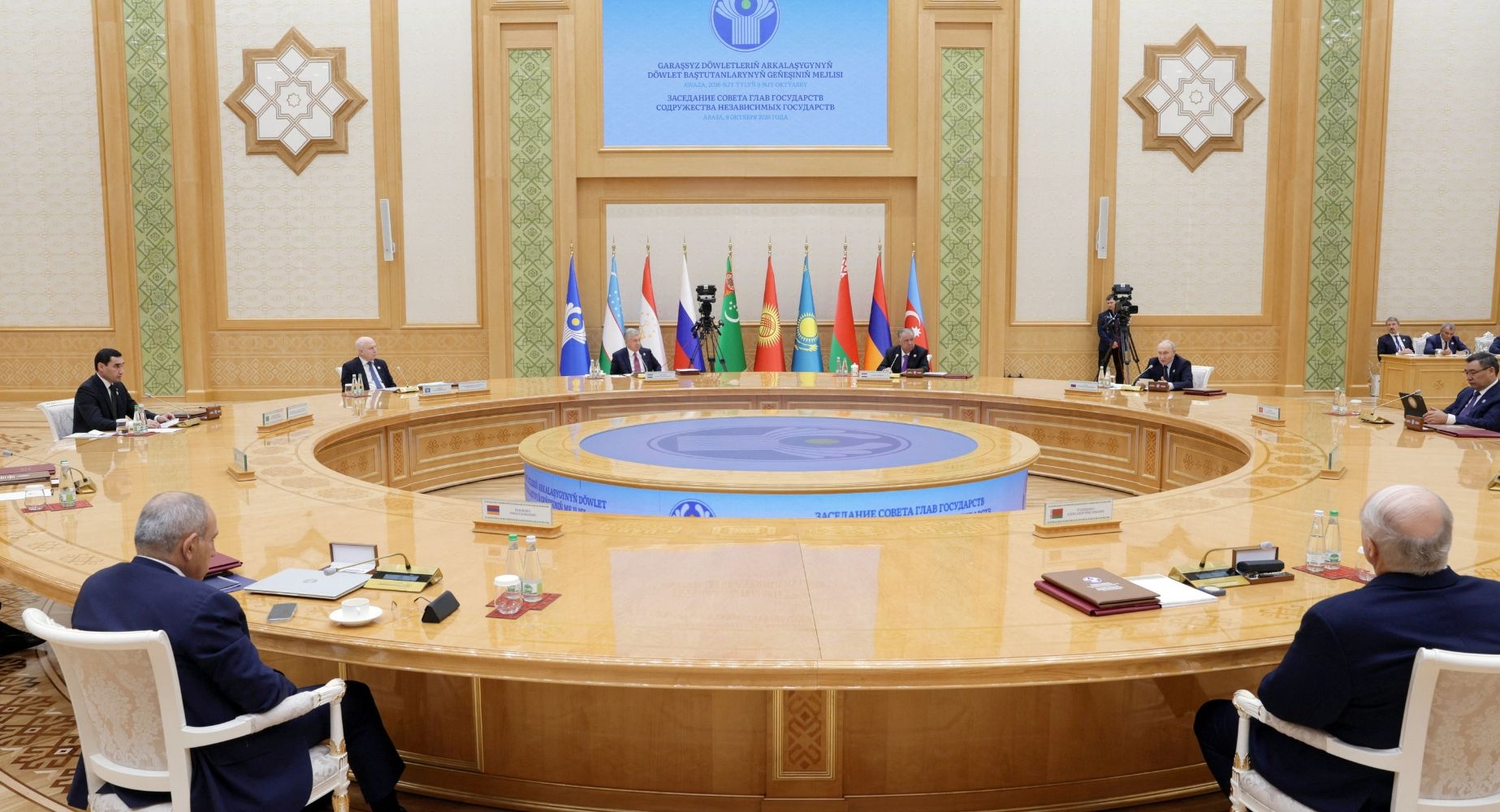
Piling victory on victory, a year after the first meeting of the new regional structure, on October 8, 2026, the Central Asian presidents invited Axzerbaijan’s President Aliev to attended their Consultative Meeting of Heads of State of Central Asia, in Turkmenistan. This marked a crucially important step in the process of recognizing and institutionalizing the trans-Caspian region as a whole. Including both Central Asia and the Caucasus. As this advanced, the Caspian Sea will come to be seen not as an impediment to their interaction but as a conduit for mutual interaction.
Notwithstanding these achievement, much remains to be done before the countries of Central Asia and the Caucasus region exist as a region and are recognized as such. Obviously, the first urgent task is for Armenia and Azerbaijan to resolve their differences. While Azerbaijan has already begun the process of linking with Central Asia, Armenia will have little chance of doing so until the conflict is resolved. Nor will it be easy for Georgia, in spite of its role in the trans-Caucasus transport project promoted by Washington and in spite of the fact that it has downgraded its expectations vis a vis Europe.
Beyond this, even within just Central Asia the process of coordination remains woefully under-institutionalized. It is well and good for the presidents to meet and even for senior officials to convene, but if there are no secretariats to follow up, the best initiatives will be stillborn. The presidents realize this. But when they convened in Cholpan-Ata in Kyrgyzstan a few years back they identified two dozen areas where coordination and interaction were needed but there was absolutely no follow-up. Yet it will be a simple matter to set up offices for the areas that are called for, to spread them among the various capitals, and to coordinate them through the internet, and automatic translation obviates the need for a single regional language,
Regional leaders do not need to reinvent the wheel for in every part of the world there exist swell-organized regional organizations from whom they can learn. ASEAN, the Baltic Council, the Asia Pacific Economic Cooperation, as well as the Association of Caribbean States, the Southern Common Market (MERCOSUR), and the European Union. Some of the lessons of these groups will be positive, others negative, but all will prove instructive.
One might well ask what has so delayed the cause of cooperation and coordination in Central Asia and the Caucasus? There is one obvious cause and one less obvious. The obvious reason is fear of reprisals from Russia, Bitter experience has proven these to be justified, at least in the past. For now, Russia is staggering under the domestic effects of its war against Ukraine. Moreover, the long-term consequences of the war in many areas—finance, industry, energy, science, demography, and public health—are profound and inevitable. Russia will have no choice but to enter a post-imperial era and for a generation will lack both the will or resources needed to successfully dominate its neighbors.
The less obvious cause for the governments’ cautious approach to coordination is fear that it will lead to calls for a region-wide elective parliament. They recall their own countries’ bitter experience with the Supreme Council (Soviet) of the USSR and its councils in each republic, and they have watched with the EU’s parliament with deep skepticism. All of them are so focused on working out acceptable relations with their own new parliaments that they have no intention of complicating their lives further by the addition of a regional parliament.
For these and other reasons, society across both Central Asia and the Caucasus has forged ahead of the governments with respect to regionalism. Region-wide initiatives in travel, communications, business, higher education, sports, tourism and other fields are proliferating and creating a reality that their governments cannot ignore. That younger men and women dominate these initiatives makes the need for governmental action all the more compelling.
As governments calibrate when and how they will create regional structures to coordinate activities in a range of areas, their officials will do well to consider the cost of their not acting. For however much they are thriving today, the states of Central Asia and the Caucasus will eventually find themselves in the position of tall people struggling under a low ceiling. He only way they can advance further and keep pace with developments worldwide will be to link arms. This does not require them to sacrifice what they have achieved through hard work since independence. Rather, they should review the results as a kind of second story atop their existing sovereignties and identities, supplementing rather than supplanting what they have become since 1991.
As they do so, they can be sure of one thing: with few exceptions, the international community will welcome a locally and regionally based movement for regional cooperation and coordination. Foreign partners will look with favor on a region that is better able to manage its internal differences and conflicts. International investors will seize on the expansion of potential markets and the greater ease of doing business everywhere. Meanwhile, senior officials in both Central Asia and the Caucasus will hail the fact that both foreign businessmen and foreign politicians will all find it hard play their regional partners against each other.
The developments sketched out here cannot and will not come into being immediately. Several challenging issues must be addressed along the way, both by the regional governments and their friends abroad. And there are bound to be setbacks, as indeed there have been during the years since 1991, even though the record as a whole has been one of steady progress. Let it also be noted that many matters within Central Asia and the Caucasus that demand serious treatment have not yet even been mentioned, even though they must eventually be addressed if greater coordination and institutionalization is to be achieved and the benefits arising from them reaped.
Finally, let us ask what should the new region be called: Greater Central Asia, the Caspian Region, the Caspian Heartlands, or some other name yet to be derived? Happily, this question, like so many others, can and should be left solely to the countries themselves. That is the path forward.